
Choosing the right roof type for commercial buildings in Orange County can significantly impact durability, maintenance costs, and overall functionality. Flat and pitched roofs each offer distinct advantages based on climate, building use, and budget. For most commercial properties in this region, flat roofs are often the better choice due to their suitability for rooftop utilities and ease of access for maintenance.
Pitched roofs, while effective for water runoff and longevity in certain weather conditions, may not maximize usable rooftop space or accommodate HVAC systems as efficiently as flat roofs. Understanding the unique needs of a commercial building is key to making an informed decision that aligns with both operational and financial goals.
Tom Byer Roofing Service, a trusted roofing contractor in Garden Grove, California, guides business owners through these choices with expert knowledge and practical solutions tailored to Orange County’s environment. Their experience ensures commercial clients receive roofing systems that balance performance and cost-effectiveness.
Understanding Flat And Pitched Roofs
Flat and pitched roofs differ mainly in design, drainage, and material options. Each type presents distinct characteristics that influence durability and usability, especially for commercial buildings in Orange County.
What Is a Flat Roof?
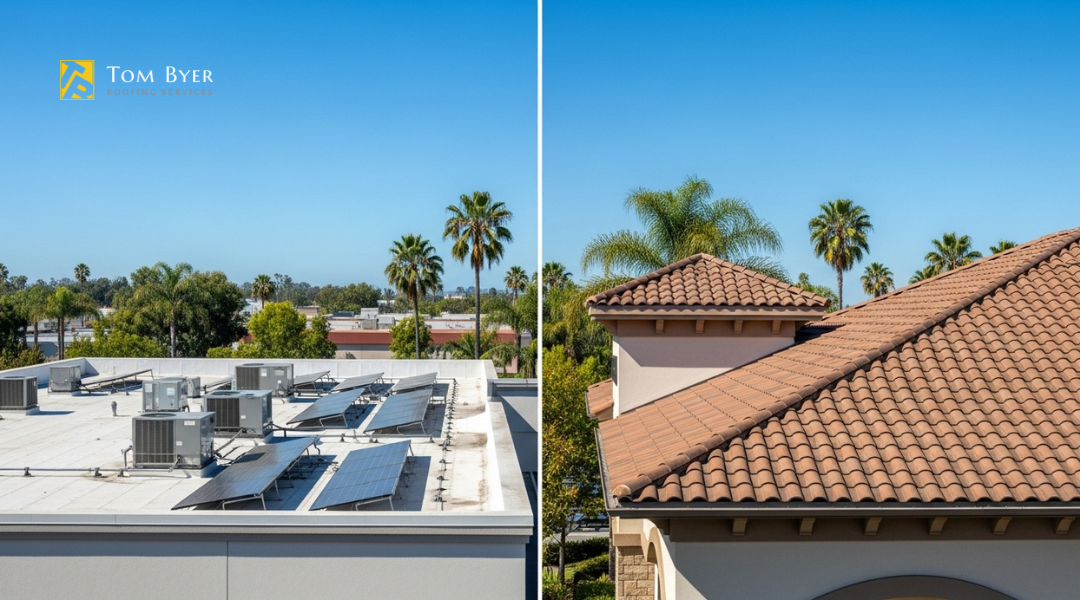
A flat roof is almost horizontal, with a slight slope to promote drainage. This minimal incline makes it easier to install and maintain rooftop equipment like HVAC units or solar panels.
Flat roofs are common in commercial buildings and modern architecture. They provide usable space for maintenance or outdoor applications but require reliable waterproofing to prevent leaks, especially in climates with occasional heavy rain.
Drainage systems on flat roofs must be carefully designed to avoid water pooling. Proper sealing and periodic inspections are critical to extend their lifespan.
What Is a Pitched Roof?
A pitched roof has a noticeable slope, directing water and snow off the structure efficiently. This design is traditional for both residential and commercial buildings in areas with significant rainfall.
Pitched roofs generally last longer due to better natural water runoff and are less prone to leaks caused by standing water. Their shape also allows for attic or loft spaces, which can add functional storage or mechanical space.
Because of their slope, pitched roofs can be more complex to install and may require different structural supports and materials compared to flat roofs.
Common Materials Used for Each
Flat roofs often use materials designed for waterproofing and durability, such as:
- TPO (Thermoplastic Polyolefin): Heat-reflective and energy-efficient.
- EPDM (Ethylene Propylene Diene Monomer): Known for flexibility and weather resistance.
- Built-Up Roofing (BUR): Layers of asphalt and gravel for durability.
Pitched roofs typically feature materials optimized for shedding water, including:
- Asphalt shingles: Cost-effective and widely used.
- Metal roofing: Durable, lightweight, and long-lasting.
- Clay or concrete tiles: Common in warmer climates for their thermal properties.
Material choice depends on building needs, climate, and budget considerations.
Pros And Cons Of Flat Roofs For Commercial Buildings
Flat roofs are a common choice for many commercial properties in Orange County due to their simplicity and practicality. They offer unique benefits for space and cost but also come with challenges related to durability and maintenance.
Advantages of Flat Roofs
Flat roofs typically cost less to install because they require fewer materials and less labor compared to pitched roofs. This can be a significant factor for businesses managing budget constraints.
They provide additional usable space that can be adapted for rooftop equipment, solar panels, or even recreational areas, which is a valuable asset in urban environments like Garden Grove.
Maintenance tasks and inspections are generally easier and safer on flat roofs since the surface is level, reducing the risk for workers. This can lead to timely repairs and longer roof life when managed properly.
Disadvantages of Flat Roofs
Flat roofs have a shorter lifespan, usually between 10 to 20 years, depending on materials and climate impacts such as heavy rain or heat typical to Orange County. This means more frequent replacements or repairs may be necessary.
Water drainage issues are common since flat roofs don’t shed water as efficiently as pitched designs. Proper installation and regular maintenance are crucial to prevent leaks and membrane damage from standing water.
Insulation can be less effective on flat roofs, potentially increasing heating and cooling costs over time, especially in climates with temperature extremes. This factor should be carefully evaluated during roof selection.
Pros And Cons Of Pitched Roofs For Commercial Buildings
Pitched roofs offer distinct benefits in durability, aesthetics, and drainage, but they also involve higher installation costs and maintenance complexity. Understanding these factors helps business owners in Orange County decide if a pitched roof suits their building needs.
Advantages of Pitched Roofs
Pitched roofs provide excellent water drainage due to their sloped design, reducing the risk of leaks and water damage in Orange County’s variable weather. This design also prevents debris buildup, which lowers maintenance frequency.
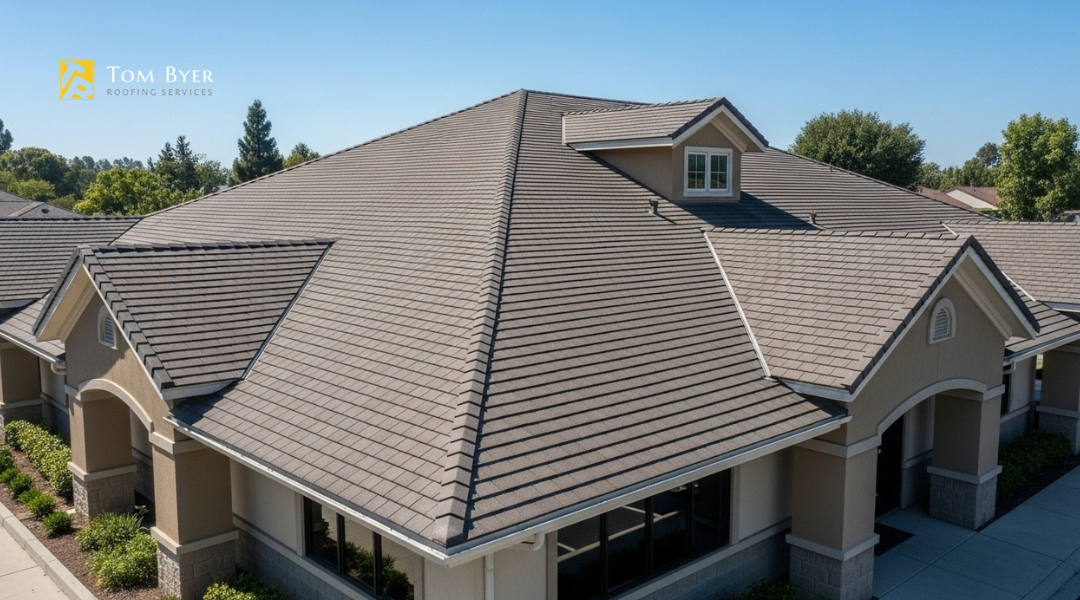
They tend to have a longer lifespan compared to flat roofs when constructed with quality materials. The slope allows for additional attic or storage space, which can be valuable for commercial buildings requiring extra room without expanding the footprint.
Aesthetic appeal is another strong advantage. Pitched roofs can enhance the building’s look with various styles and finishes, potentially increasing property value. Their traditional appearance often suits certain architectural designs favored in commercial areas.
Disadvantages of Pitched Roofs
Installation costs for pitched roofs are generally higher than flat roofs due to more complex framing and materials. This can be a significant consideration for businesses with tight budgets.
Maintenance and repair can also be more challenging. The slope requires specialized safety equipment and expertise for inspection and repair work, which may increase service costs. Accessibility is more restricted than on flat roofs.
Additionally, pitched roofs can add extra weight to the building structure, potentially requiring reinforced support. This might increase construction expenses or limit choices on certain building types in Orange County, especially on older buildings needing retrofitting.
Climate And Building Code Considerations In Orange County
Selecting the right roof for commercial buildings in Orange County demands attention to local climate conditions, zoning rules, and energy standards. These factors influence material durability, design limits, and insulation needs, ensuring performance and compliance.
How Local Weather Affects Roofing Choice
Orange County experiences mild, Mediterranean-like weather with moderate rainfall and warm temperatures. This climate favors roofs that resist moisture damage and heat absorption.
Pitched roofs are effective for shedding occasional rain, reducing water pooling and extending roof life. Flat roofs, however, require high-quality waterproofing and regular maintenance to prevent leaks.
Heat exposure encourages the use of reflective roofing materials, such as cool roofs, which reduce interior temperatures. This can lower energy costs in commercial buildings by minimizing cooling demand during hot months.
Building Height, Aesthetics, and Zoning Regulations
Local zoning laws in Orange County influence maximum building heights and roof visibility. Many commercial areas have height restrictions that can limit pitched roof profiles.
Flat roofs often help meet height limits while providing space for HVAC units, solar panels, or green roofs. Pitched roofs may be preferred in zones where architectural character or historical style plays a role in permitting.
Aesthetics also matter; some business districts require particular roof types to maintain community design standards. Consulting local planning departments ensures roofing plans comply with regulations and neighborhood guidelines.
Energy Efficiency and Insulation Requirements
California state codes mandate energy efficiency standards for commercial buildings, impacting roofing insulation and materials. Orange County follows these strict regulations to reduce energy consumption and emissions.
Cool roofing materials with high solar reflectance indexes are recommended to meet insulation performance. They help lower cooling loads by reflecting sunlight away.
Proper insulation beneath both flat and pitched roofs is critical to comply with Title 24 energy standards. This reduces heat transfer, enhancing indoor comfort and reducing utility costs.
Energy-efficient roofing systems may also qualify for rebates or incentives, benefiting commercial property owners financially while improving sustainability.
Maintenance And Longevity Factors
Maintenance needs and expected lifespan vary significantly between flat and pitched roofs. These differences affect ongoing costs, repair frequency, and the overall return on investment for commercial buildings.
Flat Roof Maintenance Requirements
Flat roofs typically require more frequent inspections due to their limited drainage. Water tends to pool on flat surfaces, increasing the risk of leaks and material degradation over time.
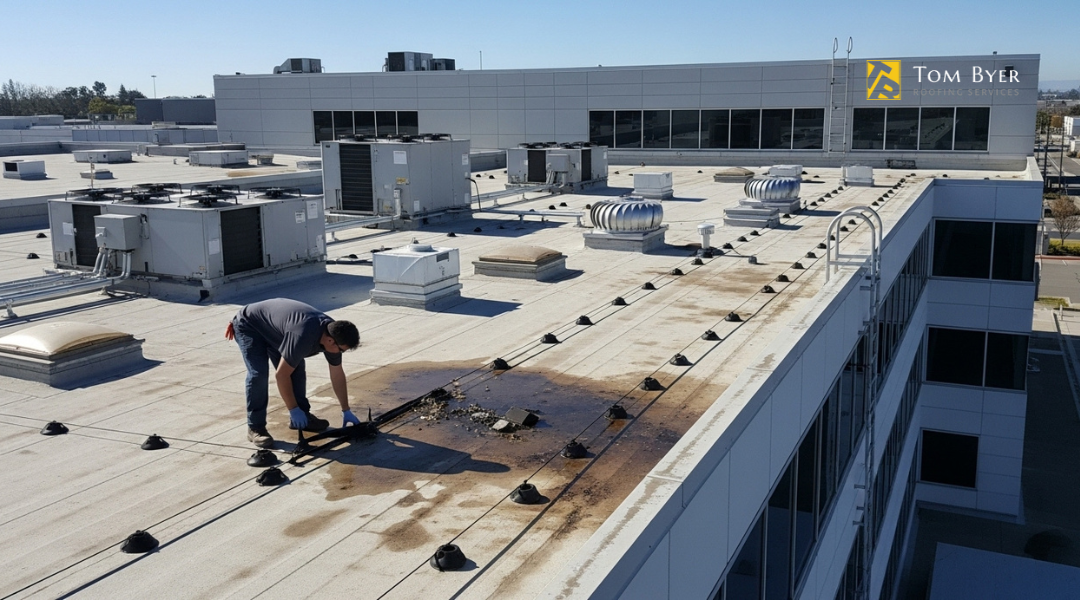
Routine cleaning of debris and prompt repair of any cracks or blisters are essential to prevent damage. Maintenance often involves checking seals around vents and HVAC units installed on the roof.
Flat roofs may need recoating every 10 to 15 years to maintain waterproofing. Because commercial buildings often have equipment on flat roofs, these areas are prone to wear and punctures, which require timely attention to avoid costly repairs.
Pitched Roof Maintenance Considerations
Pitched roofs benefit from better natural water runoff, reducing issues related to standing water. This lowers the risk of leaks and helps extend the roof’s structural integrity.
Maintenance focuses on clearing gutters, inspecting shingles or tiles for damage, and replacing any broken or missing materials. Regular checks after storms are important to catch damage early.
Pitched roofs require fewer repairs over time but still need periodic inspection to maintain flashing and seals around chimneys or vents. Overall, their sloped design minimizes standing water and debris build-up, reducing maintenance efforts compared to flat roofs.
Lifespan Expectations and ROI Over Time
Pitched roofs usually last between 30 to 50 years, depending on the materials used and maintenance quality. Their durability often results in higher long-term value and lower repair costs.
Flat roofs generally have a shorter lifespan, around 20 to 30 years, with maintenance and recoating impacting longevity. However, lower initial installation costs may make flat roofs more budget-friendly upfront.
When evaluating return on investment, pitched roofs can reduce the frequency of costly repairs. Flat roofs offer usable rooftop space for equipment, but this can increase maintenance demands and expenses over time.
Which Roof Type Fits Your Commercial Property?
Selecting the right roof depends on the building’s size, purpose, and budget. Different industries often favor certain roof styles, and sometimes converting between flat and pitched roofs is necessary due to changing needs or building conditions.
Factors to Consider: Size, Use, Budget
The building’s size plays a key role in roof choice. Flat roofs are generally more cost-effective on large, square structures, making them suitable for warehouses or big-box retailers. Pitched roofs may be more practical for smaller buildings or those needing better water drainage.
Use impacts the decision as well. For example, industrial spaces often prioritize accessible rooftop systems, suited for flat roofs. Budget constraints can push owners toward flat roofs, which are usually cheaper upfront but may have higher long-term maintenance costs. Pitched roofs, while sometimes more expensive initially, tend to offer longer durability.
Common Roof Types by Industry (Retail, Industrial, Office, etc.)
Retail buildings often use pitched roofs to create an inviting visual appeal, with various styles and colors to match branding. Industrial buildings typically favor flat roofs for ease of equipment installation and cost efficiency.
Office buildings fall between both styles. Smaller or urban offices may have pitched roofs to enhance design, while corporate campuses might use flat roofs to maximize space for HVAC or solar panels. The climate of Orange County also favors flat roofs due to moderate rainfall but requires quality materials to avoid water pooling.
Flat-to-Pitched Conversions: When and Why
Conversions from flat to pitched roofs happen when water drainage problems persist or aesthetic improvements are needed. A pitched roof can extend the lifespan of an aging flat roof by addressing leaks and structural issues.
This change is also common when a business wants to repurpose space, adding attic storage or offices under a pitched roof. However, converting is a significant investment, requiring structural modifications and permits. Consulting experienced contractors, like Tom Byer Roofing Service, ensures the project suits the building’s needs and local regulations.
How Tom Byer Roofing Service Helps You Decide
Tom Byer Roofing Service provides thorough guidance to help businesses in Orange County choose between flat and pitched roofs. Their approach combines hands-on assessments, tailored solutions, and deep local knowledge to support informed decisions.
Free Inspections and Consultations
Tom Byer Roofing Service offers free inspections to evaluate the current roofing needs and conditions. Technicians assess structural integrity, drainage, and energy efficiency requirements specific to commercial buildings in Orange County.
During consultations, they discuss how roof types affect installation costs, maintenance, and building use. This lets clients compare flat roofs, which are cost-effective and space-efficient, to pitched roofs that offer durability and better water drainage. All assessments are provided with no obligation, allowing businesses to consider options carefully.
Customized Roofing Solutions for Orange County Businesses
The company designs roofing plans based on each business’s size, budget, and purpose. For example, flat roofs can accommodate HVAC units or rooftop gardens, maximizing usable commercial space. Pitched roofs may be recommended for structures prone to heavy rain.
Solutions also factor in energy efficiency, local climate, and long-term maintenance costs. Tom Byer Roofing Service presents clear cost-benefit analyses to help clients prioritize features essential for their commercial property’s performance and longevity.
Local Expertise, Materials, and Long-Term Support
With extensive experience in Garden Grove and the wider Orange County area, Tom Byer Roofing Service understands regional weather patterns and building codes. This expertise guides material selection, ensuring roofs withstand heat, seasonal rains, and coastal conditions.
They recommend materials suited for flat asphalt roofs or traditional pitched roofing styles, emphasizing durability and warranty coverage. The company also provides ongoing maintenance and repair services, ensuring the roof remains reliable over time and protecting the client’s investment.