
Replacing or repairing your roof in Garden Grove can be a major financial decision, especially when unexpected damage or age-related wear makes quick action necessary. Understanding how roofing financing works helps you plan confidently and avoid stress when comparing payment choices. By learning how financing structures, loan terms, and city programs align with your budget, you can replace or repair your roof without putting your finances at risk.
You have multiple ways to pay for a new roof—from home improvement loans and contractor financing to local assistance programs like Garden Grove’s Re-Roof Loan Program, which offers deferred, low-interest support for qualifying homeowners. Each option comes with tradeoffs that affect long-term costs, interest rates, and flexibility. Knowing where financing applies and where it does not helps you target options that actually fit your home and situation.
Tom Byer Roofing Service has served Garden Grove for decades, guiding homeowners through both the technical and financial sides of roofing projects. With clear details about costs, scope, and payment structures, you can make practical choices that balance quality and affordability while protecting your investment for years to come.
Where Financing Applies And Where It Does Not
Financing can help you manage roof costs when the expense is high or unexpected. However, not every project or repair fits financing programs, since lenders, insurers, and contractors set different limits based on scale, urgency, and property type.
Full Replacements Versus Localized Repairs
You generally use financing for full roof replacements because they carry higher costs and require more materials and labor. A new roof in Garden Grove often runs from $12,000 to $20,000, which makes lump-sum payment difficult for most homeowners. Financing spreads that cost across months or years, letting you start work sooner.
For small, localized repairs, financing is less common. Minor leak fixes, flashing replacements, or shingle patches may cost under $2,000, making personal savings or credit cards more practical. Lenders also may not issue loans for small amounts or short durations because processing costs outweigh profits.
In most cases, a lender will expect a clear estimate outlining total replacement needs. This documentation helps ensure borrowed funds are used for full-scale restoration rather than piecemeal repairs that may not add long-term value.
Typical financing use cases:
| Project Type | Likely to Qualify for Financing | Common Funding Source |
|---|---|---|
| Full roof replacement | ✅ Yes | Home equity loan, HELOC, or personal loan |
| Patch repair or minor section | ❌ No | Cash or credit card |
Emergency Work Versus Planned Upgrades
Emergency roof work—such as after severe wind or water damage—often pushes homeowners toward short-term personal loans or contractor financing. The goal is fast approval and direct payment to start repairs quickly. These short-term loans may have higher interest rates due to urgency but can prevent more costly structural damage later.
Planned upgrades, such as when you want to upgrade your roof for energy efficiency or aesthetics, usually allow more time to compare financing terms. In these cases, you can explore home equity lines of credit (HELOCs) or FHA-backed improvement loans that offer lower rates and flexible repayment schedules.
When work is planned, it’s best to pre-qualify with several lenders, so you know your credit options before approving a contract. Emergencies rarely allow that time, so you focus on quick funding rather than long-term savings.
Tip: Keep an emergency reserve or credit option in place if your roof is nearing its expected lifespan (typically 20–25 years).
Insurance-Eligible Versus Discretionary Projects
When roof damage results from a covered event, such as a storm or falling tree, your homeowners insurance may pay much of the cost after your deductible. In this case, financing is used only for uncovered expenses—like deductibles, code upgrades, or optional material upgrades. Always review your policy limits before financing what insurance might reimburse.
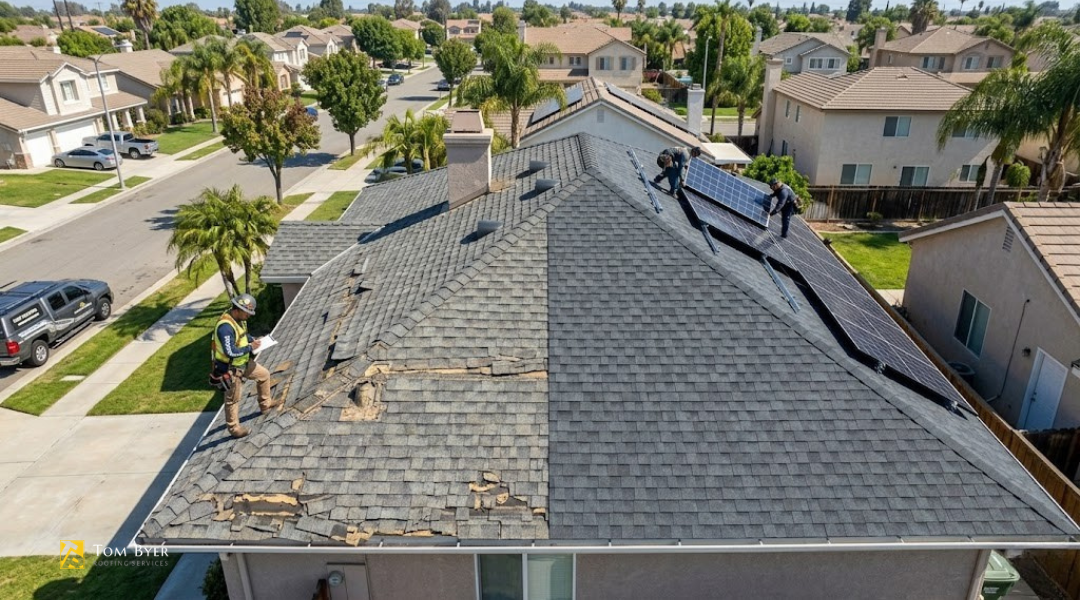
For discretionary projects, such as adding solar panels or upgrading materials from asphalt to composite shingles, you usually rely on loans rather than insurance. Lenders view these improvements as elective but add property value over time.
You can combine both forms of payment when appropriate. For example, insurance might handle structural replacement, while a loan covers your roof upgrade to higher-end materials that exceed base coverage.
Overview of coverage and funding:
| Project Type | Typical Payment Method | Insurance Involvement |
|---|---|---|
| Storm or hail damage | Insurance payout + deductible | High |
| Energy-efficient roof upgrade | Loan or savings | None |
| Adding solar panels | Roof loan or solar-specific financing | None |
Residential Versus Commercial Property Contexts
Residential roof financing is generally more accessible. Homeowners can apply for HELOCs, personal loans, or even in-house contractor loans with simple applications. The approval process depends largely on your credit score, home equity, and debt-to-income ratio.
Commercial properties face a more complex structure. Lenders consider business revenue, projected rental income, and property value. Loan amounts are higher, often reaching hundreds of thousands of dollars, and may require corporate guarantees. Financing might include commercial equity lines or Small Business Administration (SBA) loans for long-term improvements.
Because commercial roofs vary greatly—flat membranes versus pitched structures—contractors often stage the work. That means you may combine different financing sources for separate project phases.
For individual homeowners in Garden Grove, residential options remain simpler, faster, and more predictable.
How Roofing Financing Structures Actually Function
Roofing financing uses several payment models that align lender, contractor, and homeowner interests. You may borrow through equity-based products, personal credit, or dedicated home improvement loans, while contractors may manage payments through direct lender agreements or staged billing tied to project milestones.
Contractor-Arranged Financing And Lender Partnerships
Many roofing companies offer contractor financing through partnerships with third-party lenders. This lets you apply for a roof loan directly through your contractor instead of arranging your own credit. Contractors often work with lenders that specialize in home improvement loans, giving you faster approvals and fixed-rate terms.
You usually complete a short credit application and get a decision within minutes. If approved, the lender pays the roofing company after you sign an installation agreement. Interest rates vary by credit score, loan term, and project size.
You benefit from simplified paperwork and the ability to start work sooner. However, contractor-arranged plans sometimes carry higher rates or promotional terms that increase later. Always compare these offers with independent options such as a personal loan or home equity line of credit (HELOC) before agreeing to contractor financing.
Personal Loans, HELOCs, And Credit-Based Options
If you prefer to choose your own financing, you can use unsecured personal loans, secured home equity loans, or a HELOC. Each type affects your monthly cost and access to funds differently.
| Option | Secured By | Typical Use | Key Tradeoff |
|---|---|---|---|
| Personal Loan | None | Fast access, fixed payments | Higher rates |
| Home Equity Loan | Home equity | Lump-sum funding | Slower process |
| HELOC | Home equity | Draw funds as needed | Variable rate |
A personal loan works well for smaller roofs since it needs no collateral and pays out quickly. A home equity loan offers lower interest through your property’s value, but setup takes longer. A HELOC lets you borrow only what you need for unexpected cost changes, but payments may rise if rates increase. Compare lender fees, repayment terms, and credit score requirements across local HELOC lenders and banks.
Progress Payments Tied To Project Milestones
Some contractors prefer a progress payment system that links payments to specific project stages. You may pay a portion at contract signing, another when materials arrive, and the final balance upon completion. This structure helps you manage cash flow while giving the contractor financial assurance.
For example, a $12,000 roof might follow a 30/40/30 schedule:
- 30% at signing
- 40% after mid-project inspection
- 30% after final approval
Financed projects may have these milestones written into the loan. The lender releases funds as the roofer submits proof of progress. This protects your investment and prevents overpayment before work is done.
Insurance Claim Disbursement Timelines And Gaps
If your roof damage is covered by insurance, payouts may arrive in stages rather than all at once. Insurers often release an initial disbursement for materials and then a final payment after inspection. This can delay your contractor’s full payment if the paperwork process runs long.
Loan or credit options can help bridge that gap. A small home improvement loan, cash-out refinance, or HELOC draw can cover upfront costs until insurance funds arrive. When using this approach, confirm repayment timing with your lender so you don’t overlap loan payments and insurance disbursements.
Programs like the Weatherization Assistance Program or roofing grants may also supplement insurance shortfalls for qualified homeowners. Always verify eligibility and payment timing to ensure funds align with your roofing schedule.
Cost Composition And Scope Constraints In Garden Grove
Roof replacement in Garden Grove combines material expenses, local labor rates, and city permitting rules that shape what you pay and what work can move forward. Weather, code rules, and how contractors structure financing offers influence both cost control and project scope.
Material Systems And Lifespan-Driven Pricing Differences
Your total roof replacement cost varies mainly by the type of material you choose and the expected service life. Asphalt shingles are the most common and cost between $5 and $8 per square foot installed, lasting about 20–25 years. Clay tiles cost $10–$14 per square foot but can last 50 years or more if maintained. Metal roofs land in the middle, typically $8–$12 per square foot, offering long-term resilience against California’s heat.
Longevity often dictates real value rather than upfront savings. Shorter-lived shingles may seem affordable but require earlier replacement. Tile and metal systems, while more expensive, reduce lifetime maintenance and replacement risk. Some homeowners favor hybrid solutions, such as synthetic shake, that balance cost and durability.
Material weight also matters. Tile roofs can demand added framing support, raising both labor costs and permit complexity. By comparing product lifespan, installation demands, and local supply variation, you can identify where long-term savings outweigh higher initial cost.
| Material Type | Typical Range (per sq. ft.) | Average Lifespan | Notes |
|---|---|---|---|
| Asphalt Shingle | $5 – $8 | 20–25 yrs | Least expensive, basic warranty |
| Wood Shake | $9 – $11 | 25–35 yrs | Aesthetic appeal, higher upkeep |
| Metal | $8 – $12 | 40–50 yrs | Energy efficient, fire resistant |
| Clay Tile | $10 – $14 | 50–75 yrs | Heavy, durable, premium look |
California Code Requirements And Permit Cost Impact
Garden Grove follows California Building Standards, which outline how roofing materials, insulation, and drainage must perform. These codes factor into roof replacement costs because every major repair or replacement requires a city permit. Most permits cost $200–$500, but charges can increase if the structure is large or includes multiple roof planes.
Permit review ensures fire safety compliance, proper load capacity, and energy efficiency ratings. Contractors who miss these details can face re-inspection fees or stoppages that delay completion. You should verify that the contractor’s estimate lists permit expenses clearly. Some firms bundle permit processing; others expect you to pay it directly.
In certain zones, additional approvals—like solar readiness assessments or waste recycling plans—add modest administrative fees. Although small individually, these items raise total project cost if not identified early. Understanding inspection and code expectations upfront keeps your scope predictable and helps prevent costly revisions later.
What Financing Typically Bundles Versus Excludes
Many Garden Grove roofing contractors offer financing options that combine material, labor, and permit costs into a single loan or payment plan. Standard financing often covers core installation work, underlayment, and removal of debris. Some providers even roll minor repairs or gutter replacement into the same funding structure.
However, most financing programs exclude pre-existing structural issues, termite damage, or upgrades that fall outside code compliance. Homeowners loans and home equity credit lines may also omit optional add-ons such as skylight installation or solar mounts. You should review the Scope of Work line in every estimate to check what’s actually financed.
A typical bundled financing table looks like this:
| Included in Financing | Common Exclusions |
|---|---|
| Roof tear-off and disposal | Structural beam repair |
| New shingles or tiles | Dry rot or pest remediation |
| Labor and permits | Attic insulation upgrades |
| Flashing and vents | Solar attachment prep |
Knowing what your loan includes prevents short-term surprises and improves budget planning.
How Unforeseen Structural Issues Alter Financial Scope
Even when estimates seem solid, hidden issues often arise once older layers come off. In Garden Grove, roofs occasionally conceal rotted decking, termite damage, or corroded flashing. Discoveries like these can raise costs by 10–25% beyond your initial quote because repairs must occur before the new roof goes on.
Structural decking replacement often runs $2–$4 per square foot depending on material. Moisture intrusion near vents or chimneys can also demand replacement of insulation and framing. These repairs usually fall outside standard financing bundles and are billed as change orders.
It’s wise to request a contingency allowance in your project budget—commonly 10% of total cost—to handle discoveries that affect scope. Contractors familiar with older Garden Grove homes can estimate likely risk areas before work starts, but they cannot fully confirm conditions until demolition begins. Careful inspection and transparent communication keep financial scope steady when surprises occur.
Interpreting Tradeoffs Across Payment Choices
Funding a roof replacement involves more than just comparing interest rates. You balance cash flow, credit impact, and how quickly you can start the work against the total cost over time. Every financing option—from home equity loans to personal loans or contractor payment plans—comes with different costs and obligations that affect both your budget and risk.
Upfront Savings Versus Long-Term Repayment Burden
Low or zero-down financing can help you start your roofing project quickly, especially when you need emergency repairs. This approach can preserve your savings for other expenses, but it often leads to higher total costs over the life of the loan.
A home equity loan or HELOC typically offers lower interest rates but requires closing costs and longer repayment periods. While personal loans can fund your roof fast, they usually carry higher annual percentage rates (APRs). Comparing interest costs across these options helps you see how upfront affordability interacts with total repayment.
| Option | Typical Upfront Costs | Long-Term Cost Impact | Common Term Length |
|---|---|---|---|
| Home Equity Loan | Appraisal + Closing Fees | Lower Interest, Fixed Payment | 5–30 years |
| HELOC | Appraisal + Variable Fees | Variable Rates, Flexible Draws | 10–20 years |
| Personal Loan | Minimal or No Fees | Higher Interest, Faster Payoff | 2–7 years |
| Contractor Financing | Often $0 Down | Can Include Higher APRs | Varies by Provider |
Speed Of Funding Versus Cost Of Capital
The faster you can access funds, the more you may pay for that convenience. Personal loans and contractor financing often disburse funds in days, which helps if your roof leaks or you’re under weather pressure. However, lenders commonly charge higher interest to offset short approval times and lower risk verification.
In contrast, home equity loans and cash-out refinance options may take weeks because of appraisals, title reviews, and closing steps. These slower options can reduce your loan’s cost of capital through lower rates, especially if your credit and equity are strong. If you can wait for approval, slower funding methods often produce more stable monthly payments over time.
Flexibility In Terms Versus Contractual Rigidity
You may prefer loan structures that let you adjust repayment terms or access funds again later. A HELOC allows recurring draws within a set limit, which works well if you anticipate other home improvements. Yet, variable interest rates can change your monthly obligation, making budgeting harder.

Home equity loans and personal loans offer fixed payments and predictable payoff timelines, but they don’t allow extra draws once the loan closes. These rigid terms can provide simplicity and stability, though at the cost of flexibility. Contractor financing programs may fall in between—some feature promotional rates or deferred interest, but often include strict penalty clauses for late payments.
Key differences to note:
- Fixed-rate loans: predictable but inflexible.
- Variable-rate credit lines: adaptable but uncertain.
- Promotional financing: appealing upfront but costly if terms lapse.
Risk Exposure When Project Scope Expands Mid-Work
Roofing jobs sometimes uncover hidden problems like structural rot or flashing damage. When the scope expands, how you financed the project directly affects your exposure. If you used a HELOC or personal loan, you may apply for additional funds or adjust your draw amount more easily.
However, home equity loans and contractor financing plans usually lock in fixed totals at signing. Adding funds later can mean starting a new loan or renegotiating at higher rates. Using part of your emergency savings or maintaining available credit can help you manage overruns without missing contractor deadlines.
You reduce risk by planning for a 10–15% project buffer, especially when using rigid funding tools like second mortgages. This approach gives you options if costs rise while keeping long-term repayments within your comfort zone.
How Experienced Roofing Contractors Navigate Financing Realities
Skilled roofing contractors connect technical inspection results with practical financing solutions, matching real roof conditions to lender terms, insurance payouts, and customer budgets. They organize each step—from lender coordination to payment structure—to keep projects steady and predictable in both cost and timing.
Aligning Inspection Findings With Financing Feasibility
You begin every project by linking your inspection findings to financing options that suit the homeowner’s financial capacity. A detailed report that identifies code upgrades, storm-related damage, or full replacements helps set realistic expectations early.
Use specific cost estimates instead of ranges. For example, “$12,400 replacement with energy-rated shingles” is more helpful to lenders and clients than a broad quote. Clear documentation strengthens loan applications, particularly when paired with photos and material lists.
You may show clients side-by-side comparisons like:
| Roof Type | Estimated Cost | Typical Monthly Payment* |
|---|---|---|
| 3-tab asphalt | $9,000 | $165–$200 |
| Architectural | $14,000 | $250–$310 |
| Metal | $26,000 | $470–$550 |
*Based on 60-month financing with common consumer loan providers.
This approach lets you discuss repair scope together with realistic payment paths instead of forcing a decision based only on the total price.
Managing Timelines Between Lenders, Insurers, And Crews
You balance timelines by starting the lending process as soon as you share an estimate. Waiting for insurance or financial approval can delay crew scheduling, so experienced contractors prepare parallel timelines.
Lenders often approve roof loans within 1–3 days, while insurance decisions can take several weeks. You maintain project flow by confirming approval staging—loan documents, insurer confirmation, and deposit release—before committing labor scheduling.
Keep open communication among all parties. A practical method is to use a shared schedule showing approval date, permit issue, material delivery, and crew mobilization. This prevents gaps that cause rescheduling or idle time. By coordinating these moving parts, you stay productive and maintain a steady cash cycle.
Structuring Payments To Reduce Project Disruption
Payment structure affects your crew’s efficiency and your working capital. Many roofers use draw schedules that tie payments to key milestones, such as:
- Initial Deposit: Covers materials and permits.
- Midpoint Draw: Paid after tear-off or halfway completion.
- Final Payment: Released after inspection or funding confirmation.
If financing is involved, you can align these stages with lender or customer payment releases. Using fast‑funding platforms that deposit within 24–72 hours helps you pay suppliers and crews without short-term borrowing.
Tracking each payment stage in your job management software ensures you do not advance work without secured funds. This reduces stress and keeps job momentum even during high-volume periods.
Balancing Durability Decisions With Client Budget Limits
Clients often want premium durability, but you must guide them through cost-benefit tradeoffs that fit within financing terms. Framing the difference in monthly payments instead of total cost helps homeowners decide logically.
Use factual comparisons—for example, “Architectural shingles add $30 per month for 25 more years of lifespan.” Provide visual examples showing material life spans, maintenance needs, and warranty coverage.
| Material | Approx. Lifespan | Monthly Cost Increase | Warranty Range |
|---|---|---|---|
| 3-tab asphalt | 20–25 yrs | — | 10–20 yrs |
| Architectural | 30–50 yrs | +$30–40 | 25–50 yrs |
| Metal | 40–70 yrs | +$70–100 | 40–50 yrs |
This clear framing keeps the conversation focused on measurable durability rather than sales push. You help clients choose practical materials while protecting both performance expectations and financial comfort.