

When your roof suffers damage, the difference between a smooth insurance payout and a denied claim often depends on what you can prove. Photos, notes, and inspection reports become more than simple records—they act as evidence that tells the story of your roof’s condition. Accurate, verifiable documentation protects your investment and strengthens both insurance and warranty claims.
You need more than a few pictures to make that story credible. Organized, clearly labeled, and time-stamped documentation allows insurers or manufacturers to confirm your claim without guesswork. Standards like Claim Verifiability™ show how objective evidence builds trust and reduces disputes, turning your file into a self-contained proof of condition and scope.
At Tom Byer Roofing Service, every inspection and repair includes structured documentation that meets professional standards. You gain confidence knowing the information in your file can stand on its own—whether for an insurance claim, a warranty request, or a future inspection.
When Roof Documentation Becomes Material Evidence
Precise roof documentation transforms observations into verifiable records used in insurance and warranty decisions. The strength of your files affects how adjusters, inspectors, or manufacturers interpret roof conditions, identify causes, and determine whether coverage applies under a roof damage insurance claim or a warranty review.
Pre-Damage Records Versus Post-Incident Documentation
Evidence has more weight when it includes before-and-after records. Pre-damage documentation—such as inspection photos, installation reports, and maintenance summaries—shows the roof’s baseline condition. Post-incident documentation then clarifies what changed after a wind or hail event.
When handling a roof damage claim, your adjuster compares both sets of records to confirm that the reported damage did not exist before the incident. Without prior documentation, you may have to rely solely on visible signs, which are less persuasive.
| Documentation Type | Purpose |
|---|---|
| Pre-Damage Photos | Show original roof condition and workmanship quality |
| Post-Storm Photos | Confirm new or worsening damage after a specific event |
| Inspection Notes | Provide technical context and dates that link evidence to an event |
Clear timestamps, organized storage, and consistent terminology make these records credible in both warranty and insurance contexts.
Routine Maintenance Logs Versus Reactive Inspections
Maintenance logs often determine whether a claim is supported or denied. For insurance carriers, records of regular cleaning, sealing, and professional inspections show diligence. In contrast, if you inspect your roof only after a storm, the insurer may question whether the condition resulted from neglect or recent damage.
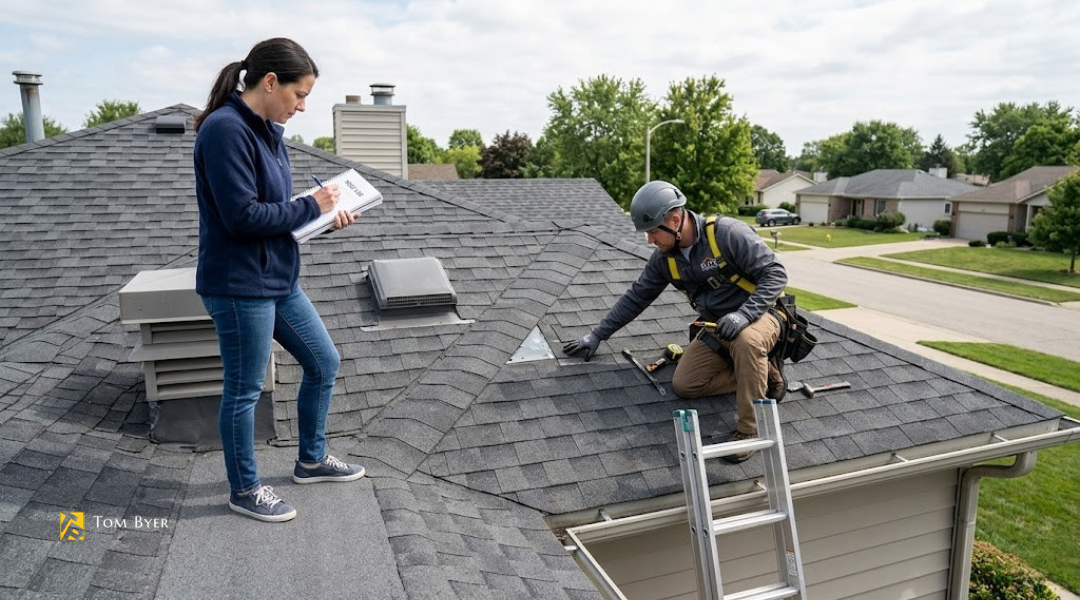
A practical schedule usually includes semiannual inspections and written notes on observed wear. Keep receipts for roof servicing, materials used, and dates of minor repairs. When a roof damage insurance claim is filed, these materials prove ongoing care rather than reactive action.
Reactive inspections still matter, but they are stronger when backed by a pattern of preventive maintenance. Together they create a timeline that strengthens cause and condition assessments.
Insurance-Driven Claims Versus Warranty Validation Scenarios
Roof documentation supports different standards in insurance and warranty cases. For roof damage insurance claims, the focus is on showing that a covered peril—like hail or wind—produced physical loss. Adjusters rely on dated photos, storm reports, and slope-by-slope condition logs.
Manufacturers reviewing warranty claims look instead for proof of proper installation, product maintenance, and compliance with care instructions. If your warranty excludes damage caused by poor upkeep or third-party alteration, detailed maintenance records can help establish eligibility.
| Scenario | Key Evidence |
|---|---|
| Insurance Claim | Storm correlation data, roof inspection reports, clear evidence of sudden damage |
| Warranty Claim | Installation documentation, service receipts, maintenance logs validating care standards |
Accurate file labeling and consistent photo quality make both scenarios easier to verify.
Situations Where Documentation Holds Limited Value
Documentation can lose weight when it lacks structure or credibility. Blurry photos, missing timestamps, and vague notes weaken both warranty and roof insurance claim reviews. Images showing only close-ups without roof context often fail to explain the location or scale of damage.
In some cases, even strong documentation cannot override policy or warranty exclusions. For example, normal wear or long-term shingle aging may not meet the definition of covered roof damage insurance. Similarly, manufacturer warranties rarely cover environmental staining or cosmetic impacts.
Avoid using unclear terms like “obvious damage” or “clearly storm-related.” Instead, describe what you actually see—split shingles, dented flashing, displaced granules—and link it to documented events when possible. Reliable, factual language helps evaluators focus on verifiable findings rather than assumptions.
What Constitutes Valid Roofing Documentation
Reliable roofing documentation uses dated visual evidence, organized records, and structured logs that verify installation quality and roof condition over time. Your documentation must clearly connect any claim to a covered cause, supported by proof that can be independently verified.
Photo Evidence Standards And Timestamp Requirements
Photo evidence is the foundation of any valid roof inspection file. Each image should be clear, labeled, and taken from consistent vantage points for every roof slope. Capture establishing shots of the entire structure, followed by close-ups of specific issues like cracked shingles, flashing gaps, or hail dents.
Use timestamped and geotagged photos whenever possible. Many insurance reviewers require verifiable dates to confirm that your documentation matches the claimed event. Digital tools or camera metadata can record this automatically, reducing disputes later.
Take photos under good lighting and from multiple angles. Check focus and avoid blurry images since unclear visuals are a common documentation mistake. Maintain an organized list of file names to match each image with the slope, elevation, or component photographed.
Tip: Include a brief written description under each photo identifying the location, damage type, and estimated cause, such as “north slope – lifted shingles – wind impact, 3/14/26.” This creates an audit trail that validators trust.
Invoices, Material Records, And Contractor Documentation
Accurate records of your roofing work support both warranty and insurance claims. Keep copies of itemized invoices, estimates, permits, and proof of payment. These documents prove that approved materials and licensed contractors handled the job.
Include manufacturer product labels and warranty registration forms. They confirm that shingles, flashing, and underlayment meet installation standards. For any repairs, request a certificate of completion stating the scope of work and contractor details.
Maintain a simple reference table like:
| Document Type | Purpose | Example |
|---|---|---|
| Invoice & Payment | Confirms cost and contractor | Payment receipt from ABC Roofing |
| Material List | Shows approved products | Owens Corning shingles label |
| Completion Report | Proof of finished work | Roof replacement certificate |
These records demonstrate proper installation methods and help you resolve any coverage questions years later.
Inspection Logs And Condition Tracking Over Time
Routine inspection logs show that you actively maintained your roof. Record each roof inspection date, the person performing it, and specific findings such as minor cracking, granule loss, or flashing wear.
A consistent log helps insurers verify that roof damage did not result from neglect. It also supports warranty compliance, since many warranties require documented maintenance and inspections.
Use simple entries such as:
| Date | Inspector | Condition | Actions Taken |
|---|---|---|---|
| 4/13/26 | Homeowner | Missing shingle at west slope | Temporary patch installed |
Store digital and paper copies together for easy access. Include annual inspections or post-storm checks. Over time, this evidence shows the difference between pre-existing issues and storm damage, strengthening your claim’s credibility.
Digital Storage Formats And Record Accessibility Expectations
Digital storage ensures you can retrieve documents quickly when filing a claim. Save your files in non-editable formats such as PDF or JPEG with embedded metadata. Back up all materials in at least two places—like external drives and secure cloud folders.

Maintain consistent file naming. A clear structure such as 2026-04-13_RoofInspection_WestSlope.JPG prevents confusion. Insurers often request digital packets organized by file type, so keep separate folders for photos, invoices, and reports.
Ensure accessibility for all parties involved in the claim. Give your contractor, adjuster, or warranty provider limited shared access to view or download your documentation. Reliable digital storage and version control prove that your records have not been altered, which preserves the evidence standard that claim reviewers depend on.
Interpreting Documentation In Claims And Disputes
Claim evaluators rely on clear, consistent evidence to verify the timing, extent, and cause of roof damage. Your documentation helps connect visible conditions to weather events, establishes whether damage is sudden or gradual, and supports your position during disputes with insurers.
Linking Visible Damage To Causation And Timelines
When you file a claim, you must link visible roof damage to a specific covered peril such as hail, wind, or impact. Adjusters look for time-stamped photographs, inspection reports, and repair invoices to confirm when the loss occurred.
If possible, match your records with weather data or contractor assessments that mention storm activity. This reduces the chance of the insurer questioning the link between the event and the damage.
| Document Type | Purpose |
|---|---|
| Time-stamped photos | Show when and where the damage appeared |
| Inspection report | Identifies cause and severity |
| Weather records | Support timing and event details |
Presenting consistent documentation strengthens your explanation of how hail dents, lifted shingles, or debris marks formed during a specific storm rather than over time.
Differentiating Wear And Tear From Sudden Damage
Insurers often deny claims when they decide the issue results from normal aging instead of a sudden event. You should show how the condition of cracked shingles, granule loss, or missing tabs differs from what would be expected from long-term wear.
Label your photos and note whether the damage pattern matches wind uplift, impact, or mechanical stress. For example, random missing shingles after one storm commonly indicate wind damage, while widespread granule erosion suggests old age.
Provide past maintenance or inspection records. Showing a clean inspection six months before storm damage often convinces an insurance adjuster that the change is recent and caused by a covered peril.
Gaps In Records And Their Impact On Claim Approval
Missing or unclear evidence often results in partial payments or denials. Adjusters need a complete set of documentation to verify every part of your claim. Incomplete photo sets or missing reports create room for uncertainty, which insurers usually interpret against you.
To prevent this, record roof conditions after every inspection, even when no damage is visible. Keep before and after photos for each slope and section.
A simple checklist helps track what you collected:
- Photos of all slopes
- Written description of damage
- Contractor or inspector notes
- Dates and weather event reference
Consistent records show that your claim rests on credible data rather than assumption or recollection.
Conflicts Between Insurer Assessments And Submitted Evidence
Disagreements between your records and the insurer’s evaluation can delay or reduce payment. An insurance adjuster might classify isolated lifted shingles as minor or unrelated to wind, while your inspection shows a clear storm pattern.
When this occurs, compare both assessments side by side. Highlight measurable details such as nail pull-throughs, direction of tear, or the spread of granule loss. Use side-by-side images, technician statements, and roof measurements to clarify discrepancies.
If communication breaks down, request a re-inspection or submit a contractor’s report for review. Objective documentation—photos, dates, and written findings—helps establish a factual basis for resolving the dispute without speculation.
How Tom Byer Roofing Service Approaches Documentation Standards
Tom Byer Roofing Service follows structured documentation methods that support insurance claim accuracy, roof performance tracking, and warranty validation. The company combines field data, image standards, and technical reporting methods to ensure that evidence meets both insurer and manufacturer requirements.
Aligning Field Inspections With Insurer Documentation Expectations
You receive a detailed inspection process that aligns with insurance carrier standards for claim verification. Tom Byer Roofing inspectors record the type, extent, and cause of damage during every site visit using forms modeled after insurer loss assessment templates. This ensures that the information you submit matches the expectations of claims adjusters.
Each inspection includes:
- Condition summaries for roofing materials and flashing
- Notes on potential contributing factors, such as hail, wind, or debris impact
- Time-stamped photographs that match each description
Inspectors use consistent terminology, such as “mechanical uplift” or “thermal cracking,” to prevent ambiguity. This level of precision helps the insurance representative confirm coverage eligibility and repair scope more efficiently.
Structuring Photo Records To Support Claim Validation
Your photo documentation follows a uniform file structure to simplify the review process and provide complete visual evidence. Tom Byer Roofing separates photographs by area, material type, and type of damage. Before-and-after images are labeled with capture dates and cross-referenced with inspection notes.
A sample file structure might include:
| Folder Name | Contents | Example Label |
|---|---|---|
| 1_Roof_Surface | Shingle damage, substrate condition | “Surface_NWCorner_041326.jpg” |
| 2_Flashings | Metal flashing deterioration | “Flashing_VentPipe_041326.jpg” |
| 3_Post_Repair | Final completed work | “Repair_Completed_042026.jpg” |
You gain a clearer chain of evidence linking each stage of work to a visible result. When insurers request supplemental proof or clarification, this organized visual record shortens approval times and reduces disputes over repair necessity.
Maintaining Consistent Logs For Long-Term Roof Performance
You benefit from maintenance logs that build a verifiable performance history over time. Tom Byer Roofing maintains a standardized log format combining inspection dates, repair details, and maintenance actions taken. Each entry includes who completed the work, materials used, and warranty-relevant notes.
This record allows you and your insurer to reference exact service timelines. It helps demonstrate that you kept the roof properly maintained—a factor that often influences coverage decisions and warranty compliance.
Routine entries also assist in identifying gradual wear patterns or recurring problem areas. That insight supports early intervention, helping extend the roof’s lifespan while maintaining documentation that strengthens any future claims.
Translating Technical Findings Into Verifiable Documentation
You receive documentation that converts technical roofing data into clear, standardized language that insurers and warranty reviewers recognize. Tom Byer Roofing inspectors translate pitch angles, material degradation, and weather exposure measurements into terms reflected in claim and warranty guidelines.
Reports often include tables that summarize metrics such as:
| Test / Observation | Measurement | Condition Code |
|---|---|---|
| Moisture Reading | 14% | Within Limit |
| Surface Granule Loss | 25% | Moderate Wear |
| Sealant Adhesion | 80% | Acceptable |
By structuring technical results this way, the information remains both specific and easy to verify. You can submit the report directly to your insurer or warranty provider as formal documentation, minimizing requests for reinspection or clarification.
Tradeoffs Between Documentation Effort And Claim Outcomes
Stronger documentation often leads to smoother insurance claim approvals, but it also takes more time, money, and organization. Choices about who documents the roof, how much detail to include, and how long to store records can affect both claim results and your overall workload.
Depth Of Records Versus Practical Homeowner Effort
Detailed records create trust with insurance adjusters by showing accurate and consistent evidence of roof conditions. This can include before-and-after photos, written notes on repair dates, and copies of contractor assessments. Such depth reduces the chance of disputes when claiming storm or wear-related damage.
However, maintaining this level of documentation requires discipline. You may spend hours sorting images, organizing files, and updating maintenance logs. For many homeowners, a balanced approach works best—record enough detail to prove damage but not so much that it becomes unmanageable.
A simple structure helps:
| Record Type | Frequency | Example Evidence |
|---|---|---|
| Photos | After storms | High-resolution roof images |
| Contractor Reports | Annually | Inspection summaries |
| Repair Receipts | When repairs occur | Invoices and warranty papers |
Consistent but practical record-keeping lets you protect your claim potential without making documentation an ongoing burden.
Professional Inspections Versus Self-Documented Evidence
A professional roof inspection offers credible, third-party proof that insurers typically trust. Certified inspectors use measurement tools, moisture meters, and detailed reports that describe damage type and extent. These reports often meet the documentation standards insurers prefer, especially for weather-related claims.
Self-documented evidence is cheaper and faster. Taking clear photos, noting the date and weather, and capturing close-ups of leaks or missing shingles can still build a solid file. Yet, it may miss subtle issues like underlayment damage or hidden moisture entry that only trained inspectors detect.
You could mix both methods: document visible issues yourself regularly and schedule professional inspections annually or after major storms. This balance reduces cost while keeping your proof credible and complete.
Cost Of Documentation Versus Potential Claim Value
You should weigh the cost of documenting your roof against the possible claim payout or warranty benefit. Hiring inspectors, buying quality photo equipment, or storing cloud-based data all add expense. For newer roofs or small sections, heavy documentation may not justify the cost.
For older or high-value roofs, thorough records may save thousands during a claim. Insurance adjusters often approve claims faster when supported by professional-grade evidence. Spending a few hundred dollars upfront can prevent underpayment or denial later.
If you want a clear guideline, consider this approach:
- Low-value claim risk: Use self-documentation.
- Moderate to high-value risk: Include at least one professional report.
This method keeps spending in proportion to potential reimbursement.
Long-Term Record Keeping Versus Short-Term Convenience
Roof warranties and insurance policies often last years, so losing older documentation can weaken future claims. Keeping digital copies of inspection reports, invoices, and photos in a secure cloud folder provides lasting protection. Label files by year and event to make retrieval simple.
Short-term habits—like storing images only on a phone or skipping backups—may save time early on but create problems later. When insurers ask for prior roof evidence, incomplete records can slow approval or lower payout.
A long-term system requires small but steady effort. Set quarterly reminders to upload new photos, update maintenance logs, and archive receipts. Over time, this organized record keeps your roof claim-ready without extra last-minute stress.