

Ventilation and heat control in a single-story stucco home in Orange County play a major role in your comfort and utility costs. The region’s warm, dry climate means trapped attic air and unventilated wall spaces can quickly raise indoor temperatures. Effective ventilation keeps your home cooler, prevents moisture buildup, and reduces stress on your air conditioning system.
You live in a climate where coastal breezes and summer heat shift fast, so balanced airflow is essential. Proper vent placement, attic insulation, and heat-dispersing roof materials help you maintain consistent indoor temperatures. Small details—like the type of vents used, their location, and the roof’s color—decide how well your home handles daily heat swings.
Stucco walls add another layer of complexity because they seal tightly and trap heat when ventilation is poor. When your roof, vents, and stucco system work together, the home breathes naturally and stays energy-efficient. Learning how each part contributes gives you the knowledge to make informed upgrades that enhance comfort and protect your investment.
Applicability To Single-Story Stucco Structures
In single-story stucco homes, heat control and airflow depend on how the roof, attic, and wall assemblies handle sunlight and ventilation. The performance of vents, insulation type, and placement directly affects indoor comfort, energy use, and structural longevity in Orange County’s coastal and inland climates.
Roof-To-Wall Heat Interaction Patterns
Your roof collects most of the sun’s thermal load during the day. In a single-story layout, that heat tends to move downward into the attic and transfer through the ceiling to living areas. Proper attic ventilation removes hot air before it warms the rest of the house. Ridge and eave vents improve this heat release when paired correctly.
A stucco exterior helps buffer heat at the wall surface because it absorbs and slowly releases warmth. However, that benefit can decline if your attic vents are undersized or if insulation blocks airflow at the eaves. In Orange County’s warm afternoons, you can limit heat buildup by combining continuous attic vents with radiant barriers and R-30 or higher insulation.
| Area | Heat Concern | Recommended Action |
|---|---|---|
| Attic | High temperature buildup | Add ridge and soffit ventilation |
| Wall-Ceiling Junction | Trapped hot air pockets | Maintain open eave airflow |
| Exterior Walls | Delayed heat release | Use light-colored stucco or reflective coatings |
Even small improvements, like sealing leaks around vent housings, can reduce attic temperature spikes by several degrees.
When Multi-Story Or Non-Stucco Homes Differ
You face different conditions if your home includes multiple levels or uses siding instead of stucco. Multi-story homes have more vertical air movement, and heat often rises into upper floors before escaping, changing how vent systems are balanced. A single-story structure, by contrast, spreads heat more evenly but requires steady attic airflow to offset it.
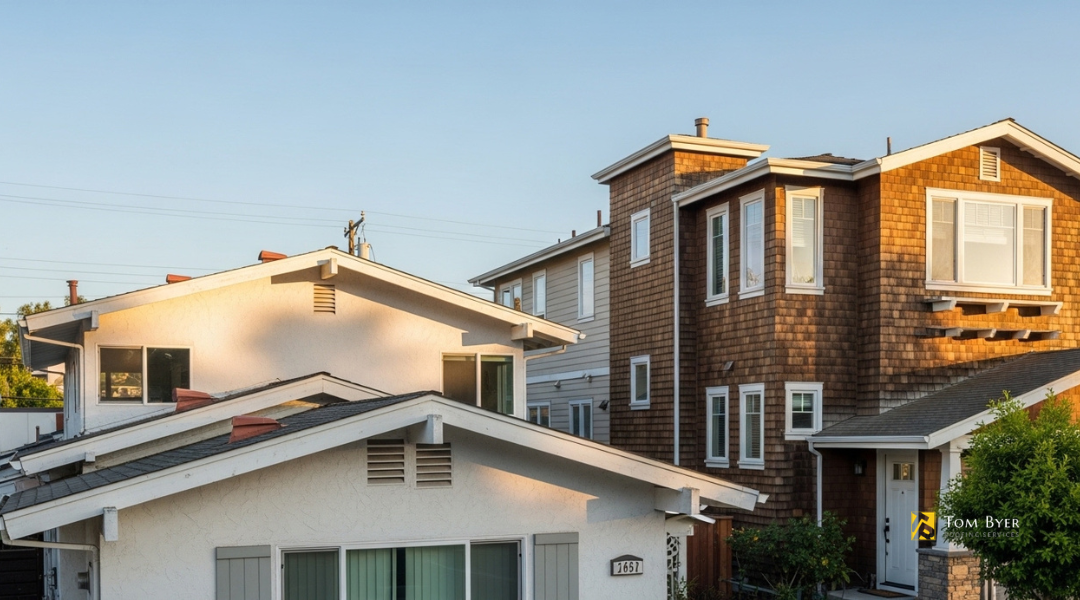
Non-stucco claddings such as vinyl or wood respond faster to daily temperature swings. They do not hold heat as long, so they rely more on insulation layers for temperature control. Stucco, being denser, slows heat transfer and stabilizes wall temperatures.
Orange County’s mild winter nights and warm summers make this difference more noticeable. You gain most efficiency when your roof, venting, and stucco systems work together as one continuous air and heat control assembly, preventing hot air from staying trapped near the ceiling line.
Climate-Driven Heat Behavior In Orange County
Orange County’s mild Mediterranean climate creates steady but noticeable heat variations shaped by distance from the coast and seasonal sun angles. Understanding how these local conditions influence surface temperatures and indoor heat build-up helps you design better ventilation and cooling strategies for stucco homes.
Coastal Vs Inland Thermal Variation
Temperature differences between coastal and inland Orange County strongly affect heat transfer through walls and roofs. Coastal areas such as Newport Beach or Laguna maintain moderate highs—usually in the low 70s°F—because ocean breezes and marine layers cool building surfaces. Inland zones like Anaheim or Yorba Linda often exceed 90°F during summer afternoons, creating higher thermal loads on exterior stucco surfaces.
Stucco, with its dense cement base, absorbs and stores daytime heat. Coastal air movement helps release this heat overnight, but inland conditions trap warmth longer. You can reduce evening heat gain by using lighter stucco colors, installing radiant barriers, and maintaining attic ventilation.
| Location Type | Average Summer High | Evening Cooling Rate | Typical Impact on Stucco |
|---|---|---|---|
| Coastal | 72–78°F | Fast | Lower stored heat |
| Inland | 88–95°F | Slow | Higher stored heat |
Seasonal Heat Load And Solar Exposure Angles
The intensity and direction of sunlight shift through the year, changing how much heat your home absorbs. During summer, the high sun angle concentrates direct radiation on roofs and south-facing walls, which often leads to attic temperatures above 120°F. In winter, the lower sun path warms east- and west-facing façades instead.
Roof pitch, window orientation, and shading design all influence how effectively your home manages solar heat. Installing wide eaves, window awnings, or shade trees lowers exposure to midday sunlight. Consider that in coastal neighborhoods, morning fog reduces solar gain early in the day, while inland areas receive full sun almost immediately, increasing daily heat accumulation and indoor temperature swings.
Ventilation Pathways And Thermal Regulation Systems
Effective ventilation and heat control in a single-story stucco home depend on how air moves through the attic and building envelope and how insulation and vent components manage thermal exchange. Proper design helps regulate temperature, maintain indoor air quality, and protect structural materials from moisture damage.
Passive Airflow Routes Across Attic And Envelope
Air moves through your home naturally when warm air rises and exits through higher openings while cooler air enters lower points. In your attic, well-designed passive airflow depends on a balance between intake and exhaust vents. When balanced, these pathways reduce heat buildup in the attic and limit the load on your air conditioning system.
The building envelope—walls, ceilings, and roof—acts as both a barrier and a guide for airflow. Airtightness in the envelope prevents uncontrolled leakage but still requires intentional ventilation routes to meet ventilation requirements. In Orange County’s mild coastal climate, these passive flows are often enough to maintain comfort when supported by ceiling fans or a small mechanical ventilation system.
You should keep airflow pathways clear of insulation blockages and sealed penetrations. Even a small restriction can reduce natural air exchange and cause trapped heat near the roof sheathing, which accelerates wear on materials like underlayment and shingles.
Role Of Soffits, Ridge Vents, And Insulation Layers
Soffit and ridge vents create a simple, effective airflow pattern through the attic. Cool air enters through the soffits under the eaves and travels upward to exit through the ridge vent. This steady movement limits attic temperatures and prevents condensation caused by humid inland air meeting cooler roof surfaces.
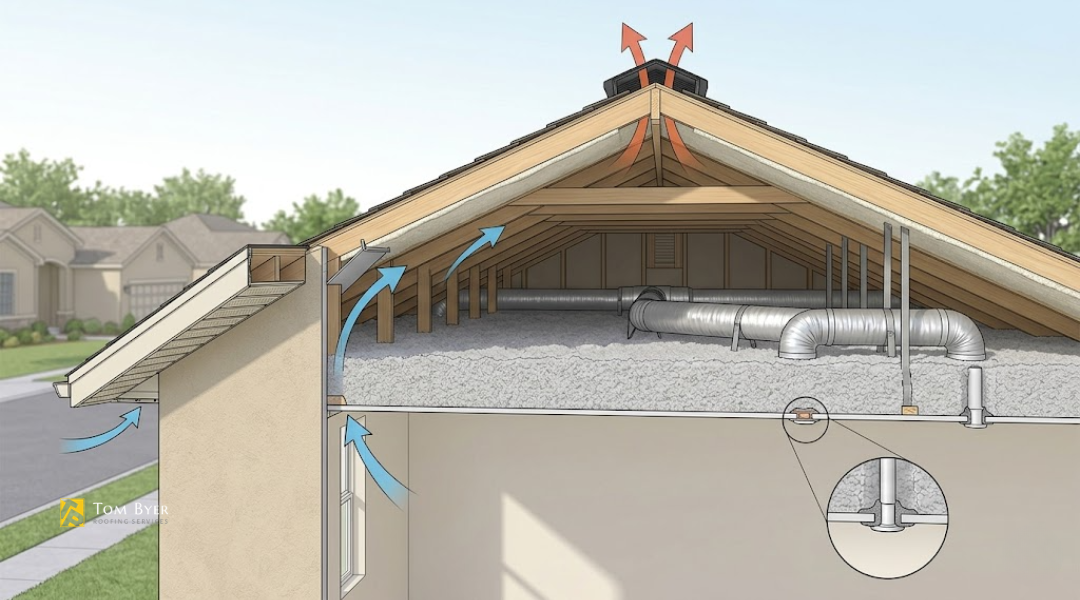
Insulation layers work together with these vents to control conductivity. In a stucco home, insulation placed above the ceiling and along the roof deck reduces heat transfer into living areas. Properly installed insulation helps maintain stable indoor conditions while ventilation removes excess heat.
Homes that combine passive venting with a balanced ventilation system—where intake and exhaust rates are equal—achieve better air quality and lower energy use. Keeping ducts sealed and vents unobstructed ensures that outdoor contaminants and moisture do not circulate indoors, preserving building efficiency and occupant comfort.
Roofing System Influence On Heat Retention Patterns
In warm coastal climates like Orange County, your roof acts as a primary barrier controlling how much solar heat enters or escapes your home. The materials, layers, and surface treatments all influence the building’s thermal behavior and your cooling costs.
Material Reflectivity And Thermal Mass Impact
Roof materials vary in how they absorb and release heat. Stucco homes often pair with clay tile or asphalt shingles, which behave differently under direct sunlight. Clay or concrete tiles have high thermal mass, meaning they absorb heat during the day and release it slowly after sunset. This can help stabilize indoor temperatures but may trap heat longer after hot afternoons.
In contrast, cool roofs or light-colored surfaces reflect more sunlight and absorb less radiant energy. Studies show that higher albedo surfaces can cut roof surface temperatures by over 10 °C in summer. Reflective coatings or laminated membranes reduce your roof’s contribution to indoor heat gain. However, these materials can slightly increase heating demand during cooler months, so the balance depends on local weather and insulation quality.
If you want to protect your roof from long-term damage, ultraviolet-resistant coatings and proper maintenance help preserve reflectivity. Simple cleaning of roof surfaces or reapplying reflective coatings every few years maintains performance.
Underlayment, Decking, And Heat Transfer Continuity
What lies beneath the roof covering shapes how heat moves into your living space. The underlayment—often synthetic felt or radiant barrier film—reduces radiant heat transfer from hot surfaces to the attic. Radiant barriers made of aluminum foil can block up to 95 % of infrared radiation, especially useful in dry, high-sun regions.
Your roof decking, typically plywood or oriented strand board (OSB), adds structural support but also acts as a conductive path for heat. Adding rigid insulation above or below this layer interrupts that continuity and slows heat flow into the attic.
Ensuring tight seams and sealed penetrations prevents moisture buildup that can degrade insulation efficiency. Adequate attic ventilation lets built-up heat escape instead of passing into ceilings. Together, these layers and details allow you to fine-tune how your roof retains, stores, or releases heat throughout the day.
Tradeoffs Between Ventilation Efficiency And Energy Retention
Maintaining indoor air quality while preserving conditioned air presents a constant challenge in single-story stucco homes. You must find an effective balance between airflow, temperature control, and long-term protection of building materials under California’s energy standards.
Balancing Airflow With Conditioned Air Loss
When you increase ventilation to improve indoor air quality, you also allow more conditioned air to escape. This exchange forces your HVAC system to work harder, leading to higher energy use and reduced efficiency. California Title 24, Part 6 of the Energy Code sets specific ventilation and energy performance requirements that help limit these losses. Meeting these standards keeps homes compliant and comfortable.
Key factors influencing this balance include:
| Factor | Effect on Efficiency | Example Solution |
|---|---|---|
| Air exchange rate | High rates can remove too much cooled or heated air | Use variable-speed fans |
| System controls | Continuous operation increases energy use | Apply demand-controlled ventilation |
| Heat recovery | Helps recover lost energy from exhaust air | Install an energy recovery ventilator (ERV) |
In Orange County’s mild coastal climate, humidity is generally moderate, which allows many homes to use controlled mechanical ventilation rather than always depending on open windows. Properly adjusted systems balance health, comfort, and compliance with California energy efficiency rules.
Long-Term Structural And Moisture Implications
Poor ventilation design can trap moisture within a stucco wall or attic, leading to deterioration over time. Excess humidity may damage insulation, warp framing, and reduce the reflectivity of roof coatings. Moisture buildup also increases the risk of mold, affecting indoor air quality and repair costs.
Energy-retaining designs sometimes seal a home too tightly. This limits the natural air exchange needed to dry building materials after coastal fog or winter rains. To mitigate this, use balanced ventilation strategies that meet California Title 24 energy-efficiency compliance standards.
Recommended practices:
- Include vapor barriers in wall assemblies.
- Provide attic venting sized for your roof area.
- Inspect exhaust ducts for leaks or blockages.
By combining steady ventilation with moisture control, you extend the life of the structure and maintain the performance levels required under Part 6 of the California Energy Code.