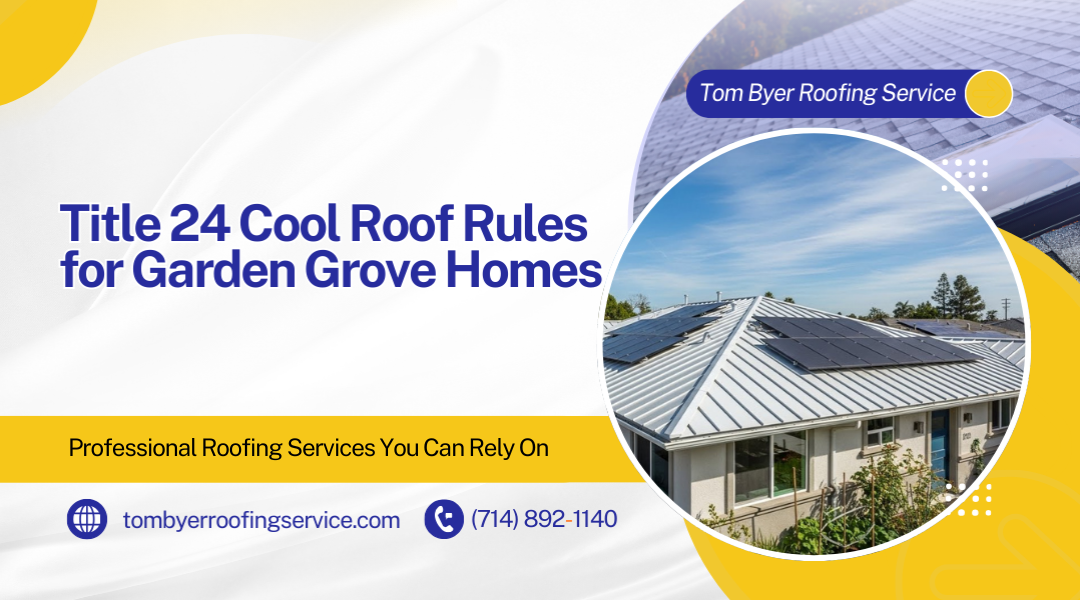
If you’re planning a roof replacement in Garden Grove or anywhere in Orange County, understanding California’s Title 24 cool roof requirements can save you from costly compliance issues down the road. Title 24 mandates that most residential re-roofing projects covering more than 50% of your roof area or exceeding 2,000 square feet must use cool roofing materials that meet specific solar reflectance and thermal emittance standards. These requirements took effect in 2023 and apply to virtually all significant roofing projects in your area.
Cool roofs aren’t just about following building codes. They reflect more sunlight and release absorbed heat more effectively than standard roofing materials, which directly reduces your cooling costs during Orange County’s hot summer months. The standards require your new roof to meet minimum performance ratings that vary based on your roof’s slope and the materials you choose.
Navigating Title 24 compliance involves understanding performance criteria, selecting approved materials, working with certified contractors, and properly documenting your project for inspections. This guide breaks down everything Garden Grove homeowners need to know about cool roof requirements, from the technical specifications to the long-term financial benefits of compliance.
Overview of Title 24 Cool Roof Requirements
Title 24 establishes minimum energy efficiency standards for roofing materials in California, requiring specific reflectance and emittance values. The California Energy Commission oversees these requirements, which apply when you replace more than 50% of your residential roof.
Purpose of Title 24 and Energy Efficiency Standards
Title 24, Part 6 sets the Building Energy Efficiency Standards for all construction in California. These standards reduce energy consumption in buildings by requiring materials and designs that limit heat gain and cooling costs.
The energy efficiency requirements update every three years to reflect new technology and performance data. Cool roofs help your home stay cooler by reflecting sunlight rather than absorbing it as heat.
When you install a cool roof, you lower your air conditioning needs during hot months. This cuts your energy bills and reduces strain on California’s power grid during peak demand periods.
The standards also address the urban heat island effect, where built-up areas become significantly warmer than surrounding regions. Cool roofs help moderate outdoor temperatures in neighborhoods and cities.

Applicability to Residential Re-Roofing Projects
The 2022 Title 24 standards apply to your re-roofing project when you replace or recover more than 50% of your roof area. Garden Grove and most of Orange County fall in Climate Zone 10, where cool roof requirements are mandatory for low-sloped residential roofs.
For low-sloped roofs with a pitch of 2:12 or less, you must use materials with:
- Aged solar reflectance of at least 0.63
- Thermal emittance of at least 0.75
- Or a Solar Reflectance Index (SRI) of at least 75
Steep-sloped roofs have less stringent requirements, needing only a minimum aged reflectance of 0.20. The “aged” values account for how materials perform after three years of weather exposure.
Your roofing materials must be rated and labeled by the Cool Roof Rating Council (CRRC) to demonstrate compliance.
Role of the California Energy Commission
The California Energy Commission develops and enforces the energy efficiency standards in Title 24. This state agency updates the standards every three years based on research, testing, and public input.
The Commission provides climate zone maps, compliance software, and technical guidance to help you meet the requirements. You can use their online tools to confirm your property’s climate zone and specific cool roof obligations.
Your local building department enforces Title 24 during the permitting process. They verify that your chosen roofing products meet the standards through CRRC documentation and compliance forms.
The Commission maintains the standards to balance energy savings, construction costs, and environmental benefits. They analyze how changes affect both new construction and existing buildings undergoing renovations.
Key Cool Roof Performance Criteria
Title 24 evaluates cool roofs based on three measurable properties that work together to reduce heat absorption. Your roofing materials must meet specific thresholds for solar reflectance, thermal emittance, and SRI values to comply with California’s energy standards.
Solar Reflectance Standards
Solar reflectance measures how much sunlight your roof bounces back instead of absorbing. The scale runs from 0 to 1, where higher numbers mean better reflection.
For residential re-roofing projects in Garden Grove and Orange County, your roof typically needs a three-year aged solar reflectance of at least 0.20 for steep-slope roofs. Low-slope roofs have stricter requirements, usually needing a minimum aged reflectance of 0.63.
The three-year aged value matters because roofs naturally collect dirt and weather over time. This aging factor provides a more realistic measure of long-term performance. Fresh roofs often have higher reflectance values that decrease as the roof ages.
Your climate zone affects the exact requirements. Most of Orange County falls under zones that require cool roof compliance for residential alterations when you replace more than 50% of your roof area.
Thermal Emittance Requirements
Thermal emittance measures your roof’s ability to release absorbed heat back into the atmosphere. This property works on a scale from 0 to 1, with higher numbers indicating better heat release.
Title 24 typically requires a minimum thermal emittance of 0.75 for steep-slope residential roofs. Low-slope roofs need at least 0.75 as well. The combination of high reflectance and high emittance creates the most effective cool roof system.
Some roofing materials naturally have high emittance values. Metal roofs, tile, and certain coatings often exceed the minimum requirements. Your contractor should verify both the reflectance and emittance values before installation.
Solar Reflectance Index (SRI)
The Solar Reflectance Index combines both reflectance and emittance into a single number. SRI uses a scale where standard black has a value of 0 and standard white equals 100.
You can meet Title 24 requirements using SRI instead of separate reflectance and emittance values. Steep-slope residential roofs typically need a minimum aged SRI of 16. Low-slope roofs require an aged SRI of at least 75.
SRI gives you flexibility in choosing materials. A roof with moderate reflectance but excellent emittance might still meet the SRI threshold. This option lets you select darker colored roofs that still perform efficiently.
CRRC Certification and Labeling
The Cool Roof Rating Council provides independent testing and certification for roofing products. Title 24 requires all roofing materials used for compliance to have CRRC ratings and labels.
Your roofing contractor must use products listed in the CRRC database. Each product receives a unique identification number that appears on packaging and documentation. This system ensures accurate reporting of reflectance, emittance, and SRI values.
CRRC testing follows standardized procedures that account for real-world aging. The three-year aged values in the database show you how products perform over time, not just when new. You can search the CRRC database online to verify your chosen roofing material meets Title 24 requirements before purchase.
Climate Zones and Local Code Considerations
California’s Title 24 requirements change based on your specific climate zone and building type. Garden Grove and Orange County fall into climate zones that require careful attention to cool roof standards for residential re-roofing projects.
Identifying Your Climate Zone
California uses 16 climate zones for building codes and green building standards. These zones account for different weather patterns and temperatures across the state. You need to know your exact climate zone before starting any re-roofing project.
Garden Grove and most of Orange County are located in Climate Zone 6. This zone covers coastal and inland areas of Southern California with mild winters and warm summers. Some parts of eastern Orange County may fall into Climate Zone 8 or 9, which have hotter temperatures.
You can check your property’s climate zone using the California Energy Commission’s climate zone maps. Your city building department can also confirm your zone during the permit application process.
Requirements for Garden Grove and Orange County
Climate Zone 6 has specific requirements for residential re-roofing under Title 24. For steep-slope roofs, which are common in residential buildings, cool roof requirements apply when you replace, recover, or recoat more than 50% or 2,000 square feet of your roof (whichever is less).
Your roofing materials must meet minimum aged solar reflectance (SR) and thermal emittance (TE) values. The aged values matter more than initial values because roofs lose some reflectivity over time from exposure to weather and dirt.
All products must be rated and labeled by the Cool Roof Rating Council (CRRC). You can verify that your chosen roofing materials meet Title 24 standards by checking the CRRC’s online Rated Products Directory before purchase.
Trade-Off Compliance Options in Warm Zones
Title 24 offers two main paths for compliance in warm climate zones like Orange County. The prescriptive approach requires your roof to meet specific minimum aged SR and TE values or achieve a minimum Solar Reflectance Index (SRI).
Some local cities in Orange County have adopted stricter requirements that go beyond state minimums. You should check with your local building department about any additional cool roof requirements or green building standards.
If your preferred roofing material doesn’t meet the prescriptive requirements, you may qualify for exemptions or alternative compliance methods. These options depend on your specific project type and climate zone.
Approved Cool Roofing Materials
Garden Grove and Orange County homeowners have several roofing materials that meet Title 24 cool roof standards. The right choice depends on your roof slope, climate zone requirements, and whether your product carries Cool Roof Rating Council certification.
Asphalt Shingles and Cool Shingle Options
Traditional asphalt shingles can meet Title 24 requirements when they have special reflective granules. These cool roofing shingles use ceramic-coated granules that reflect more sunlight than standard options. You need products with a CRRC rating that shows an aged solar reflectance of at least 0.20 for steep-slope roofs.
Many manufacturers now offer cool shingle lines in various colors. Lighter colors naturally reflect more heat, but newer technology allows darker shades to meet standards too. Look for products labeled as “cool roof rated” or “Title 24 compliant.”
Your roofing contractor should verify the CRRC product ID number before installation. This number proves the shingles meet California’s aged reflectance requirements. Most major brands publish their CRRC certificates on their websites.

Metal Roofing and Reflective Coatings
Metal roofing performs well for cool roof applications in Orange County. Factory-applied reflective coatings on metal panels can achieve aged solar reflectance values above 0.63 and thermal emittance above 0.75. These values exceed requirements for both low-slope and steep-slope applications.
Standing seam metal roofs and corrugated metal panels both qualify when they have proper coatings. You can choose from painted finishes or bare metal options that meet standards. Aluminum and steel are the most common base materials.
Field-applied coatings offer another path for metal roofs. White or light-colored elastomeric coatings can transform an existing metal roof into a Title 24-compliant cool roof. Your contractor must use CRRC-rated coating products and follow manufacturer application guidelines.
Concrete and Clay Tiles
Concrete and clay tiles naturally provide good thermal performance for residential roofing. These materials typically have high thermal emittance values around 0.75 to 0.90. Light-colored tiles easily meet the 0.20 aged solar reflectance requirement for steep-slope roofs.
You can find CRRC-rated tile products in many colors and profiles. S-shaped mission tiles, flat tiles, and interlocking designs all come in cool roof versions. White and terracotta colors perform best for solar reflectance.
Some tile manufacturers apply special reflective coatings or use light-colored concrete mixes. These products maintain the traditional tile appearance while meeting energy standards. Tiles also add thermal mass to your roof, which can provide an exception path in certain situations.
Alternative Roofing Solutions
Single-ply membrane systems work well for low-slope residential roofs. TPO (thermoplastic polyolefin) and PVC membranes achieve aged reflectance values of 0.63 or higher. These white membrane roofing materials meet the strictest Title 24 requirements in all Orange County climate zones.
Modified bitumen with a reflective cap sheet provides another option. The white granular surface reflects sunlight while the underlying layers provide waterproofing. You need products with CRRC ratings that confirm aged performance values.
Built-up roofing systems can meet standards when topped with reflective coatings or white gravel. Foam roofing with elastomeric coatings also qualifies as a cool roof solution. Your specific climate zone and roof slope determine which alternative materials work best for your home.
Documenting and Ensuring Compliance
Proper documentation and certified materials form the foundation of a compliant re-roofing project in Garden Grove and Orange County. You need to work with qualified contractors and use CRRC-rated products to meet Title 24 standards.
Certification and Permitting Process
You must obtain a building permit before starting your re-roofing project in Garden Grove or Orange County. The permit application requires documentation showing your chosen roofing materials meet Title 24 energy efficiency requirements for your specific climate zone.
Your contractor should provide product data sheets that include CRRC ratings for thermal emittance and aged solar reflectance. The building department will review these documents to verify compliance before issuing your permit.
Most jurisdictions require a Title 24 compliance report as part of your permit package. This report confirms your roofing materials meet the minimum reflectance, emittance, or SRI values for your building type and climate zone. Keep all documentation, including product labels and installation records, for future reference and potential inspections.
Working with Qualified Roofing Contractors
You should hire contractors who understand Title 24 requirements and have experience with cool roof installations. Ask potential contractors about their familiarity with CRRC-rated products and Title 24 compliance procedures.
A qualified contractor will help you select appropriate roofing materials that meet code requirements while fitting your budget. They should handle permit applications and provide all necessary compliance documentation.
Your contractor must install roofing products according to manufacturer specifications to maintain their CRRC ratings. Proper installation ensures your roof performs as intended and maintains compliance with energy efficiency standards.
Role of the Cool Roof Rating Council (CRRC)
The CRRC rates and labels roofing products for their solar reflectance and thermal emittance properties. You cannot use roofing materials for Title 24 compliance unless the CRRC has rated and labeled them.
CRRC ratings provide standardized data that building departments use to verify code compliance. You can search the CRRC’s online database to find rated products that meet your project requirements.
The organization tests products using consistent methods and provides three-year aged ratings that account for weathering and dirt accumulation. These aged ratings give you accurate performance expectations for your roofing materials over time.
Benefits of Title 24-Compliant Cool Roofs
Cool roofs that meet Title 24 standards deliver measurable advantages for your home in Garden Grove and Orange County. These benefits range from cutting your monthly utility costs to making your home more comfortable during hot summer months.
Energy Savings and Lower Energy Bills
Cool roofs reduce the amount of heat your home absorbs from the sun. This means your air conditioning system doesn’t have to work as hard to keep your home cool.
Most homeowners see a reduction in cooling costs between 10% and 30% after installing a Title 24-compliant cool roof. The exact savings depend on your home’s insulation, the efficiency of your HVAC system, and how much direct sunlight your roof receives. In Orange County’s warm climate, these savings add up quickly over the summer months.
Your energy-efficient home becomes less expensive to maintain year after year. The money you save on energy bills helps offset the initial cost of your re-roofing project. Peak electricity rates in California make these savings even more significant during the hottest parts of the day.
Improved Indoor Comfort
A cooler roof creates a more comfortable living space throughout your home. The temperature difference between your attic and living areas becomes less extreme when your roof reflects sunlight instead of absorbing it.
You’ll notice fewer hot spots in upstairs rooms and more consistent temperatures from room to room. Your HVAC system can maintain your desired temperature more easily without constant cycling on and off. This steadier performance means less wear on your equipment and better comfort for your family.
During heat waves, your home stays more livable even if your air conditioning struggles to keep up. Second-story bedrooms become more comfortable for sleeping, and your attic doesn’t turn into an oven that radiates heat down into your living spaces.
Extended Roof Lifespan and Durability
Cool roofs last longer than traditional dark roofs because they stay cooler under the sun. Heat causes roofing materials to expand and contract, which leads to cracking and degradation over time.
A roof that reflects sunlight experiences less thermal stress throughout the day. This means fewer repairs and a longer time before you need another roof replacement. Many cool roof materials maintain their protective qualities for 20 to 30 years or more when properly installed and maintained.
The reduced surface temperature also helps prevent premature aging of sealants, adhesives, and other roof components. Your investment in a Title 24-compliant roof pays off through both immediate energy savings and long-term durability.
Environmental Impact and Urban Heat Island Mitigation
Your cool roof choice helps reduce greenhouse gas emissions by lowering electricity demand. Less energy consumption means power plants generate fewer emissions to meet cooling needs across the community.
Cool roofs also combat the urban heat island effect that makes cities warmer than surrounding areas. When many homes in Garden Grove and Orange County use reflective roofing, the entire neighborhood stays cooler. This reduces smog formation, which requires heat and sunlight to develop.
You contribute to cleaner air quality in your community while making your own home more sustainable. The cumulative effect of cool roofs across California helps the state meet its energy efficiency and climate goals.