
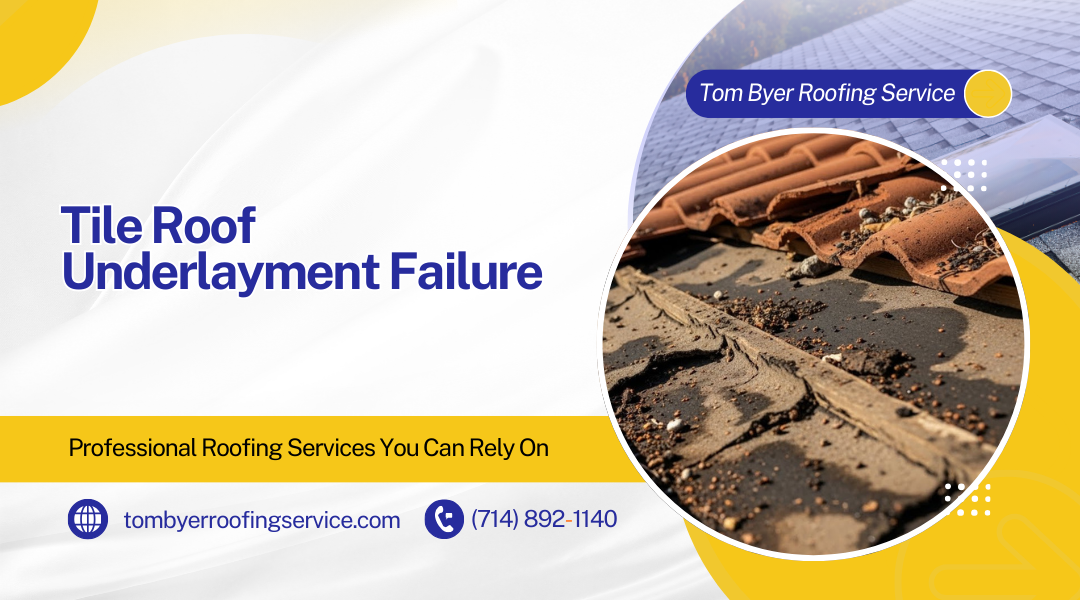
Tile roofs across Southern California often look flawless from the street, but what’s hidden beneath can tell a different story. Beneath those sturdy concrete or clay tiles lies an underlayment that silently protects your home from water intrusion and weathering. When that underlayment begins to fail, your roof’s hidden age reveals itself—and suddenly, a roof that looked strong can start leaking long before the tiles themselves wear out.
You might assume your tile roof will last decades without major concern, but underlayment materials have a much shorter lifespan than the tiles above them. Heat, sun exposure, and moisture trapped under tiles accelerate deterioration, especially in Southern California’s fluctuating coastal and inland climates. Recognizing the early warning signs can save you from costly repairs and protect your home’s structure.
At Tom Byer Roofing Service in Garden Grove, you gain decades of local experience in identifying, repairing, and replacing aging underlayment beneath tile roofs. Our work focuses on preserving both the performance and longevity of your entire roofing system—so you can keep the timeless look of your tiles while ensuring the protection beneath them lasts.
Why Tile Roofs Age Differently Than They Appear From The Surface
A tile roof can look solid long after internal components begin to deteriorate. What you see from the ground rarely reflects the true condition of the layers beneath the tiles, where moisture, heat, and movement quietly wear away the underlayment that keeps your home watertight.
Climate Exposure Patterns That Accelerate Breakdown
Southern California’s climate creates a unique aging process for tile roofs. Long, dry seasons followed by short bursts of heavy rain cause thermal expansion and contraction in the tiles and underlayment. This cycle stresses seams, fasteners, and flashing points, gradually weakening waterproof barriers.
Intense sunlight also accelerates material fatigue. Ultraviolet exposure breaks down asphalt-based underlayments faster, especially on south- and west-facing slopes. Over time, the material becomes brittle and loses flexibility, which allows wind-driven rain to penetrate below the tile layer.

Coastal areas experience additional stress from salt-laden air and humidity. These conditions corrode metal fasteners and battens that support the tile system. Combined with thermal cycling, this accelerates the overall breakdown of the roofing assembly, often years before the tile itself shows visible wear.
Roof Designs And Tile Systems Most Affected
Certain roof layouts and installation methods make some tile systems more vulnerable to premature underlayment failure. Roofs with low slopes hold moisture longer under tiles, increasing the risk of seepage through nail holes and overlapped joints. Conversely, very steep roofs can experience wind uplift that loosens tiles and exposes the membrane.
Lightweight concrete tiles, while durable, often rest on battens that trap water when drainage patterns are poor. Traditional mortar-set applications can also crack over time, allowing water to bypass the surface layer. When that occurs, leaks may appear far from the actual point of entry.
Roofs with complex valleys, skylights, or multiple ridgelines create additional stress points. These detailed areas require precise flashing and high-quality underlayment. Even small installation errors can shorten the practical service life of the waterproof layer beneath the tiles.
Conditions Where Underlayment Failure Is Less Relevant
Underlayment degradation matters less in certain conditions. Homes with well-ventilated attics and open roofing structures allow trapped moisture to evaporate quickly, reducing the impact of small leaks. In arid inland climates with consistent low humidity, minor underlayment wear progresses more slowly because water intrusion occurs less frequently.
Some tile systems, such as fully adhered membranes or synthetic underlayments, provide greater resistance to UV damage and heat. These materials retain flexibility longer and maintain a stronger seal between laps. Proper installation techniques—adequate overlap, sealed fasteners, and continuous flashing—can also extend performance even in older roofs.
If your property uses durable materials and benefits from balanced ventilation, you may see fewer symptoms of aging even after decades of exposure. However, regular inspection remains important to confirm that unseen areas remain watertight.
The Functional Role Of Underlayment Beneath Concrete And Clay Tile
Underlayment installed beneath tile roofing functions as a critical barrier system that manages water, temperature changes, and structural stress. You depend on it not just for waterproofing, but also for maintaining tile alignment, protecting the deck, and preserving the long-term service life of your roof.
Moisture Management And Secondary Weather Protection
Even in dry climates like Southern California, seasonal rain and wind-driven moisture can infiltrate through gaps between tiles. Underlayment provides a continuous secondary barrier that prevents water from reaching the plywood or OSB deck below.

High-quality products—such as modified bitumen or synthetic membranes—offer strong waterproofing properties and resist wrinkling from trapped humidity. This performance becomes especially valuable during wind events that lift or shift tiles.
In coastal or inland valleys, moisture also appears as condensation caused by temperature variation. A properly installed underlayment helps regulate vapor movement and allows limited breathability where needed. Without this layer, roof sheathing can absorb moisture, leading to rot or delamination over time.
Thermal Cycling, Fastening Stress, And Material Fatigue
Tile roofs expand and contract daily due to thermal cycling. In Southern California’s sun-exposed environments, these cycles can cause underlayment to stretch, shrink, and slowly degrade. Synthetic options outperform older asphalt felt because they tolerate higher temperatures and maintain tensile strength longer.
Fasteners—from nails to screws—penetrate through the underlayment and deck. Each fastener hole becomes a potential weakness under expansion and contraction forces. Selecting an underlayment with reinforced scrim backing reduces tear risk and maintains a weather-tight seal around penetrations.
Consistent heat exposure can also drive material fatigue. When the underlayment stiffens or becomes brittle, cracks form near overlaps or fastened points. Inspecting for early signs of brittleness or cracking helps prevent leaks before they reach the decking layer.
How Tile Weight And Movement Interact With Underlayment
Concrete and clay tiles are heavy materials, often weighing 600–1,000 pounds per square. That static load presses directly on the underlayment and deck structure below. When installed over battens, the layer must tolerate localized pressure points without deforming.
Tile movement can occur from wind lift, seismic activity, or uneven substrate. Each motion transfers small amounts of shear force into the underlayment surface. Durable membranes, particularly self-adhering types, distribute this load across the roof plane and resist abrasion.
Proper fastening and surface preparation are essential. A clean, smooth roof deck ensures consistent contact, preventing shifting that leads to premature wear. If your underlayment fails to support the weight and motion of tiles, even an intact roof covering can begin leaking long before reaching its expected lifespan.
Interpreting Failure Signals, Tradeoffs, And Replacement Timing
Tile roof underlayment can degrade quietly for years before major leaks emerge. You can prevent severe structural damage by distinguishing visible failures from concealed deterioration, understanding partial versus full replacement choices, and weighing the risks of delay against early action.
Visible Symptoms Versus Concealed Deterioration
Underlayment issues start small but grow quickly once moisture penetrates beneath the tile layer. You might notice stained ceilings, musty odors, or slipped tiles, which point to water intrusion. Exterior indicators—such as sagging rooflines or cracked ridge caps—often appear only after significant material decay.
Hidden deterioration is harder to detect. Ultraviolet exposure, heat from Southern California’s climate, and trapped debris can dry out or crack the underlayment even when tiles still look intact. Beneath the surface, small tears near valleys or flashings often allow slow leaks that rot roof decking over time.
Regular inspections by a qualified roofer let you track subtle degradation before symptoms become visible indoors. Because tile systems tend to outlast their underlayment by decades, routine checks around the 20-year mark help you make informed maintenance decisions instead of reacting to emergencies.
Partial Repairs Compared To Full Underlayment Replacement
You face a choice between spot repairs and complete replacement when underlayment begins to fail. Partial repairs cost less short term, since only specific damaged areas are lifted and re-sealed. This works if deterioration is isolated—such as under a broken tile or around a vent flashing.
However, patching seldom restores the continuous waterproof barrier needed under tile roofing. If the material has grown brittle or widespread cracking exists, replacing only sections can lead to uneven protection and repeated service calls. Full replacement removes the old layer, exposes the deck for inspection, and installs new waterproof material across the entire surface.
| Option | Expected Longevity | Relative Cost | Recommended When |
|---|---|---|---|
| Partial Repair | 3–7 years | Lower | Localized damage only |
| Full Replacement | 20–30 years | Higher | Aging or extensive wear |
A trusted contractor can identify whether the visible moisture damage runs deeper than surface-level defects, helping you choose the most cost-effective path.
Risk Tradeoffs Between Deferred Action And Proactive Intervention
Delaying underlayment replacement increases exposure to hidden leaks that compromise wood decking and structural framing. Once moisture infiltrates the roof system, repairs expand from underlayment replacement to include deck reconstruction or attic mold remediation—raising costs dramatically.
Proactive replacement may seem expensive, but it stabilizes your home’s weatherproofing and protects both interior finishes and insulation value. Acting early often saves you from larger insurance claims or extended property downtime after heavy storms.
You also balance safety and home value. Persistent leaks can weaken rafters and reduce resale appeal. By scheduling replacement before failures spread, you retain tile aesthetics while ensuring the system’s performance matches Southern California’s demanding heat and seasonal rain patterns.
How Underlayment Decisions Shape Long-Term Roof Performance
Your choice of underlayment determines how well your tile roof performs decades after installation. While the tiles protect against direct sunlight and debris, the underlayment serves as the true moisture barrier beneath. In Southern California’s dry climate with occasional heavy rains, this layer faces intense UV exposure and heat cycles that can shorten its lifespan if the wrong material is used.
Selecting high-quality synthetic or tile-specific underlayment helps maintain water resistance and prevent cracking. These materials typically last 30–50 years, compared with 10–20 years for older asphalt felt. The higher upfront cost is offset by fewer repairs and reduced risk of leaks developing under aging tiles.
| Material Type | Typical Lifespan | Key Characteristics |
|---|---|---|
| Asphalt Felt | 10–20 years | Low cost, limited UV resistance |
| Synthetic | 30–50 years | Strong, tear-resistant, UV stable |
| Rubberized Asphalt | 10–20 years | Self-sealing, good for valleys |
| Peel-and-Stick | 15–25 years | Excellent waterproofing, higher cost |
Correct installation is just as important as material selection. When underlayment overlaps are sealed properly and fasteners are aligned, your roof gains consistent protection against water intrusion. Poor workmanship, on the other hand, can shorten even premium materials’ performance.
Regular inspections every few years let you identify signs of wear early—such as wrinkling or exposed edge sections—before leaks reach the decking. By balancing material durability, installation precision, and ongoing maintenance, you ensure your tile roof in Southern California performs reliably far beyond its visible surface.


