
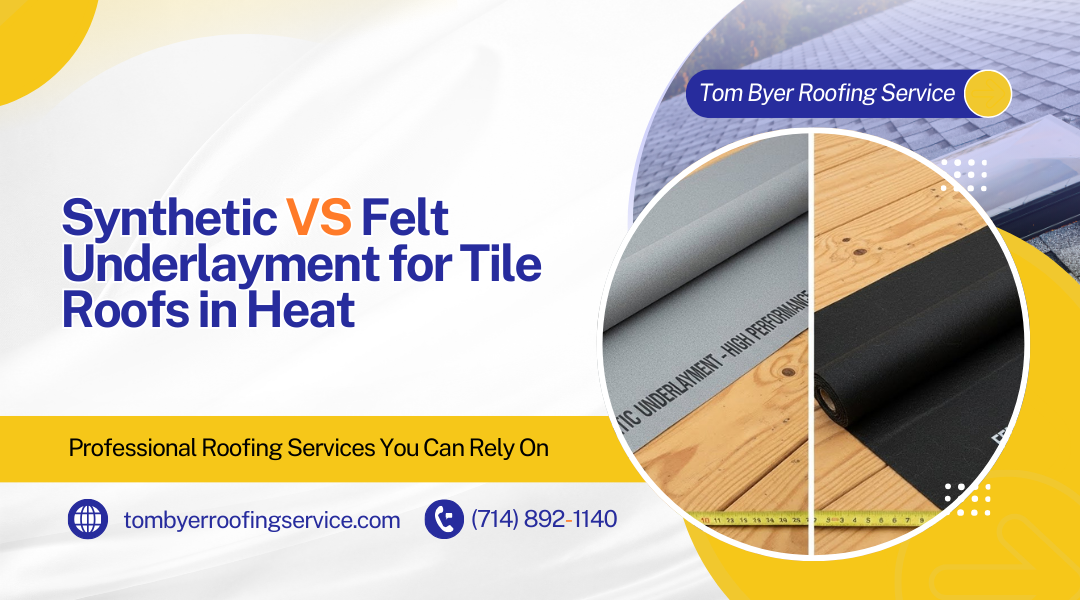
When replacing or repairing a tile roof in California’s hot, sunny climate, the underlayment beneath your roof tiles plays a bigger role than most property owners expect. It’s the hidden layer that protects your roof deck from heat, moisture, and long-term wear. For tile roofs exposed to year-round sunlight, synthetic underlayment often outperforms felt by offering stronger moisture resistance, longer life, and greater heat stability.
Choosing between synthetic and felt underlayment affects more than cost—it shapes how well your new roof handles expansion from heat, how it sheds moisture during rare rain, and how long it lasts before needing attention. Under tile, where airflow is limited and temperatures rise, even small differences in material quality can impact durability and maintenance cycles.
At Tom Byer Roofing Service in Garden Grove, you gain guidance from specialists who understand how underlayment reacts under heavy roof tiles and California’s intense sun. Your roof’s performance, lifespan, and long-term value depend on making the right choice now.
Why Underlayment Choice Matters More Under Tile Than Most Roof Owners Expect
Tile roofs look durable from the outside, but their strength depends on the layer beneath them. The underlayment is what actually keeps water, heat, and moisture out. Without the right material, even well-installed tile can allow leaks or heat buildup that shortens the roof’s life.
Because clay and concrete tiles are heavier and have small gaps between them, they rely on a tight, consistent barrier underneath. The underlayment acts as your roof’s secondary defense against rain and extreme sun exposure. In hot climates like Southern California, UV rays and high temperatures can dry and crack certain materials faster than expected.
Here’s a quick look at the main types you’ll compare:
| Underlayment Type | Common Name | Key Advantage | Possible Drawback |
|---|---|---|---|
| Felt underlayment | Roofing felt / Tar paper | Affordable and breathable | Can wrinkle or degrade faster in heat |
| Synthetic underlayment | – | Highly heat- and tear-resistant | Costs more upfront |
If you use felt underlayment, expect to replace it sooner under strong sun. The older roofing felt or tar paper absorbs heat and may lose oil content over time, reducing flexibility.
Modern synthetic underlayment resists UV damage and holds its shape better under tile weight. That stability helps when tiles expand or shift during temperature changes. For roofs in hot, sunny climates, the added durability of synthetic materials can make your entire tile system perform more reliably over time.
Climate Pressure Points That Separate Synthetic From Felt Performance
In hot, sunny regions like Southern California, roofing materials face constant stress from UV rays, heat buildup, and surface expansion. These pressures affect how long an underlayment holds its integrity, resists curling, and keeps moisture from seeping through during tile roof installations or repairs.
Prolonged UV Exposure During Installation And Repairs
Under a high-sun climate, UV stability becomes a key factor. Synthetic underlayments usually include UV inhibitors and reflective coatings that delay breakdown when left exposed between tile installation phases. You can typically leave synthetic sheets open for weeks longer than standard felt without losing performance.

Felt underlayment, by contrast, degrades faster when exposed. Its asphalt base softens, dries, and cracks under repeated sun exposure. When that happens, the material can warp or absorb moisture, reducing grip with the roof deck. This shortens the safe exposure window and increases the risk of leaks if a project is delayed.
For properties relying on gradual installation schedules, synthetic options limit heat-related aging while preserving slip resistance for workers. This stability during staged roofing work often offsets their higher upfront cost in hot climates.
Heat Retention, Expansion, And Surface Temperature Extremes
Tile roofs absorb and store large amounts of heat, especially on south-facing slopes. Felt underlayment tends to trap more of that heat because of its dark asphalt surface and lower reflectivity. Prolonged heat exposure can cause the asphalt to soften, making seams less secure.
Synthetic membranes resist heat deformation due to their polymer composition. Some products include reflective coatings that help manage surface temperature by reflecting sunlight before it penetrates deeper layers. Lower heat retention reduces roof deck stress and slows material aging beneath the tiles.
You’ll also notice less stretching and contraction with synthetics as rooftop temperatures change throughout the day. This stable dimensional performance helps maintain consistent coverage under heavy clay or concrete tiles that expand in direct sun.
Conditions Where Climate Impact Is Marginal Rather Than Decisive
In coastal or temperate microclimates near Garden Grove, the temperature is more moderate and daily UV radiation less intense. Under these conditions, both felt and synthetic underlayments can perform adequately if installed correctly and covered in a short timeframe.
If your roof sits in partial shade or benefits from strong ventilation beneath the tile layer, heat resistance becomes less of a deciding factor. Proper attic airflow, lighter tile colors, and adequate roof overhangs lessen thermal strain on either material.
When project schedules are quick and exposure to sunlight minimal, felt may still offer an economical and code-compliant solution. Yet even in mild conditions, a high-quality synthetic option provides extra durability if long-term maintenance cycles or repeated roof access are anticipated.
Material Behavior Beneath Tile Assemblies
Under tile roofs exposed to long hours of sunlight, both synthetic and felt underlayments face stress from heat, weight, and moisture cycling. How these materials interact with the deck, resist damage from fasteners, and manage trapped vapor plays a direct role in how long your roof performs as intended.
Tear Resistance, Fastener Holding, And Deck Interaction
Tile systems put constant tension on the underlayment from roofing nails, battens, and the tile’s own mass. Synthetic underlayments typically show greater tear resistance and maintain integrity even when tiles shift slightly over time. This strength helps reduce the risk of fasteners pulling through or edges fraying during installation or repair.
Felt underlayment, especially No. 30 felt, holds nails well when first installed but may weaken as oils dry out in heat. Once it dries, the paper mat can tear around nail heads, especially on steep or irregular decks.
A plywood or OSB roof deck pairs better with synthetic layers because these materials adhere consistently and don’t wrinkle when secured. In contrast, felt tends to wrinkle with humidity changes, making tile leveling harder and allowing slight air gaps that reduce contact between the tile and deck.
| Property | Synthetic | Felt |
|---|---|---|
| Tear resistance | High | Moderate |
| Weight | Light | Heavy |
| Nail retention | Strong | Weakens with age |
Vapor Permeability And Moisture Release Dynamics
In hot, sunny climates, vapor movement becomes a critical factor. You want an underlayment that serves as a moisture barrier while letting small amounts of vapor escape to prevent buildup beneath tiles. Synthetic sheets are engineered for limited permeability, controlling vapor diffusion but resisting liquid water. This balance helps keep the decking dry even when surface temperatures fluctuate.
Felt absorbs and releases small amounts of moisture but can stay damp longer after rainfall or tile washing. Extended dampness softens asphalt layers and may cause curling or blistering beneath high-temperature tiles.
Proper attic ventilation and thermal spacing help either product function better, yet synthetics generally maintain lower moisture retention over repeated wet-dry cycles, which supports longer deck life in areas like Garden Grove.
Aging Patterns Under Constant Load And Thermal Cycling
Tile roofs impose a steady compressive load on the underlayment while daily sun exposure drives large swings in surface temperature. Under these stresses, synthetic underlayments tend to remain dimensionally stable. Their polymer base resists cracking, shrinking, or oil leaching, even after years of heat cycling. This characteristic limits gaps that could allow dust or water intrusion.

Felt products age differently. The asphalt content breaks down under long UV exposure, especially if tiles shift and expose portions of the mat. Over time, the material becomes brittle and loses adhesion to nails or decking.
In high-heat zones, you may notice small brittle flakes appearing when sections are lifted. Regular inspection helps catch this early, but you can expect faster wear for felt underlayment beneath heavy tile assemblies.
Interpreting Tradeoffs Between Durability, Compatibility, And Risk
Selecting the right underlayment for tile roofing in a hot, sunny climate involves balancing heat resistance, installation precision, and material longevity. Each product type responds differently to stress from high temperatures, UV radiation, and mechanical movement. Knowing these tradeoffs helps you reduce early roof failure and improve long-term performance.
Failure Modes That Differ Between Felt And Synthetic
Tile roofs in intense heat expose underlayments to constant expansion and thermal cycling. Felt underlayment, especially asphalt-saturated or modified bitumen versions, can dry out over time, causing cracks and brittleness. As the material ages, its oils evaporate, reducing flexibility and water resistance. This breakdown accelerates when felt stays trapped under tiles that retain heat.
Synthetic underlayment, made from polypropylene or polyethylene, resists UV degradation much longer. It also holds up better to foot traffic during tile installation. However, some synthetics may deform under sustained heat if the type of plastic is not rated for high temperatures. Minor tears or punctures from tile battens can spread quickly without reinforcement.
| Failure Cause | Felt Response | Synthetic Response |
|---|---|---|
| UV exposure | Rapid drying and cracking | Gradual degradation over time |
| Moisture | Absorbs and weakens | Repels but may trap if improperly sealed |
| Heat cycling | Causes shrinkage | May soften in extreme heat |
Proper ventilation beneath tile battens can limit both materials’ stress loads.
Installation Tolerances And Error Sensitivity
Your roof’s lifespan often depends more on installation quality than on material choice. Felt offers some forgiveness because it grips the deck and tolerates limited fastener mistakes. Yet, excessive nailing or wrinkling from moisture can compromise its seal. Small misalignments may lead to overlapping gaps once tiles settle.
Synthetic products roll out smoother and stay flatter. Most include printed guides to align fasteners and overlaps correctly. Still, they demand accuracy. If seams are left unsecured, wind uplift can tear large sections or cause wicking during rain exposure.
Key installation risks in hot climates:
- Overdriven fasteners: can pierce both felt and synthetic, reducing weather resistance.
- Incomplete adhesion to modified bitumen flashings: can form capillary leaks.
- Improper walking surfaces during tile placement: increases puncture rates.
Long-Term Consequences Of Mismatched Underlayment Choices
When underlayment isn’t matched to tile weight or local temperature extremes, it affects the roof’s thermal and structural behavior. If you pair thin felt with heavy clay or concrete tiles, compression and trapped heat accelerate material fatigue. Over time, drying and curling may cause under-tile voids where moisture collects.
In contrast, high-grade synthetics handle compression well but demand compatibility with adhesives and flashings. Some synthetics may react poorly with asphalt-based modified bitumen components, loosening the bond at transition points. Checking both manufacturer data and local code listings prevents chemical or thermal mismatch.
Choosing based on short-term budget instead of material fit can create long repair cycles. Underlayment failure often remains hidden until interior leaks appear, making routine inspections essential even with top-grade products.
How Underlayment Selection Shapes Maintenance Cycles And Roof Longevity
Your choice of underlayment directly affects how often you need roof maintenance and how long your tile roof lasts. In hot, sunny regions like Garden Grove, heat and UV exposure can break down weaker materials, leading to premature wear. Selecting an underlayment that resists heat and moisture reduces repair needs and keeps your roof structure stable over time.
Synthetic underlayment typically performs better under constant sun. Its polymers resist drying, cracking, and stretching, which helps maintain a watertight barrier for decades. Felt underlayment, while less costly at first, often needs replacement sooner because heat makes it brittle and more likely to absorb moisture.
| Feature | Synthetic Underlayment | Felt Underlayment |
|---|---|---|
| Average Lifespan | Up to 40–50 years | About 12–20 years |
| UV Resistance | High | Low |
| Moisture Absorption | Minimal | Moderate to High |
| Maintenance Frequency | Low | High |
Fewer maintenance cycles mean lower long-term costs and less disruption for you. A roof system that stays intact also improves energy efficiency by keeping interior temperatures steadier and reducing heat transfer through the attic.
When you use durable underlayment beneath tile, your roof can better handle expansion, contraction, and foot traffic during inspections. This stability helps your tile roofing system perform consistently even in extended heat waves, adding years of service life while maintaining its protective function.


