

Choosing the right roof coating for your flat roof in Southern California isn’t just about picking a product off the shelf. Your decision affects how well your roof handles intense sun exposure, occasional rain, and the unique climate challenges that Garden Grove and surrounding areas present year-round.
For most flat roofs in Southern California, silicone coatings offer better waterproofing and UV resistance, while acrylic coatings provide easier application and better color retention at a lower initial cost. The right choice depends on your roof’s condition, your budget, and whether your roof experiences standing water after rain.
This analysis walks you through the basic properties of both coating types, examines how they perform under real Southern California conditions, and provides a practical framework for making a decision that fits your specific situation. You’ll learn what matters most for flat roofs in this region and how to weigh short-term costs against long-term performance.
What Readers Will Grasp From This Analysis
This analysis clarifies how silicone and acrylic roof coatings differ in real-world performance and why Southern California’s climate makes one coating type more suitable than the other for flat roofs.
Core Performance Differences Between Silicone and Acrylic on Flat Roofs
Silicone roof coatings excel at waterproofing. They handle ponding water without breaking down, which matters on flat roofs where water collects in low spots. Acrylic coatings absorb moisture over time and can fail when water sits on the surface for extended periods.
Durability and flexibility separate these two options. Silicone stays elastic through temperature changes and resists UV damage without chalking significantly. Acrylic becomes brittle in extreme heat and cold, leading to cracks that require more frequent repairs.
The coating thickness affects performance too. Silicone coatings contain about 95% solids, meaning almost all the material stays on your roof after application. Acrylic coatings have around 55% solids, so nearly half evaporates during curing. You get less protection per coat with acrylic.
Application differences impact your project timeline. Acrylic is water-based and easier to apply with standard equipment. Silicone requires spray application and careful surface preparation, but it adheres to wet surfaces and cures in humid conditions that would ruin an acrylic application.
How Southern California Conditions Determine the Superior Choice
Southern California’s intense UV exposure and temperature swings favor silicone roof coatings. Your roof faces direct sunlight most days, with temperatures reaching 90-100°F in summer. Silicone maintains its protective properties under this constant heat without degrading.
Minimal rainfall changes the equation for flat roofs in this region. While silicone handles ponding water better, Southern California receives only 10-15 inches of rain annually in most areas. However, when rain does occur, flat roofs still develop standing water that acrylic cannot tolerate.
The dry climate causes acrylic coatings to dry out faster, increasing brittleness. Your roof experiences daily temperature variations of 30-40°F between day and night. These cycles stress acrylic coatings, creating cracks that leak during rare but heavy winter storms.
Coastal properties face salt air exposure. Silicone resists salt degradation better than acrylic, which absorbs moisture from marine air and loses adhesion over time.
Fundamental Properties Shaping Coating Behavior
The chemistry of roof coatings determines how they perform on flat roofs in Southern California. Silicone offers superior water resistance and flexibility, while acrylic provides strong reflectivity and easier maintenance.
Silicone’s UV Stability, Flexibility, and Ponding Water Resistance
Silicone roof coating maintains its structure under constant sun exposure because of its strong UV stability. The coating doesn’t break down or crack when exposed to Southern California’s intense sunlight year after year. This chemical stability keeps your roof protected without frequent reapplication.
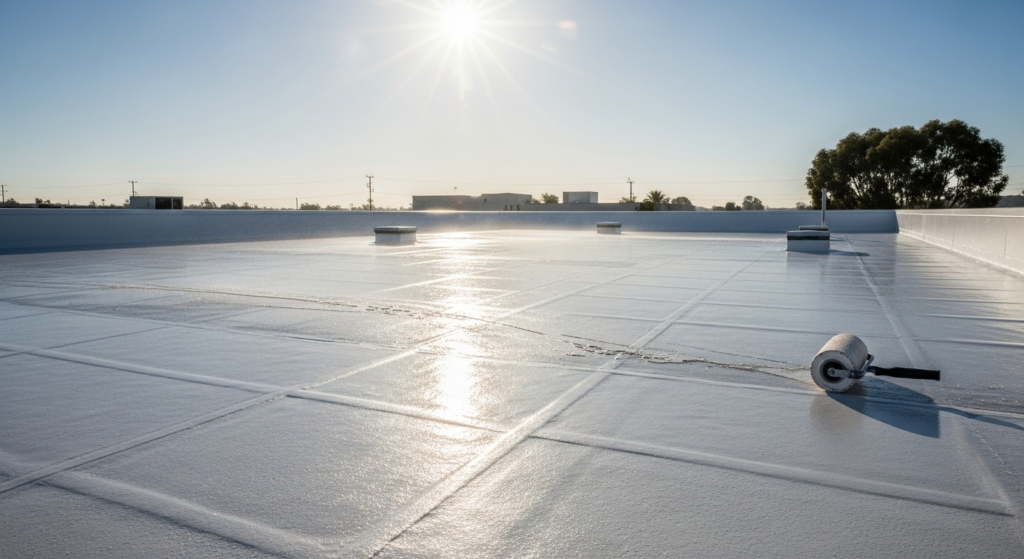
High-solids silicone formulations contain 90-95% solids content, which means less material evaporates during curing. You get a thicker, more durable membrane per coat. The coating remains flexible across temperature changes, expanding and contracting with your roof without losing integrity.
Ponding water resistance sets silicone apart from other coating options. Water that sits on your low-slope roof for 48 hours or more won’t degrade silicone. The coating repels water rather than absorbing it, which prevents deterioration even in areas with poor drainage.
Acrylic’s Reflectivity, Solids Content, and Chalking Tendencies Under Sun Exposure
Acrylic roof coating reflects up to 85-90% of solar radiation when first applied. Your building stays cooler because the white surface bounces sunlight away. This reflectivity helps reduce your cooling costs during hot Southern California summers.
The solids content in acrylic coatings typically ranges from 50-60%. Lower solids mean you need more coats to achieve the same thickness as silicone. Each coat must dry completely before applying the next layer.
Chalking occurs when acrylic coatings break down under UV exposure. You’ll notice a powdery residue on the surface after several years. This process actually helps maintain reflectivity by creating a fresh white surface, but it also means the coating gradually wears away.
How Each Handles Thermal Expansion on Low-Slope Commercial Flat Roofs
Your low-slope roof expands during the day and contracts at night as temperatures shift. Silicone moves with these changes because of its elastomeric properties. The coating stretches up to 400% without tearing or separating from the substrate.
Acrylic coatings become more rigid as they age, especially under constant sun exposure. Temperature fluctuations can cause the coating to develop small cracks over time. You’ll need to recoat sooner than with silicone to maintain protection.
Both coatings bond to existing roof membranes, but they respond differently to thermal stress. Silicone’s flexibility prevents stress cracks at seams and penetrations where movement is greatest.
Southern California Flat Roof Performance Realities
Southern California’s desert-adjacent climate creates distinct conditions that affect how roof coatings perform. Strong year-round UV exposure and extreme surface temperatures demand different coating properties than climates with regular rainfall or moderate heat.
UV Intensity and Dry Heat Effects on Coating Degradation Rates
Your flat roof in Southern California faces some of the highest UV exposure levels in the continental United States. Surface temperatures on dark roofs regularly exceed 160°F during summer months.
UV radiation breaks down the chemical bonds in roof coatings over time. This process happens faster in Southern California than in cloudier regions. Both silicone and acrylic coatings offer strong UV resistance, but they respond differently to sustained heat.
Acrylic coatings can become brittle when exposed to repeated thermal cycling. Your roof expands during the day and contracts at night, creating thermal movement that stresses the coating layer. Silicone coatings remain more flexible across temperature ranges, which helps them handle this daily expansion and contraction.
The dry heat also affects how quickly solvents evaporate during application. Contractors must work during cooler morning hours to ensure proper curing and adhesion.
Limited Ponding Risks Versus Occasional Heavy Rain and Dust Accumulation
Most Southern California flat roofs have minimal ponding water issues compared to regions with frequent rainfall. Your primary water-related concern involves occasional heavy winter storms that can overwhelm drainage systems.
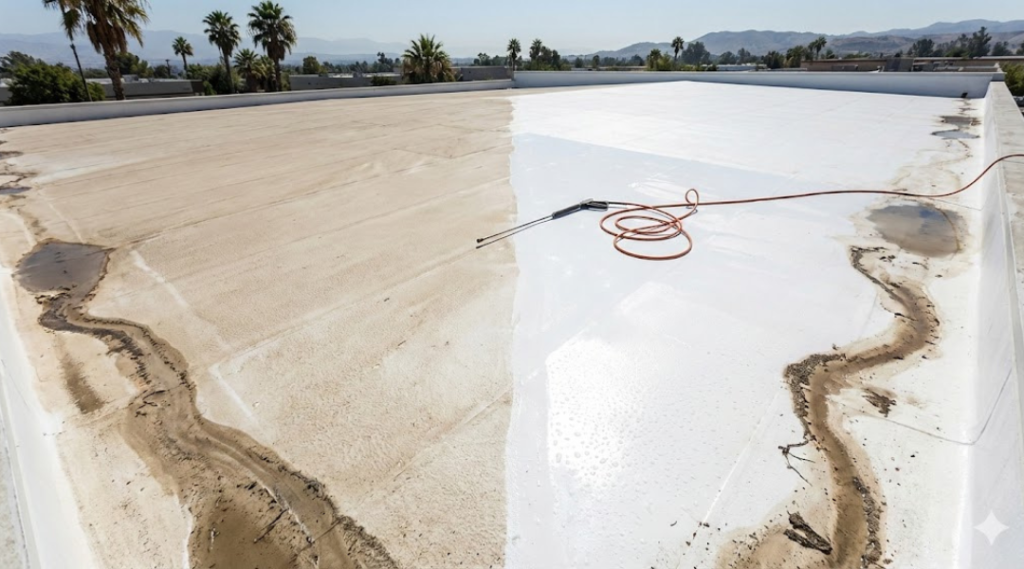
Silicone coatings handle standing water better when it does occur. Acrylic coatings perform well on roofs with proper drainage, which most Southern California commercial buildings already have.
Dust accumulation presents a bigger maintenance issue in this region. Airborne particles from desert areas settle on roof surfaces and reduce reflectivity over time. White and light-colored coatings show this dirt buildup more visibly, though it affects performance regardless of what you see.
Regular cleaning maintains coating effectiveness longer in dusty conditions.
Energy Code Compliance Through Reflectivity and Cool Roof Qualifications
California’s Title 24 energy code requires cool roof standards for most low-slope commercial roofs. Your coating must meet specific reflectivity and thermal emittance values.
Both coating types can meet Title 24 requirements when properly formulated:
- Initial solar reflectance: minimum 0.63
- Aged solar reflectance: minimum 0.50 (after three years)
- Thermal emittance: minimum 0.75
Acrylic coatings typically offer higher initial reflectivity values, often 0.85 or above. This translates to lower cooling costs during your building’s peak energy use. Silicone coatings usually start with slightly lower reflectivity but maintain their performance longer.
The Cool Roof Rating Council (CRRC) provides rated product listings that show both initial and three-year aged values. You need documentation of these ratings for permit approval and utility rebate programs.
Interpreting Coating Choices in Garden Grove Practice
Garden Grove’s flat roof conditions demand careful evaluation of substrate compatibility, long-term cost projections, and strict application protocols. Professional roofers match coating chemistry to existing materials while accounting for Southern California’s climate patterns and maintenance realities.
How Tom Byer Roofing Service Evaluates Flat Roof Substrates for Coating Compatibility
Your existing roof material determines which coating will bond properly and perform reliably. Modified bitumen, TPO, EPDM, and built-up roofing each require different surface preparation and primer selection.
A thorough roof inspection identifies ponding areas, membrane degradation, and contamination that affect adhesion. Contractors test surface moisture levels and verify the substrate can support the coating’s weight. If your membrane shows extensive cracking or blistering, roof restoration may require repairs before coating application.
Silicone adheres well to most substrates without extensive prep work, but its slick surface makes future recoating harder. Acrylic needs cleaner surfaces and primers on certain materials like metal or aged EPDM. Your contractor measures surface temperature and checks weather forecasts since both coatings require specific application conditions. Garden Grove’s stable climate provides consistent application windows throughout most of the year.
Weighing Upfront Costs Against 10-20 Year Maintenance Cycles in Local Conditions
Silicone costs 20-40% more initially but requires minimal maintenance over 15-20 years in Garden Grove’s climate. You’ll pay $2.50-$4.00 per square foot installed compared to $1.50-$2.50 for acrylic systems.
Acrylic coatings need recoating every 5-10 years depending on UV exposure and foot traffic. Your total cost over 20 years often exceeds silicone when you factor in labor, disruption, and material expenses for multiple applications. Garden Grove’s intense summer sun accelerates acrylic degradation on roofs with heavy UV exposure.
Dry film thickness affects longevity significantly. Silicone applied at 20-25 mils delivers better value than thin acrylic applications that wear through prematurely. Your contractor should guarantee proper mil thickness rather than simply covering square footage.
Application Challenges and Inspection Standards for Commercial Flat Roofs
Achieving consistent dry film thickness across large flat roofs requires experienced crews and proper equipment. Your contractor should use calibrated spray equipment and measure wet film thickness during application to ensure adequate coverage.
Surface preparation takes longer in Garden Grove’s dusty conditions. Wind-blown debris settles on roofs quickly, so crews must clean and coat sections in sequence rather than prepping the entire roof at once. Temperature monitoring matters because both coatings have minimum and maximum application temperatures.
Post-application inspections verify mil thickness, check for holidays (missed spots), and document ponding areas. Your contractor should provide roof inspection reports with thickness measurements at multiple locations. Many commercial property owners schedule annual inspections to catch minor issues before they require full recoating. Proper documentation helps you track coating performance and plan future maintenance budgets accurately.
Tradeoffs and Long-Term Judgment Framework
Both coating types deliver protection, but they differ sharply in how long they last, what can go wrong, and which situations demand the more expensive option. Understanding these tradeoffs helps you avoid overspending on features you don’t need or choosing a cheaper coating that fails early.
Lifespan, Recoating Frequency, and Total Ownership Costs Compared
Silicone coatings typically last 15 to 20 years before needing replacement. Acrylic coatings last 7 to 10 years in Southern California’s climate.
This difference in recoat frequency changes your total cost picture. A silicone coating might cost $2 to $4 per square foot installed, while acrylic runs $1 to $2 per square foot. Over 20 years, you’ll recoat acrylic two or three times. That means more labor costs, more disruption, and potentially higher total spending.
Silicone also needs less maintenance between recoats. You won’t spend as much on inspections or touch-ups. Acrylic requires more frequent checks for cracking and brittleness, especially after Santa Ana winds or rare heavy rains.
The higher upfront cost of silicone often pays back through fewer recoating cycles and lower maintenance expenses. Your break-even point typically arrives around year 12 to 15 when comparing acrylic vs silicone ownership costs.
Risk of Failure Modes—Dirt Pickup, Brittleness, or Waterproofing Gaps
Silicone attracts dirt and dust more readily than acrylic. This dirt buildup reduces the coating’s reflective properties over time. You’ll see higher cooling costs if you don’t clean the roof every few years. The coating still protects against water, but energy savings drop.
Acrylic becomes brittle with age, especially under intense UV exposure. Small cracks form after several years. These cracks let water seep through to the roof membrane below. Once water enters, you face expensive repairs that cost more than the coating itself.
Ponding water breaks down acrylic quickly. Even shallow puddles that sit for 48 hours start degrading the coating. Silicone handles standing water without damage. On a perfectly flat Southern California roof with drainage issues, acrylic failure from ponding is almost guaranteed within five years.
When Acrylic Suffices Versus Silicone’s Necessity Based on Roof Age and Use
Acrylic works well on newer roofs with good drainage and slopes above 1/4:12. If your roof is less than 10 years old and sheds water quickly, acrylic provides adequate protection at lower cost.
Choose silicone for roofs over 15 years old. Older roofs develop low spots and drainage problems. They need the waterproofing strength that only silicone provides.
Buildings with heavy HVAC equipment or frequent foot traffic need silicone’s durability. Acrylic chips and wears faster under these conditions. Warehouses, manufacturing facilities, and multi-tenant buildings fall into this category.
Residential flat roofs with light use can use acrylic successfully. You’ll recoat more often, but the lower initial cost makes sense if you plan to sell within 10 years or have budget constraints now.


