

Choosing between roof coating and full replacement for your commercial building in Orange County affects more than just this year’s maintenance budget. The decision impacts your total roofing costs over the next two decades. Most property managers focus only on immediate expenses, but the real financial picture becomes clear when you calculate long-term costs, including reapplication schedules, energy savings, and business disruption.
For a typical 50,000 square foot commercial building in Orange County, roof coating costs $100,000-$200,000 initially while replacement runs $500,000-$1,000,000, but the 20-year total cost depends on how many times you’ll need to recoat versus when you’ll eventually replace, plus hidden factors like disposal fees and business interruption. Your roof’s current condition, your building’s age, and your property plans determine which option saves you more money over time.
This breakdown examines the actual numbers over 20 years, not just the upfront price tag. You’ll see how coating and replacement costs stack up in Orange County’s climate, what Tom Byer Roofing Service finds when evaluating local commercial roofs, and which financial factors beyond material costs change the real comparison. Understanding these tradeoffs helps you make a decision that protects both your building and your budget.
What Readers Will Understand After This Breakdown
This analysis gives you specific numbers to compare three approaches over 20 years, showing how each choice affects your operating budget, property value, and planning timeline for Orange County commercial buildings.
How 20-Year Costs Shape Long-Term Asset Planning
A 20-year window matters because it covers multiple budget cycles and matches typical commercial property holding periods. When you look at coating vs replacement over two decades, you see the full picture of maintenance intervals, labor costs, and downtime expenses.
Coating systems typically need reapplication every 10 to 15 years. This means you’ll budget for at least one renewal during your 20-year period. Full replacement gives you 20 to 30 years of service life with minimal mid-cycle costs.
Your capital expenditure planning changes based on which route you take. Coatings spread costs across shorter intervals with lower individual outlays. Replacement requires a larger upfront investment but reduces the number of roofing projects you’ll manage.
Orange County’s climate also affects your numbers. The mild weather extends coating life compared to harsher regions, making restoration more competitive against replacement in local cost models.
Where Coating, Partial Restoration, and Full Replacement Fit Into That Horizon
Coating works best when your roof has 60% or more of its service life remaining and shows only surface-level wear. You’ll spend less upfront and gain 10 to 15 additional years before any major work is needed.
Partial restoration targets buildings with isolated problem areas. You replace damaged sections while coating the rest. This hybrid approach costs more than coating alone but less than full replacement, and it extends roof life by 15 to 20 years.
Full replacement makes sense when your roof is past 75% of its expected lifespan or has widespread structural issues. You’ll pay the highest upfront cost but eliminate all roofing expenses for the next 20 to 30 years except basic maintenance. This option also resets your warranty coverage and improves energy efficiency with modern materials.
Defining The 20-Year Decision Boundary In Orange County
The 20-year mark represents a critical decision point for commercial building owners in Orange County. At this timeline, most roof systems face declining performance while coating technology offers proven service life extensions of 15-20 years, creating a natural evaluation window for comparing total ownership costs.
Typical Lifespans Of Common Commercial Roof Systems In Southern California
Your commercial roof’s expected service life depends heavily on the system type and installation quality. A low-slope roof with modified bitumen typically lasts 20-25 years in Orange County’s climate. TPO and PVC single-ply membranes achieve 20-30 years when properly maintained.
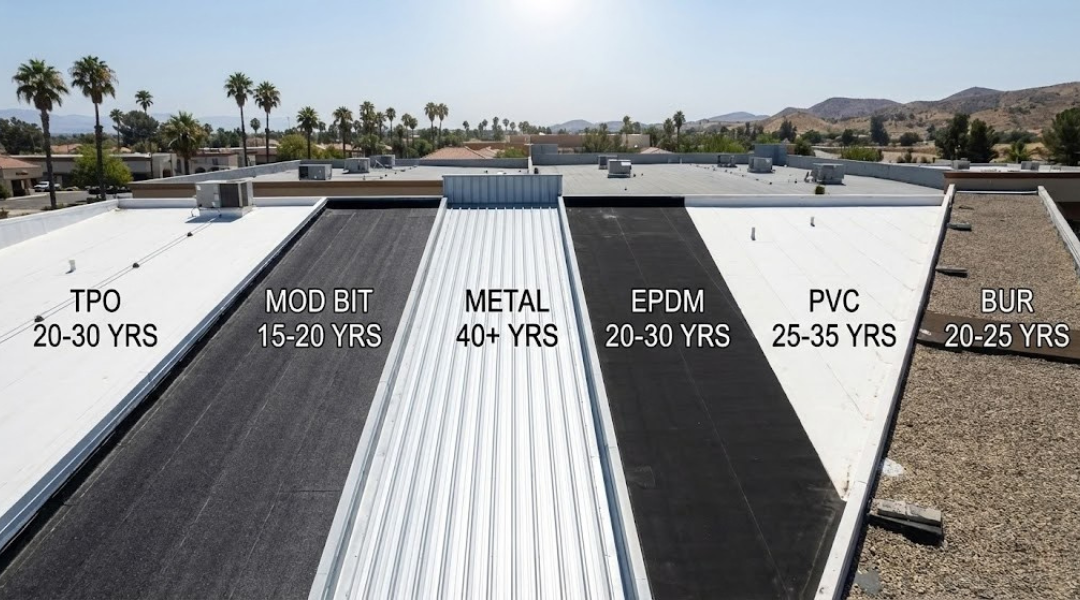
Built-up roofing (BUR) systems usually reach 15-25 years before requiring replacement. EPDM rubber roofing performs for 20-25 years in most applications. Metal roofing systems outlast other options at 30-45 years but cost significantly more upfront.
These ranges assume regular maintenance and proper installation. Deferred maintenance or poor workmanship can reduce service life by 30-50%. Your actual roof performance depends on inspection frequency, repair responsiveness, and environmental exposure levels.
Local Climate, UV Exposure, And Energy Code Pressures On Roof Choices
Orange County’s intense UV radiation accelerates roof material degradation faster than in northern climates. Your roof experiences 280-310 sunny days annually with high solar heat gain that breaks down conventional roofing materials.
California Title 24 energy codes impose specific requirements on roof replacements for commercial buildings. As of January 1, 2026, the 2025 California Building Code mandates increased energy efficiency during roof replacement projects for non-residential and multi-family properties.
These regulations push you toward reflective coating systems or cool roof materials that reduce cooling loads. A modified bitumen roof coated with reflective elastomeric coating can achieve Title 24 compliance while reducing your cooling costs by 20-35%. The code requirements make coating an attractive option since you gain compliance benefits without the cost of full replacement.
When Roofs Are Candidates For Coating Versus Mandatory Replacement
Your roof qualifies for coating when the substrate remains structurally sound despite surface aging. Key qualification factors include:
Coating Candidates:
- Minimal active leaks (fewer than 3-4 problem areas)
- Solid deck with no moisture saturation
- Intact drainage without persistent ponding water
- Surface deterioration limited to UV damage or minor cracking
Replacement Required:
- Widespread membrane splitting or delamination
- Saturated insulation or deck damage
- Failed drainage creating standing water for 48+ hours
- Structural inadequacies or code compliance issues
You cannot coat over severely damaged membranes or wet insulation. Professional moisture testing and core samples determine coating viability for your specific roof condition.
Cost Structure Of Coating And Replacement Over Two Decades
Commercial roof coating typically costs $2-4 per square foot while full replacement runs $10-20+ per square foot, but the true financial picture extends beyond these initial numbers. Maintenance cycles, recoating schedules, and unexpected repairs create distinct cost patterns that separate over 20 years.
Installed Cost Ranges For Commercial Roof Coatings In California Markets
Commercial roof coatings in Orange County typically cost between $2.50 and $5.00 per square foot installed. Silicone roof coating systems fall on the higher end of this range due to superior weather resistance and longevity.
Acrylic roof coating options cost less upfront but may require more frequent reapplication. Your final price depends on roof access, surface preparation needs, and the number of coating layers required.
A 10,000 square foot commercial building pays $25,000-$50,000 for professional coating application. A 50,000 square foot warehouse faces costs between $125,000 and $250,000 for complete roof restoration with coating systems.
Labor rates in California markets run 15-25% higher than national averages. Surface repairs before coating application add $0.50-$2.00 per square foot to your total investment.
Tear-Off, Deck Work, And Replacement Cost Ranges For Orange County Roofs
Full roof replacement in Orange County costs $12-$22 per square foot for commercial properties. Tear-off and disposal of existing roofing materials adds $1.50-$3.50 per square foot to your project budget.
Deck repairs or replacement increase costs significantly when rot or structural damage exists. Your roof deck work can add $3-$8 per square foot in areas requiring substrate replacement.
Replacement Cost Breakdown:
- Material removal: $1.50-$3.50/sq ft
- New roofing materials: $4-$10/sq ft
- Installation labor: $4-$7/sq ft
- Deck repairs: $3-$8/sq ft (as needed)
A 10,000 square foot flat roof replacement ranges from $120,000 to $220,000. A 50,000 square foot commercial roof costs $600,000 to $1,100,000 for complete replacement.
How Maintenance, Repairs, And Recoating Cycles Compound Over 20 Years
Roof coating systems require recoating every 10-15 years to maintain protection. Your second coating application costs $2-$4 per square foot, roughly matching the initial investment.
Annual roof maintenance runs $0.10-$0.25 per square foot for coated roofs. Replacement systems need similar maintenance but face higher repair costs when problems develop.
Minor repairs on coated roofs cost $500-$2,000 annually for typical commercial buildings. Replacement roofs require $1,000-$4,000 in annual maintenance and spot repairs during their service life.
Over 20 years, a coating approach requires one initial application plus one recoating cycle. Your total coating investment reaches $4-$8 per square foot plus maintenance. A replacement installed at year zero lasts the full 20 years without major reinvestment but carries higher upfront costs and annual maintenance expenses.
Interpreting 20-Year Roof Costs Through Tom Byer Roofing’s Environment
Orange County commercial building owners face distinct cost factors based on their property’s age, regional energy standards, and market realities. Local roofing contractors work within specific budget ranges and risk profiles that shape whether coating or replacement makes financial sense over two decades.
How Orange County Building Age And Roof Type Affect Viable Options
Buildings constructed before 2000 typically have built-up or modified bitumen roofs that respond well to coating applications. These older systems cost $6,700 to $25,000 to replace but only $500 to $2,000 to coat per section.
Properties built after 2000 often feature single-ply membranes or metal roofing. Metal roofs accept silicone coatings effectively, extending their life by 10 to 15 years. Single-ply systems work with elastomeric coatings that bond directly to the membrane.
A 20-year-old asphalt roof shows significant depreciation in its actual cash value. The material type determines replacement urgency. Asphalt shingles degrade faster than metal, making coating less viable after 25 years of age.
Your roofing contractor evaluates substrate condition before recommending coating. Roofs with structural damage, widespread rot, or failed decking require replacement regardless of age. Surface-level wear qualifies for coating treatment.
Aligning Coating Vs Replacement With Southern California Energy Performance Expectations
California Title 24 energy codes push commercial buildings toward reflective roofing solutions. Cool roof coatings meet these standards while costing 75% less than full replacement with comparable materials.
Reflective coatings reduce cooling loads by reflecting solar heat. This matters in Orange County where buildings run air conditioning eight to ten months yearly. Energy savings reach 10% to 30% depending on building insulation and HVAC efficiency.
A full roof replacement with cool materials costs $11,500 for average-sized buildings. The same building receives coating treatment for $1,500 to $3,000. Both options deliver similar reflectivity ratings above 0.70.
Your energy performance improves immediately after coating application. The titanium pigments in acrylic elastomeric coatings maintain reflectivity for 10 to 12 years before requiring recoating.
Practical Cost Ceilings And Risk Tolerance Seen On Local Commercial Projects
Orange County commercial property owners typically allocate 2% to 4% of building value annually for maintenance. Roof coating fits within maintenance budgets while replacement requires capital expense approval.
Small commercial buildings under 5,000 square feet see coating costs between $5,000 and $20,000. Replacement runs $30,000 to $100,000 for the same footprint. The cost difference influences decision timelines and financing options.
Risk tolerance varies by property use. Warehouse owners accept higher risk with coating to minimize disruption. Medical offices and retail spaces favor replacement to avoid future tenant complaints.
Your roofing contractor provides warranty structures that match risk profiles. Coating warranties run 5 to 10 years. Replacement warranties extend 15 to 30 years depending on materials selected.
Tax treatment differs between options. Coating qualifies as maintenance expense, providing immediate deductions. Replacement counts as capital improvement, requiring depreciation over 39 years for commercial properties.
Tradeoffs, Risk, And Value Beyond The Price Per Square Foot
Choosing between coating and replacement involves more than comparing upfront costs. Energy performance, leak prevention, and compliance issues can shift the financial advantage over time.
Energy Savings, Interior Comfort, And Regulatory Compliance As Economic Factors
A full roof replacement lets you add insulation and improve your building’s R-value. This upgrade can cut your energy bills by 15-25% in Orange County’s climate. Coating systems preserve your existing insulation but don’t add thermal resistance.
New roofing assemblies often meet current Title 24 energy codes. If your building needs major HVAC work or tenant improvements, upgrading your roof during replacement helps avoid future compliance costs. Coatings extend your roof’s life but don’t change its energy performance or code compliance status.
Better insulation also improves tenant comfort. Spaces with stable temperatures face fewer complaints and lower vacancy rates. These benefits add value even if they don’t show up directly in your roofing invoice.
Waterproofing Reliability, Leak Risk, And Disruption To Building Operations
Coatings seal existing membranes and stop minor roof leaks. They work well on roofs with less than 20% damage. For roofs with widespread problems, coatings just cover up issues that will keep causing leaks.
Full replacement eliminates all existing problems. You get a new warranty and peace of mind that no hidden damage remains. The tradeoff is higher upfront cost and more disruption during installation.
A roof leak can cost you thousands in water damage and lost business. If your building houses sensitive equipment or inventory, replacement reduces this risk. Coatings need proper surface preparation to work. Skip this step and you’ll see coating failure within 2-3 years instead of the expected 10-15.
How Owners Can Reason Through Uncertain Roof Condition And Future Use Of The Property
Get a professional roof inspection before deciding. An inspector can tell you if damage is localized or widespread. This information helps you avoid paying for replacement when coating would work.
Consider your ownership timeline. If you plan to sell in 5 years, coating might make sense. If you’re holding the property for 20+ years, replacement often costs less over time.
Your building’s use matters too. A warehouse with basic tenant needs differs from a medical office requiring strict temperature control. Match your roofing decision to how the building generates income. Properties with long-term leases justify higher replacement costs because you’ll capture the energy savings.


