
Garden Grove’s mid-century and ranch homes present unique roofing challenges that differ from newer construction. These homes were built during a time when materials and design priorities focused on clean lines and affordability rather than long-term durability. Understanding how your home’s original roofing structure responds to Garden Grove’s climate helps you make informed decisions about repairs, replacements, and upgrades.
Your mid-century home likely features low-pitched rooflines that look great but can create specific performance issues. These architectural choices affect water drainage, material selection, and maintenance needs. The original materials used in the 1950s and 1960s may no longer meet your expectations for longevity or energy efficiency.
This article examines the structural realities of mid-century and ranch home roofing in Garden Grove. You will learn about material compatibility, how local climate affects your roof, and what to consider when preserving your home’s character while improving performance.
Architectural Traits Of Mid-Century Rooflines
Mid-century rooflines in Garden Grove emphasize horizontal forms through shallow pitches, generous eaves, and built-in outdoor structures that blur the boundary between interior and exterior. These design choices reflect both the modernist aesthetic of the era and practical adaptations to Southern California’s climate.
Low-Slope Geometries And Wide Overhangs
Your mid-century home likely features a low slope roof with a pitch between 2:12 and 4:12, creating the characteristic horizontal profile that defines the style. This shallow angle reduces the visual mass of the roof and makes the structure appear grounded and connected to the landscape.
Wide overhangs extending 24 to 48 inches beyond exterior walls are a hallmark of mid-century design. These deep eaves protect windows and walls from intense sun while providing covered outdoor transition zones. The overhangs often feature exposed rafter tails that add rhythmic visual interest and honest expression of the structure.
Low-pitched gables, hipped roofs, and shed configurations all use these shallow geometries. A flat roof or near-flat design creates the most dramatic modernist statement, though it demands more rigorous waterproofing and drainage planning than steeper pitches.
Integrated Carports And Patio Tie-Ins
Many Garden Grove mid-century homes incorporate carports directly into the roofline rather than adding detached garages. The mid-century roof plane often extends seamlessly over the carport, creating a unified form that reinforces the horizontal emphasis.
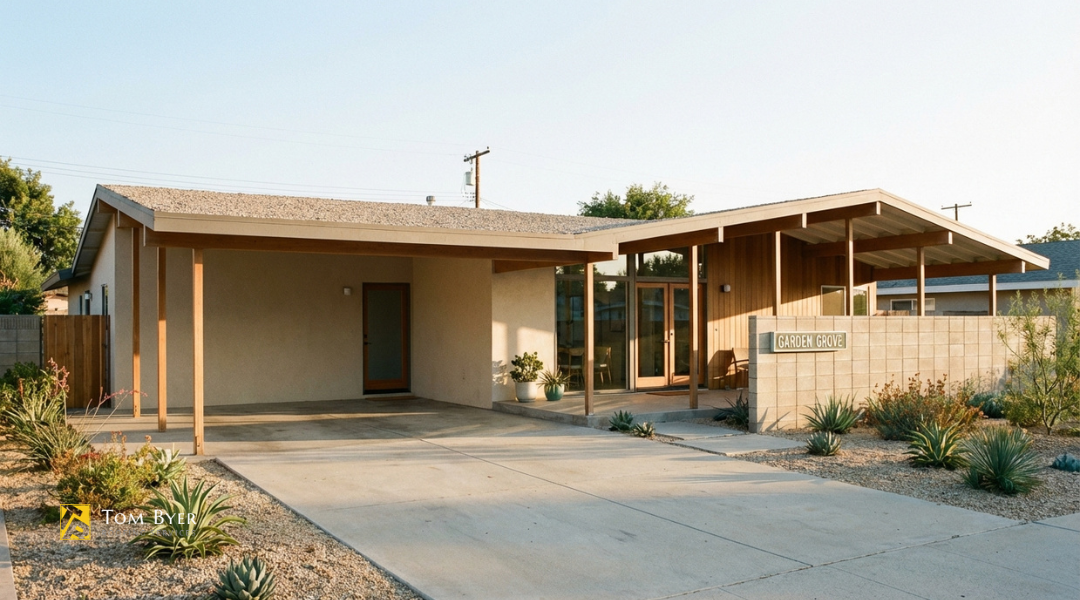
Covered patios and breezeways follow the same principle, with roof planes continuing over outdoor living areas. These extensions use the same pitch, materials, and eave details as the main house roof to maintain visual consistency. The result is a composition where indoor and outdoor spaces share shelter under one continuous or carefully linked set of planes.
Your home may feature post-and-beam connections where the roof extends beyond the main structure, with slender columns supporting the overhangs. This structural expression became a signature element that celebrated construction methods rather than hiding them.
Original Decking And Ventilation Assumptions
Mid-century builders typically installed tongue-and-groove wood decking or plywood sheathing over exposed rafters, often with minimal insulation by today’s standards. The exposed underside of the roof deck was sometimes left visible inside as a finished ceiling, eliminating attic space entirely.
Ventilation strategies varied widely. Some low slope roofing assemblies included soffit vents and ridge outlets, while others relied on minimal airflow or none at all. Flat and near-flat roofs often lacked traditional attic ventilation, which can create moisture management challenges during retrofits.
Understanding your home’s original assembly helps you plan appropriate upgrades. If your ceilings expose the roof structure, adding insulation and ventilation requires careful design to preserve the interior aesthetic while meeting current energy codes.
Material Compatibility And Performance Tradeoffs
Garden Grove’s mid-century and ranch homes require materials that respect original design intentions while delivering durability in Southern California’s climate. Architectural shingles offer better wind resistance than basic compositions, lightweight tiles reduce structural stress, cool roof coatings lower cooling costs, and material choices directly affect whether you preserve iconic horizontal lines or compromise them for performance gains.
Asphalt Composition Versus Architectural Shingles
Basic composition shingles are lighter and less expensive upfront but typically last only 15-20 years in Garden Grove’s intense sun. Architectural shingles add dimensional texture and weight, extending lifespan to 25-30 years while improving wind uplift resistance.
The dimensional profile of architectural shingles can disrupt the clean, flat planes that define mid-century rooflines. If your home features low-pitched gables or shed roofs, you’ll need to select the lowest-profile architectural product available to avoid a chunky appearance.
Composition shingles cost $3.50-5.50 per square foot installed, while architectural versions run $4.50-7.00 per square foot. The price difference narrows when you account for the longer service life and better hail resistance of architectural products.
Lightweight Tile Alternatives And Structural Load
Traditional clay or concrete tiles weigh 8-15 pounds per square foot, often exceeding the load capacity of original mid-century roof framing. Lightweight composite tiles weigh 3-5 pounds per square foot and install on existing structures without reinforcement.
Composite tiles mimic the look of clay or slate while meeting California’s strict fire and wind codes. They’re especially useful on ranch homes where tile roofs were common but original rafters were sized for lighter materials.
You sacrifice some authenticity with composites—the shadows and color variation differ slightly from genuine clay. However, you gain impact resistance, lower installation labor costs, and compatibility with solar panel mounting systems that would crack ceramic tiles.
Cool Roof Coatings And Reflectivity Impacts
Cool roof coatings with high solar reflectance reduce roof surface temperatures by 50-80°F compared to dark asphalt. In Garden Grove’s climate, this translates to 10-15% reductions in cooling energy use during peak summer months.
White or light-colored TPO and PVC membranes are ideal for flat roofs on mid-century homes. These single-ply systems provide seamless waterproofing and meet Title 24 reflectivity requirements without visible texture that disrupts modern aesthetics.
Metal roofing with reflective coatings offers similar benefits on sloped applications. Standing seam metal roofs maintain clean vertical lines while reflecting solar radiation. Lighter colors increase reflectivity but may clash with original earth-tone palettes common in ranch architecture.
Preserving Visual Lines Versus Upgrading Durability
Your material selection directly impacts roofline perception. Standing seam metal roofing and smooth single-ply membranes preserve the horizontal emphasis of mid-century design better than textured or multi-dimensional products.
Modified bitumen systems offer excellent waterproofing for low-slope roofs but create a slightly granular surface texture. If your home’s flat roof is visible from the street or adjacent properties, consider smooth-surfaced TPO or PVC instead to maintain the intended minimalist look.
Thicker materials raise the roof plane and alter eave proportions. When replacing an asphalt shingle roof with metal roofing, account for panel and underlayment thickness to ensure fascia and gutter relationships remain visually correct. You may need to adjust trim details to preserve the original shadow lines that define mid-century architecture.
Climate Pressures In Garden Grove, California
Garden Grove’s Mediterranean climate creates three primary stresses for mid-century and ranch home roofs: intense year-round ultraviolet radiation that degrades materials, wind forces across exposed suburban parcels, and seasonal rainfall on the low-slope roofs common to these architectural styles.
UV Exposure And Thermal Cycling Patterns
Garden Grove receives strong sunlight throughout the year, with summer temperatures reaching the low 80s°F and winter lows in the mid-50s°F. This consistent UV exposure breaks down asphalt shingles and flat roofing membranes by degrading protective granules and causing materials to become brittle.
The daily temperature shifts between warm afternoons and cooler evenings force roofing materials to expand and contract repeatedly. Mid-century homes with flat or low-slope roofs face particular stress because these surfaces absorb more direct heat than steeply pitched roofs.
Over time, this thermal cycling creates micro-cracks in shingles and roofing membranes. The cracks allow water infiltration during rain events. Ranch homes with darker roofing colors experience more severe thermal stress than those with reflective or lighter-colored materials.
Regular inspections help identify early signs of UV damage, including curling shingles, faded colors, and surface cracks.
Wind Uplift Across Open Suburban Lots
Garden Grove’s suburban layout features many open lots with minimal wind barriers between properties. Santa Ana winds from inland areas bring hot, dry gusts that test roof fasteners and edge systems.
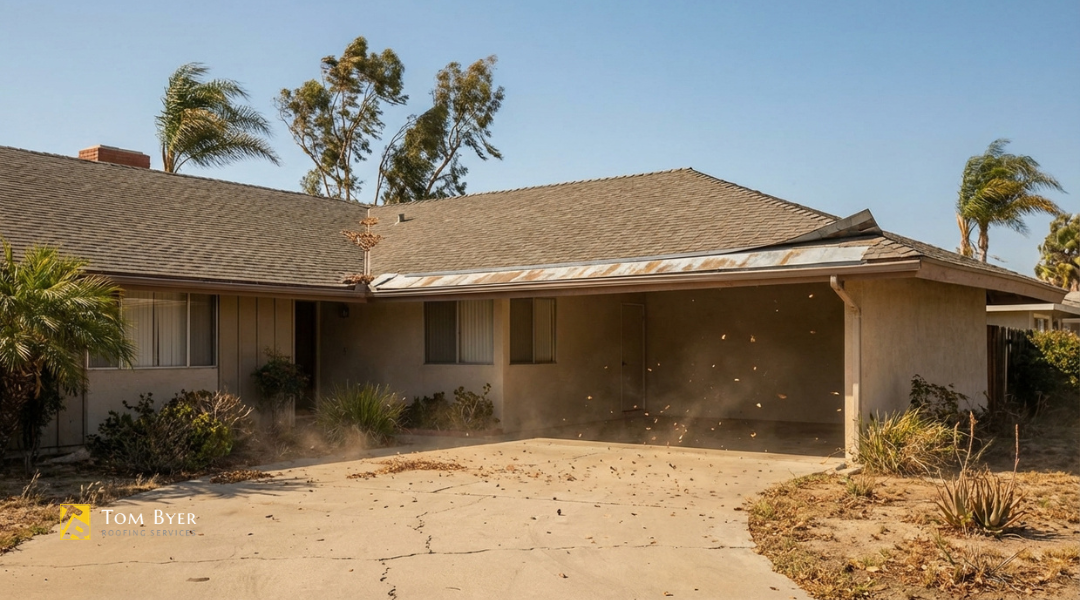
Mid-century and ranch homes often have wide roof overhangs that catch wind and create uplift pressure. The low-pitched roofs common to these styles offer less wind resistance than steeper pitches. Inadequately secured roof edges and corners become vulnerable points during high wind events.
Metal drip edges, properly sealed flashing, and sufficient fastener spacing are critical for wind resistance. Homes on corner lots or properties with few mature trees face higher wind exposure. Your roof’s ability to withstand these forces depends on proper installation techniques and the condition of your fastening system.
Rain Events And Drainage On Shallow Pitches
Winter rains in Garden Grove test the water-shedding ability of low-slope roofs typical of mid-century and ranch architecture. Roofs with pitches below 4:12 drain water more slowly, increasing the risk of pooling and leaks.
Clogged gutters and insufficient drainage outlets compound the problem by allowing water to back up under roofing materials. Flat or near-flat sections on mid-century homes require careful waterproofing and sealed seams to prevent infiltration.
Your roof’s drainage system must handle sudden, heavy rainfall without allowing water to pond. Built-up debris from surrounding trees blocks water flow and creates damp conditions that promote mold growth. Scuppers, interior drains, and properly sloped surfaces are essential for moving water off low-pitch roofs efficiently.
Structural Realities Observed By Tom Byer Roofing Service In Garden Grove Homes
Mid-century and ranch homes in Garden Grove present distinct structural challenges that become apparent during roof work. Decades of weathering, multiple repair attempts, and outdated construction standards create conditions that require careful assessment before any roofing project begins.
Aging Sheathing And Fastening Limitations
The original roof decking in many Garden Grove mid-century homes consists of skip sheathing or tongue-and-groove boards rather than solid plywood. This was standard practice in the 1950s and 1960s, but these materials weaken over time. Wood deterioration becomes more pronounced in areas where moisture has penetrated through worn roofing materials.
You may find that the fasteners used in original construction no longer hold properly. Nails pull away more easily from aged wood, and the boards themselves sometimes split when new materials are installed. Many homes built during this era used smaller dimensional lumber than current standards require.
The spacing between rafters in mid-century construction often exceeds what today’s building codes permit for certain roofing materials. This affects the type of replacement materials you can use without structural modifications. Tom Byer Roofing Service has documented these conditions across thousands of homes in the area since their establishment in the 1950s.
Retrofits Layered Over Original Assemblies
Previous roofing work on ranch-style homes often involved installing new materials directly over old layers. You might discover two or three roofing systems stacked on top of each other. Each additional layer adds weight that the original structure wasn’t designed to support.
These layered installations create uneven surfaces that make proper water drainage difficult. Moisture can become trapped between layers, accelerating wood decay beneath. The multiple layers also make it harder to identify the actual source of leaks when problems develop.
Older retrofits sometimes used incompatible materials that react poorly with each other over time. You’ll find instances where different flashing types, sealants, or underlayment products were mixed without considering long-term compatibility. This patchwork approach was common when quick repairs took priority over comprehensive solutions.
Code Evolution Versus Mid-Century Construction Methods
Building codes have changed significantly since Garden Grove’s mid-century homes were constructed. The homes were built to standards that seemed adequate in their time but fall short of current requirements. You face decisions about how extensively to upgrade systems during roof replacement.
Key code differences include:
- Fire-rating requirements for roofing materials
- Ventilation standards for attic spaces
- Wind uplift resistance specifications
- Underlayment and water barrier mandates
Your original roof likely lacks the synthetic underlayment now required by code. Many mid-century installations used basic tar paper that doesn’t meet current water infiltration standards. The ventilation systems in these homes were minimal compared to what codes now specify for moisture control and energy efficiency.
Permits for roof work on these properties require bringing certain elements up to current code. This doesn’t always mean replacing the entire structure, but it does involve strategic upgrades to critical components.
Evaluating Long-Term Outcomes And Design Integrity
Mid-century and ranch homes in Garden Grove require roofing choices that balance original architectural intent with practical performance needs. Your roof replacement decisions will affect both the visual character of your home and its operational costs for decades.
Aesthetic Preservation Versus Modernization
Mid-century homes feature low-slope and flat roofs that define their horizontal lines and clean profiles. When you work with a roof replacement company, you face a choice between materials that match the original look or modern alternatives that may clash with the design.
Wood shingles and built-up tar-and-gravel systems were common on 1950s and 1960s ranch homes. These materials helped create the intended appearance but often need replacement every 15 to 25 years. Modern PVC membranes and standing seam metal offer better water protection on flat or low-slope roofs. However, these materials can look industrial rather than residential.
You can preserve design integrity while upgrading performance by selecting materials in colors and textures that complement the original aesthetic. Light-colored metal panels or modified bitumen in earth tones maintain the low profile your home requires. Visible fasteners and reflective surfaces should be avoided on street-facing roof sections where they disrupt the clean lines typical of mid-century architecture.
Energy Performance Versus Assembly Complexity
A flat or low-slope roof on your ranch home creates opportunities for enhanced insulation but also introduces installation challenges. Standard asphalt shingles require a minimum 2:12 pitch, which many mid-century roofs don’t have.
PVC and TPO single-ply membranes reflect heat effectively and create watertight seals on slopes as low as 1:12. Your roof replacement will cost more upfront but can reduce cooling expenses by 15 to 30 percent in Garden Grove’s climate. Metal roofing systems with proper underlayment work on slopes of 2:12 or greater and last 40 to 60 years.
Complex assembly requirements increase labor costs and potential failure points. Multi-layer systems with insulation boards, vapor barriers, and membranes need skilled installation to prevent leaks. Your able roof depends on proper drainage design and flashing details around roof penetrations and edges.
Maintenance Burden Across Material Systems
Different roofing materials require varying levels of ongoing care. Metal roofs need minimal maintenance beyond occasional inspections for fastener tightness and sealant condition. You should check metal systems every three to five years.
Modified bitumen and built-up roofs require more frequent attention. Surface coatings need reapplication every five to ten years to prevent cracking and blistering. Standing water on flat sections accelerates deterioration regardless of material choice.
Wood shake roofs demand the most maintenance. You must clear debris, treat for moss and algae, and replace damaged shakes regularly. PVC and TPO membranes fall in the middle, needing inspection after storms but rarely requiring repairs when properly installed. Your roof replacement company should provide specific maintenance schedules based on the material system you choose.