
Presenting a roofing project to a homeowners association board can feel complex, but it doesn’t have to be. Each board meeting follows a predictable flow—scope discussions, budget approvals, and communication updates—that you can use to guide your presentation with confidence. When you structure your proposal around clear timelines, decision points, and responsibilities, you help the board make faster, better-informed decisions.
Your approach should align with how HOAs govern projects and manage community expectations. Some boards emphasize strict approval processes, while others value real-time updates that keep residents informed about potential disruptions. Knowing these differences and adapting your communication style will strengthen trust and help your project move smoothly through the review process.
When handled well, the presentation becomes more than a formality—it builds credibility and cooperation. By preparing structured timelines, defining boundaries, and maintaining open communication, you not only secure project approval but also set the foundation for a successful roofing partnership that keeps your community safe and supported.
Applicability Across HOA Governance Structures
Different homeowners associations handle roofing proposals through varying governance setups. Approval steps, communication style, and decision timelines depend on board size, management involvement, and how strictly community guidelines are enforced. You must tailor the level of detail and documentation to the group’s structure to ensure smooth, timely reviews.
Differences In Small Boards And Large Associations
Small HOA or condo boards usually work with fewer decision-makers and simpler review processes. You can often present directly to board members who know the properties well. This allows for open discussion and faster feedback. However, informal settings still expect clear connections to HOA architectural guidelines and local building codes.
Larger associations typically have committees or subgroups that handle roofing reviews before formal board approval. You may need to submit proposals in multiple stages, each requiring distinct documents such as:
- Architectural drawings that match community standards
- Material samples for visual and quality evaluation
- Compliance summaries showing adherence to building codes
Because larger boards guard consistency across neighborhoods, they often enforce uniform community guidelines and require detailed explanations of color, materials, and energy efficiency. The greater the number of decision layers, the more critical it becomes to maintain consistent communication and provide organized documentation.
When Management Companies Influence Presentation Depth
When an HOA management company oversees the community, it often directs the review process. You may deal more with assigned managers than with the full board. They ensure that every roofing proposal includes complete technical and financial details before sending recommendations to the board.
These companies usually standardize submission formats and emphasize compliance evidence. Expect to provide structured documents such as:
| Required Item | Purpose |
|---|---|
| Roofing specifications | Verify compliance with HOA architectural rules |
| Cost estimate | Assess community budget alignment |
| Warranty and maintenance data | Confirm long-term value |
Because management firms handle multiple communities, they prefer data-rich presentations over informal discussion. Presenting professional visual aids—floor plans, photos, and clear timelines—helps them communicate your proposal efficiently to board decision-makers.
Defining Project Scope And Decision Boundaries
You need to establish the limits of the roofing work before presenting it to the board. Clear boundaries help avoid misunderstandings, limit scope creep, and define who approves costs, materials, and scheduling. Document these details in your scope of work to keep decisions traceable and organized.
What Board Approval Typically Includes Or Excludes
A homeowners association board usually approves the final scope of work, project cost, contractor selection, and material specifications. Approvals often cover major items like roof replacement, warranties, and color or shingle type. Boards review material samples to confirm aesthetics comply with community guidelines. They also evaluate warranties and contractor credentials to ensure compliance before signing off.
However, the board may exclude minor details from approval, such as daily scheduling, supplier choices, or routine roof repair adjustments. Those tasks generally remain under the property manager’s control.
You can list responsibilities like this for clarity:
| Responsibility | Typically Approved by Board | Managed by Property Manager |
|---|---|---|
| Budget and contract approval | ✔ | |
| Daily work scheduling | ✔ | |
| Minor material substitutions | ✔ | |
| Warranty confirmation | ✔ |
Keeping this separation documented prevents confusion and ensures decisions align with board authority.
Separating Repair, Replacement, And Phased Planning
Define whether the project is a roof repair, partial replacement, or full replacement. Each path affects budgeting and timelines differently. Describing the work clearly in your scope of work helps set expectations and reduces the chance of budget issues or schedule conflicts later.
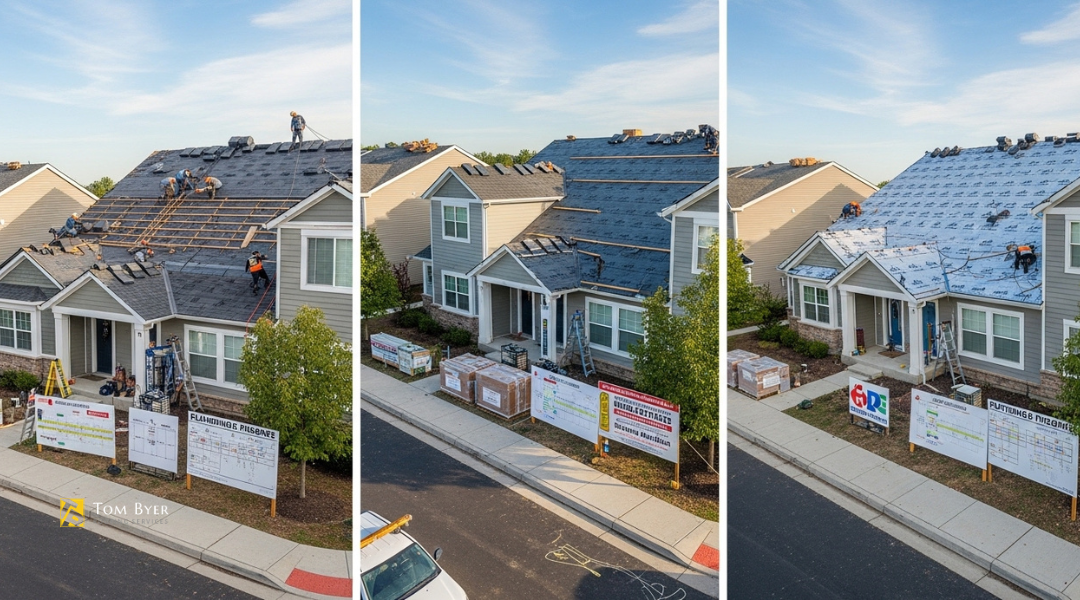
You might phase the project to manage costs over several fiscal years. For example, one phase could focus on replacing the main clubhouse roof, with residential units scheduled the following year. Phased work lets you allocate funds gradually and maintain community operations during construction.
Distinguish between emergency repairs and planned replacements to avoid overlap and scope creep. Label each task by priority and duration. Keep the board involved through clear reports showing current phase progress and upcoming milestones.
Timeline Structuring And Approval Dependencies
Coordinating a roofing project within an HOA community depends on clear sequencing and compliance with both internal and external requirements. Each event in the project—from initial inspection to final approval—must align with HOA board procedures and local permitting processes to prevent costly rescheduling or repeated reviews.
Sequencing Inspections, Bids, And Board Approvals
Roofing projects rely on a precise order of steps. You begin with roof inspections to assess the current condition and identify structural or material issues. The results from these inspections shape the roofing quote and scope of work that contractors provide.
Next, collect and compare bids using a consistent format. Include pricing for materials, labor, and any optional upgrades so board members can review them objectively. A short comparison table helps clarify differences:
| Bid Component | Contractor A | Contractor B | Contractor C |
|---|---|---|---|
| Material Type | Asphalt | Tile | Metal |
| Estimated Duration | 3 weeks | 4 weeks | 5 weeks |
| Total Cost | $XX,XXX | $XX,XXX | $XX,XXX |
Once the board receives the proposals, schedule the HOA board approval meeting in coordination with the community manager. Provide all proposals, inspection reports, insurance documents, and permits in advance. This organized approach shortens deliberation time and reduces the chance of rejected or deferred approvals. Any change orders later in the process should be documented and submitted for a modified approval before resuming work.
External Constraints Affecting Scheduling And Execution
External factors often shape your production schedule even after receiving HOA approval. Building permits from city or county offices can take several days to several weeks to issue, especially during peak construction seasons. Inspections for structural safety, electrical components, or drainage must occur in the order defined by local regulations. Delays in one inspection can postpone later work stages.
Weather is another practical constraint. Heavy rain, high winds, or unexpected temperature drops can halt roof installation or replacement. Contractor availability also matters. Qualified roofers often book out months in advance, affecting your ability to align the site inspections and construction timeline.
Material supply is a growing influence on scheduling. Specialty shingles or metal panels might have lead times of 4–6 weeks. Always verify delivery dates before confirming your start date. Keeping communication open between contractors, HOA representatives, and municipal inspectors helps synchronize all tasks and minimize downtime once work begins.
Communication Patterns Observed In Garden Grove Roofing Projects
In Garden Grove, roofing projects often face challenges tied to communication between contractors, property managers, and residents. Clear coordination, consistent messaging, and timely follow-ups reduce confusion about schedules and responsibilities while helping the board make informed decisions about budgets and maintenance.
Common Gaps Between Contractors, Boards, And Residents
You may notice frequent delays in message flow between roofing contractors and HOA boards. Contractors send updates through multiple channels, while boards rely on formal meeting summaries. This mix can cause slow decisions or conflicting information about schedules and costs.
Property managers often serve as the single point of contact, but when roles are not clearly defined, updates fail to reach residents. Without structured maintenance guidance, even small misunderstandings—such as unclear start times or access instructions—can escalate into complaints.
A simple communication plan helps prevent this. Creating a short table of responsibilities clarifies who manages each step:
| Role | Main Responsibility | Preferred Communication |
|---|---|---|
| Project Manager | Oversee daily work | Email or project app |
| HOA Board | Approve costs and scope | Meeting notes |
| Property Manager | Update residents | Notices or text alerts |
These consistent touchpoints maintain trust and ensure that residents understand disruptions before work starts.
How Timing And Clarity Influence Project Acceptance
The success of a roofing proposal in Garden Grove often depends on when and how you share details. Boards respond better when you present early, clear information on schedules, staging areas, and noise timing. Late updates can make even well-planned projects seem uncoordinated.
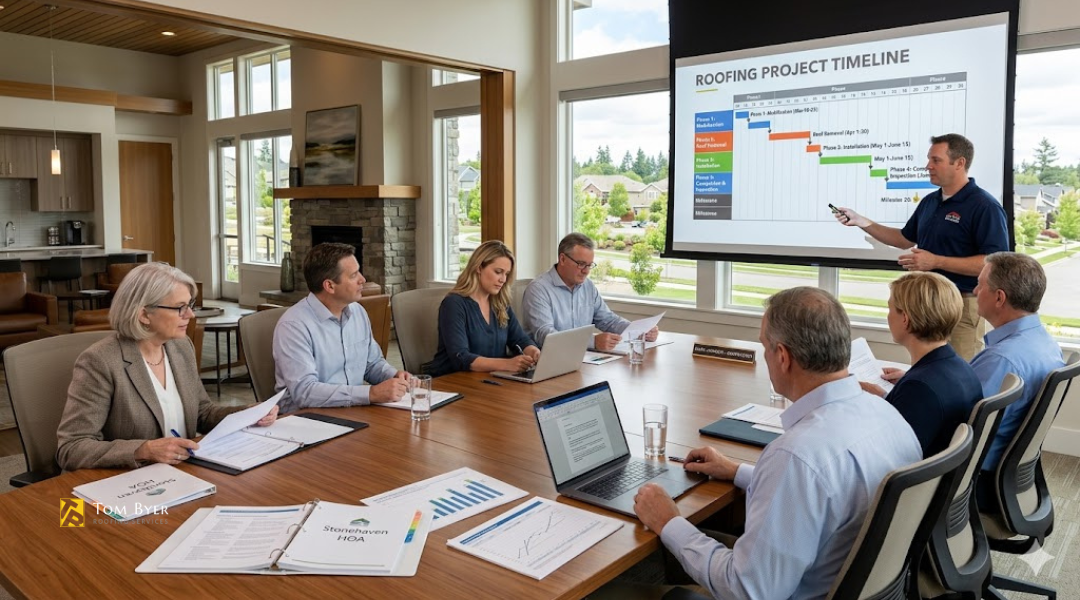
You build confidence by using plain language and verified timelines instead of broad estimates. Clear charts or short summaries help board members compare options quickly and give residents a better picture of how long work will last.
Providing notice at each milestone—a week before start, midway through progress, and after completion—keeps stakeholders aligned. When you maintain consistent timing and straightforward communication, you reduce objections and speed up project acceptance.
Tradeoffs In Transparency, Disruption, And Resident Expectations
Managing roofing projects in an HOA requires balancing open communication with minimizing everyday disruption. You need to keep residents informed enough to build trust while avoiding confusion or fatigue from excessive details.
Balancing Detailed Disclosure With Information Overload
Transparency helps build confidence, especially when a special assessment or major repair is involved. Sharing inspection photos, scope summaries, and progress updates allows residents to understand what’s happening and why. However, too much data—such as every contractor note or technical measurement—can overwhelm people who simply want key facts.
Create a communication plan that filters information into simple, useful categories, such as:
| Type of Information | When to Share | Format |
|---|---|---|
| Project overview | Before start | Email + Notice board |
| Progress updates | Weekly | Short summary |
| Final walkthrough date | End of project | Email reminder |
You should also watch the tone and frequency of updates. Repetition can make residents tune out, leading to frustration instead of clarity. Focus on relevance and plain language. Residents feel informed when they understand decisions and timelines without having to sort through unnecessary details.
Managing Inconvenience, Access, And Community Impact
Roofing work can limit parking, change access routes, and create noise. While you cannot remove every inconvenience, you can manage expectations by giving advance notice and realistic time frames. Clear schedules for key milestones—start, mid-point, and final walkthrough—help residents plan around disruptions.
Provide updates when weather or supply issues cause delays. Silence often does more harm than bad news. You can also reduce tension by organizing temporary solutions, such as alternate parking or adjusted work hours.
When residents see your efforts to minimize impact and communicate consistently, resident satisfaction rises, even when projects run long. Effective handling of inconvenience reinforces trust and shows that both progress and comfort matter.