
Managing roof maintenance and reserve planning in your HOA community can feel complex, but with the right strategy, you can protect property values and control long-term costs. A consistent maintenance program and well-structured reserve plan help you avoid sudden assessments, extend roof life, and keep your community’s finances predictable. This balanced approach supports both strong infrastructure and resident satisfaction.
In Orange County, your roofs face relentless sun, coastal moisture, and occasional high winds that speed up aging. When you build regular inspections and timely repairs into your HOA’s management plan, you gain control over your property’s most important asset—the roof. Partnering with experienced contractors who understand HOA processes ensures work stays compliant, transparent, and efficient.
Tom Byer Roofing Service brings decades of experience supporting HOA communities across Garden Grove and surrounding areas. Through proactive maintenance and coordinated project planning, you can align each roof system’s condition with your financial reserves and ensure every building in your community stays safe, durable, and well-maintained.
Applicability Across HOA Property Types
Roof maintenance and reserve planning depend on your community’s property type, ownership structure, and shared system responsibilities. These differences affect how you budget, schedule inspections, and allocate HOA dues for long-term replacement needs.
Differences Between Single-Family and Multi-Unit Associations
In single-family home HOAs, owners usually maintain their own roofs. Your HOA’s responsibility often stops at shared structures such as entry gates, perimeter walls, or clubhouses. Still, your governing documents may require you to ensure uniform roofing styles or color schemes. Reserve planning in these communities typically focuses more on roads, landscaping, and shared buildings than on individual home roofs.
For multi-unit associations—like condominiums and townhomes—the roof almost always counts as a common element. You, as part of the board, oversee inspections, repair schedules, and funding reserves for replacements. Because California’s HOA regulations expect boards to plan responsibly for major components, these associations must include roofing in their formal reserve studies. The study guides how much to collect in dues to stay adequately funded.
Multi-unit HOA roofs often cover multiple owners’ units, so deferred maintenance can cause widespread damage. That makes consistent funding and inspections critical. Hiring a licensed roofing professional to inspect every few years helps you plan repair priorities based on actual condition rather than age alone.
Where Small HOAs and Large Complexes Diverge
Small HOAs in Orange County may have limited budgets and fewer shared assets. You might manage reserve planning informally, using simpler spreadsheets instead of professional software. However, smaller associations sometimes underfund roof reserves because members prefer to keep HOA dues low. This can lead to special assessments when a replacement is suddenly needed.
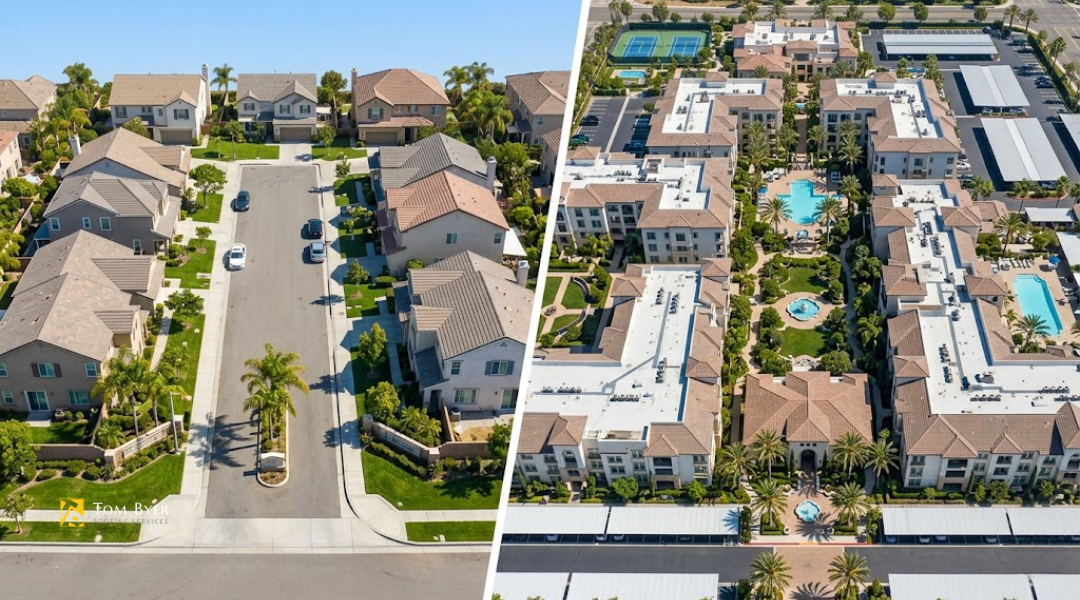
Large condominium or planned-unit developments face different challenges. Their roofs often span multiple structures, and reserves must cover different materials with varying life spans. Detailed component inventories—listing each roof surface, material, and estimated cost—help ensure accuracy.
Larger associations usually follow California HOA reserve study schedules, updating the analysis every three years with annual reviews. Many hire professional reserve study specialists to comply with state expectations and lender standards. These studies help you compare funding options, such as increasing monthly dues or setting aside interest earnings, to maintain future financial stability.
| HOA Scale | Typical Roof Responsibility | Reserve Study Frequency | Common Challenge |
|---|---|---|---|
| Small HOA (≤25 homes) | Varies; often owner-maintained | Informal or as needed | Underfunded roof reserves |
| Mid-Size HOA (26–100 homes) | Shared roofs or mixed | Every 3 years + annual review | Balancing dues vs. assessments |
| Large HOA (>100 units) | Common roof systems | Strict professional schedule | Complex budgeting and compliance |
Orange County Climate Effects on Roof Lifecycles
Orange County’s climate produces several distinct stress factors that influence how long your HOA roofing systems last. Sun exposure, salt air, temperature changes, and seasonal storms each contribute to roof material wear, affecting inspection schedules and replacement planning.
Coastal Moisture, UV Exposure, and Thermal Cycling
Coastal areas such as Huntington Beach and Newport Beach face persistent ocean air, which introduces salt corrosion and moisture infiltration. These elements can shorten the lifespan of metal flashing, fasteners, and tiles if not properly sealed. You’ll need regular washing and protective coatings to reduce salt buildup.
Intense UV radiation also weakens roofing materials over time. Asphalt shingles tend to lose protective granules, while clay and concrete tiles can experience surface fading and microcracking. Applying reflective coatings or selecting UV-resistant materials helps minimize this degradation.
Thermal cycling from daytime heat and cooler nights causes expansion and contraction that stress joints and sealants. Repeated cycling eventually opens small gaps where water can penetrate. For multi-building HOA communities, consistent biannual inspections detect and repair early damage before it spreads, saving long-term replacement costs.
| Climate Factor | Primary Effect | Recommended Mitigation |
|---|---|---|
| Salt Air | Corrosion & material deterioration | Annual sealing & rinsing |
| UV Exposure | Cracking, fading, aging | Reflective coatings |
| Thermal Swings | Sealant and joint failure | Regular inspections |
Seasonal Wear Patterns and Long-Term Degradation
Orange County roofs endure wet winters, dry summers, and high winds from Santa Ana conditions. Each stress event introduces unique challenges to your maintenance plan. Winter rains test the waterproofing around flashing and valleys, while summer heat accelerates shingle curling and membrane shrinkage.
Canyon and inland areas experience stronger heat fluctuation than coastal zones. This temperature variability can reduce shingle flexibility and lead to brittle cracking. Tracking these seasonal changes in your HOA maintenance log helps predict when materials reach critical wear points.
Over multiple years, combined exposure results in gradual loss of roof integrity—seen in early tile failure, fastener rust, or flashing separation. Coordinating proactive reserve planning ensures your association budgets adequately for future roof restoration or replacement before performance declines.
Maintenance Cycles and System Longevity Factors
Consistent roof maintenance helps extend the useful life of community assets and reduces unexpected repair costs. Routine inspections, timely minor repairs, and accurate data tracking let your HOA plan replacements logically rather than react to failures.
Preventive Maintenance Intervals and Inspection Scope
You should schedule preventive maintenance at least once or twice per year, depending on roof type, age, and local climate. In Orange County, seasonal shifts and UV exposure can cause materials to weaken faster, making semiannual inspections a practical standard.
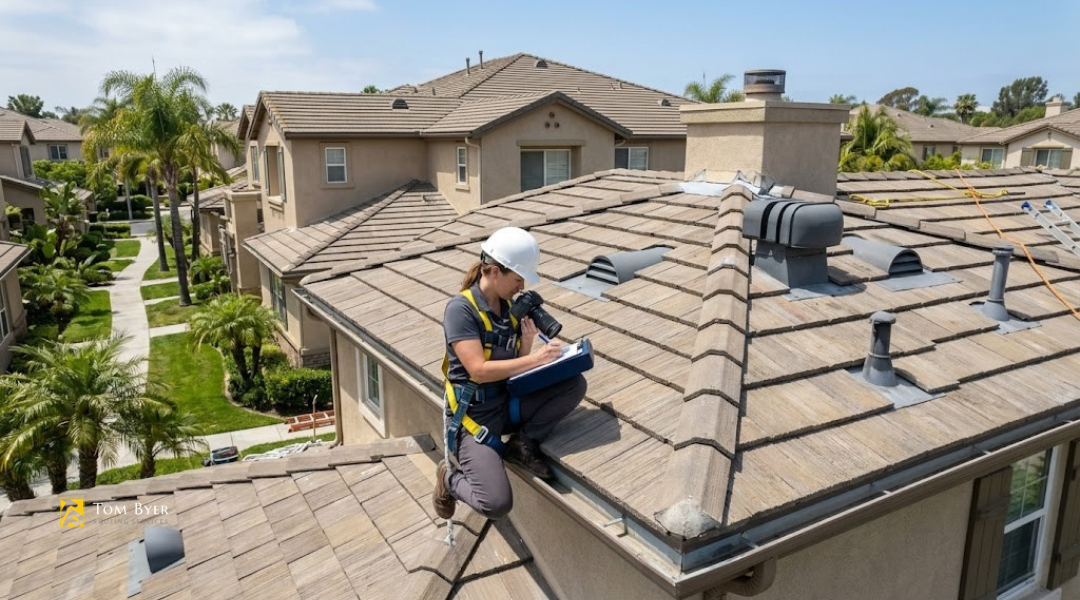
Each roof inspection should review surface materials, flashings, sealants, drainage systems, and penetrations. Inspectors look for cracks, loose tiles, clogged scuppers, and gaps where water could enter. Addressing these issues early prevents costly water damage and helps you avoid deferred maintenance that can shorten the system’s lifespan.
A well-documented maintenance program includes reports with photos, work summaries, and repair recommendations. Keeping consistent records allows your board to identify recurring patterns—such as tile slippage or membrane wear—and plan budget allocations more accurately. Regular review of inspection data also ensures compliance with insurance requirements and supports long-term reserve planning.
Material Lifespan Variability Across Roofing Systems
Different roofing materials age at different rates, so maintenance frequency should match material characteristics. For example, concrete tile roofs can last 40–50 years when maintained, while asphalt composition roofs usually serve about 20–25 years. Flat roofing systems, like modified bitumen or single-ply membranes, often require more frequent inspections because of standing water risks.
| Roofing System | Typical Useful Life (Years) | Maintenance Focus |
|---|---|---|
| Concrete Tile | 40–50 | Tile alignment, underlayment condition |
| Asphalt Shingle | 20–25 | Granule loss, flashing integrity |
| Flat/Low-Slope | 15–30 | Drainage, seam sealing, membrane wear |
Your understanding of how each system performs helps set realistic replacement timelines. Adjusting maintenance cycles to the actual wear pattern of each roof type gives your HOA greater control over the roof’s useful life and reduces unexpected capital expenses.
Reserve Planning Frameworks for Roofing Systems
A structured financial plan for your HOA’s roofing system relies on accurate data and realistic cost forecasts. Reliable inspection results and sound lifespan estimates give you the foundation to build a reserve fund that prevents budget shocks and avoids special assessments for emergency roof replacement or capital repairs.
Linking Inspection Data to Funding Projections
Roof inspections provide the information you need to align maintenance needs with your funding plan. Visual checks, moisture scans, and core samples identify material deterioration, water intrusion, and aging surfaces. Tracking these findings over time helps you anticipate repair patterns rather than reacting to costly failures.
You can use inspection data to refine your reserve study and adjust annual funding levels. For example:
| Condition Rating | Common Action | Funding Approach |
|---|---|---|
| Good (80–100%) | Routine upkeep | Maintain current reserve funding |
| Fair (50–79%) | Plan partial repair | Increase contributions 5–10% |
| Poor (<50%) | Plan replacement | Build targeted reserve fund or prepare special assessment |
These updates also improve your percent funded rating — a measure showing how well your HOA reserve funds match future obligations. Consistent evaluations help you spot trends, confirm material wear rates, and justify funding decisions during budget reviews.
Estimating Useful Life and Replacement Timing
Each roofing material has a typical life cycle that shapes your long-term reserve planning. Asphalt shingles may last 15–25 years, while tile or metal systems can exceed 40 years if maintained properly. Knowing these timelines allows you to schedule capital repairs before roof failure disrupts the community.
During your reserve study, compare current age with expected lifespan to project replacement timing. When inspection data shows faster wear, shorten your replacement horizon and adjust your reserve fund contributions accordingly.
A clear funding forecast prevents sudden cash shortages. By spacing roof replacements through a predictable schedule and maintaining accurate cost estimates, you reduce the need for special assessments and strengthen the financial stability of your HOA.
Inspection Insights from Garden Grove Roofing Operations
Regular roof assessments across Garden Grove reveal that predictable wear patterns and cost thresholds guide most long-term planning decisions for HOA communities. Understanding when deterioration exceeds routine maintenance limits helps you allocate reserve funds responsibly and maintain property safety standards.
Patterns Observed in HOA Roof Deterioration
Inspections in Garden Grove often find that UV exposure, ponding water, and inadequate ventilation lead to steady material breakdown. HOA buildings with shared roof decks or flat systems tend to show earlier signs of membrane fatigue, especially in shaded areas that trap moisture.
Frequent inspection reports also show recurring problems such as damaged flashing, blocked gutters, and granule loss on shingles. These small defects usually begin near roof edges and expand toward central slopes if left unchecked. Consistent inspection records help you spot repeat issues across multiple units, which can signal an underlying structural or design concern.
To track deterioration, it’s useful to maintain a simple condition log like this:
| Issue Type | Typical Cause | Recommended Action |
|---|---|---|
| Cracked flashing | Expansion/contraction cycles | Seal or replace section |
| Ponding water | Poor drainage | Regrade or clear roof drains |
| Blistering membranes | Trapped moisture | Inspect substrate and repair |
| Granule loss | Aging asphalt | Plan for resurfacing or replacement |
Documenting these findings gives your board objective data for choosing next steps before visible leaks appear.
Practical Limits of Maintenance Versus Replacement Decisions
Routine maintenance extends roof life only when deterioration stays within manageable limits. Once core materials—like membranes, underlayment, or support decking—lose structural integrity, patching becomes ineffective. In Garden Grove, inspectors often note that roofs nearing 20 years, or with over 25% surface damage, reach a point where replacement saves more in the long run.
You should balance costs using three key factors:
- Age of the system and remaining warranty coverage.
- Extent of moisture intrusion and substrate damage.
- Projected repair-to-replacement cost ratio (repairs exceeding 30–40% of new installation often justify replacement).
Maintenance remains practical when repairs restore full performance without recurring within two years. When similar leaks or thermal splits reappear after multiple service visits, that pattern indicates material fatigue beyond repairable limits. Honest inspection reports help you make that call based on evidence, not guesswork.