

Garden Grove’s Main Street area stands out for its historic buildings and unique character homes that reflect decades of architectural tradition. These older properties often feature distinctive roofing styles that contribute to their charm and historical value. If you own a historic or character home near Main Street, selecting the right roofing materials requires balancing authentic appearance with modern performance and meeting current building codes.
Your roof replacement choices can either preserve your home’s original character or diminish its historic appeal. Period-appropriate materials like clay tiles and slate shingles offer authentic looks that match your home’s era, but you also need to consider structural capacity, local preservation guidelines, and long-term durability. The roofing solutions that work for newer homes may not suit historic properties, which often have unique installation requirements and weight limitations.
Understanding your options helps you make informed decisions that protect both your investment and your home’s architectural integrity. This guide covers how to identify your home’s original roof system, evaluate suitable material alternatives, navigate preservation requirements specific to the Garden Grove area, and weigh factors like cost and longevity against historical authenticity.
Architectural Identity And Original Roof Systems
Wood shakes dominated early homes near Garden Grove’s Main Street, while clay tiles defined Spanish Revival structures that followed. Low-slope porches and decorative eaves completed the visual language of these neighborhoods.
Early 20th-Century Wood Shake Applications
Wood shakes and shingles appeared on most Craftsman bungalows and early Colonials built between 1910 and 1930. Cedar was the standard choice because it resisted rot and weathered to a silver-gray patina. You’ll notice these roofs had thicker, hand-split shakes with irregular edges that created shadow lines.
The installation method mattered as much as the material. Historic roofing used exposed nails in patterns that matched the home’s era. Wood shingles were thinner and machine-cut compared to shakes, creating a smoother appearance on smaller cottages.
Most original wood roofs near Main Street have been replaced, but you can still see the correct pitch and overhang proportions. These details maintained the proper scale that defined the neighborhood’s character.
Clay Tile On Spanish And Revival Styles
Spanish Colonial Revival and Mediterranean homes from the 1920s used clay tiles almost exclusively. Terra cotta tiles came in barrel shapes for larger homes and flat “S” curves for smaller structures. The warm red-orange colors ranged from light salmon to deep rust.
These traditional roofs often mixed tile sizes and shades deliberately. The variation added depth rather than looking like a mistake. Clay tiles lasted 75 to 100 years when properly installed with adequate roof pitch for drainage.
Mission-style homes featured simpler, rounded barrel tiles laid in a single wave pattern. More elaborate Revival styles used interlocking flat tiles with decorative ridgecaps and finials at roof peaks.
Low-Slope Porches And Decorative Eaves
Front porches on historic homes used gentler slopes than main roofs. These low-pitch sections created horizontal lines that balanced vertical design elements. Wood shingles on porch roofs often had tighter spacing than the main roof.
Decorative eaves with exposed rafter tails appeared on Craftsman homes, while boxed eaves fit Colonial styles. Mansard roof sections on Victorian-influenced homes required small-scale slate or wood shingles to follow the steep lower pitch. The eave brackets and trim profiles were specific to each architectural style and required matching during any roof work.
Material Substitution And Structural Limits
Replacing original roofing on historic homes requires matching visual appearance while respecting the weight capacity built into older framing systems. Pre-1940s structures near Garden Groves Main Street often have sheathing and rafter sizing that cannot support modern materials without reinforcement.
Weight Differences Across Tile And Composite Systems
A concrete tile roof weighs 900-1,200 pounds per square (100 square feet), while traditional slate roofing reaches 800-1,500 pounds per square depending on thickness. If your historic home originally had wood shakes at 300-400 pounds per square, switching to concrete tile adds 600-800 pounds per square to your roof structure.
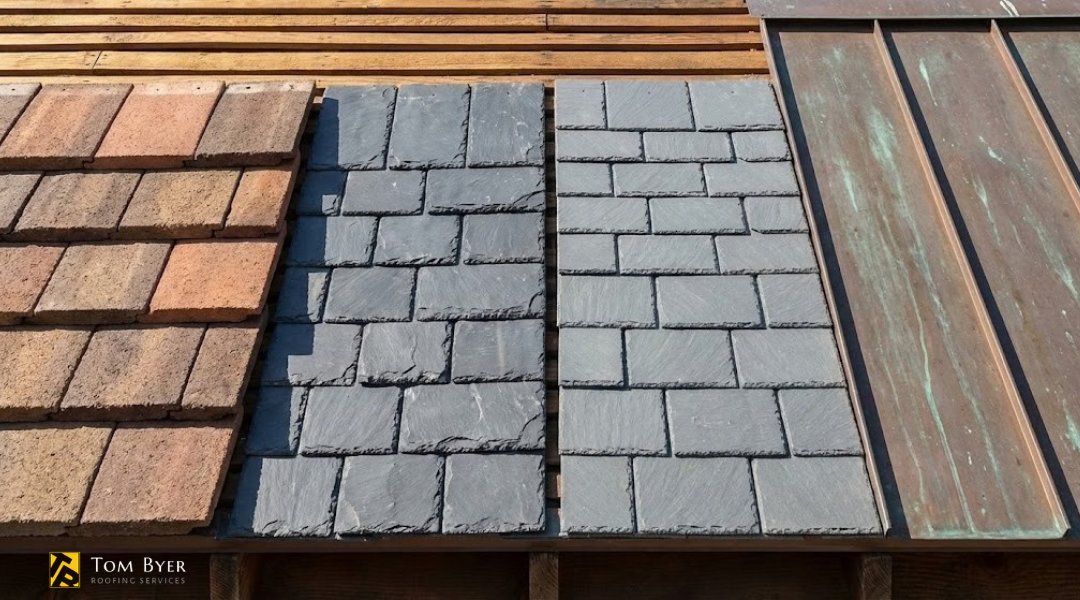
Asphalt shingles weigh only 200-350 pounds per square. Synthetic slate alternatives weigh 400-600 pounds per square, offering a middle ground that looks authentic without overloading rafters.
A metal roof in standing seam copper or steel weighs just 100-200 pounds per square. This makes metal an ideal substitute when your framing cannot handle heavier materials but district guidelines require a historic appearance. You can achieve period-correct profiles with coated steel that mimics the patina of aged copper.
Sheathing Capacity In Pre-Plywood Framing
Homes built before 1950 typically have skip sheathing (spaced boards) or tongue-and-groove planking instead of plywood. Skip sheathing works well under slate roof systems or metal panels but cannot support modern asphalt shingles without adding solid decking between the boards.
Your existing sheathing may measure only 5/8 inch thick. Current building codes often require 15/32-inch or thicker plywood for new installations. Adding plywood over skip sheathing increases roof height by 1/2 inch, which affects trim details and flashing at walls.
Check for nail pull-through on existing boards. Older wood sheathing can become brittle after 80-100 years. If boards are cracked or split, you’ll need to sister new lumber alongside damaged sections before installing any roof coating or finish material.
Ventilation Retrofits In Enclosed Attic Spaces
Historic attics often lack soffit vents, ridge vents, or gable vents found in modern construction. Without airflow, moisture becomes trapped under your new roofing, causing premature deterioration of both materials and framing.
You can add inconspicuous intake vents along eaves or behind decorative brackets without altering streetside appearance. Exhaust vents installed near the ridge blend with existing roof lines when painted to match.
Retrofit ventilation works differently under metal roofs versus asphalt shingles. Metal panels need 1-2 inches of airspace above sheathing to prevent condensation. Asphalt shingles require ventilation ratios of 1 square foot per 150 square feet of attic space. Talk to your preservation review board about approved vent styles before cutting openings in historic soffits or fascia boards.
Preservation Context Near Garden Grove Main Street
Garden Grove’s Main Street area contains several properties that reflect mid-century architectural character, and any roofing work must consider both the visual harmony of the streetscape and local regulations that protect these buildings.
Visual Continuity Within Historic Streetscapes
When you replace or repair a roof near Main Street, you need to maintain the visual rhythm that defines the neighborhood’s character. The streetscape relies on consistent roofline profiles, material textures, and color palettes that were established during the area’s development period.
Your roofing choices affect not just your property but the entire block’s appearance. Properties along Main Street typically feature low-pitched roofs with composition shingles or flat commercial roofs with parapet walls. If neighboring buildings use earth-tone shingles or traditional asphalt materials, a bright metal roof or modern synthetic product could disrupt the street’s cohesive appearance.
Pay attention to the spacing and scale of roofing elements. Historical storefronts often have decorative cornices and fascia boards that frame the roofline. Your new roofing should work with these existing details rather than cover or compete with them.
Local Code Overlays And Alteration Thresholds
Garden Grove applies specific requirements to properties within designated historic zones. You must submit plans for review before making exterior changes to buildings that contribute to the historic character of Main Street.
The city uses alteration thresholds that determine when you need additional permits. Minor repairs that match existing materials often proceed with standard building permits. Major replacements or material changes typically require review by planning staff or the Historic Preservation Committee. Properties listed on local registers or the National Register of Historic Places face stricter requirements.
Your project timeline should account for this review process, which can add several weeks to your schedule. The city evaluates whether your proposed roofing maintains architectural integrity and follows preservation guidelines for the period your building represents.
Balancing Authenticity With Fire-Resistance Standards
Modern fire codes create tension with historical accuracy for historic homes. California requires Class A fire-rated roofing in many areas, but traditional materials like wood shakes don’t meet these standards without treatment.
You can find fire-rated versions of historic-looking materials. Treated wood shingles, specialized slate products, and metal roofing that mimics traditional profiles all satisfy current codes while preserving visual character. Clay and concrete tiles naturally provide good fire resistance and match Mediterranean-style buildings common in the area.
Historic preservation doesn’t mean ignoring safety. You can meet both goals by selecting materials that replicate the appearance of original roofing while incorporating modern protective features. Work with contractors who understand these dual requirements and can source appropriate products.
Interpretive Insights From Tom Byer Roofing Service On Garden Grove Character Homes
Working with historic homes near Main Street requires specialized knowledge of older construction methods and compatible modern solutions. Roofing contractors who understand vintage building assemblies can preserve architectural integrity while improving weather protection and meeting current building codes.
Layered Reroofs Over Original Decking
Your historic home likely has original wood decking that may show signs of age but still provides structural value. A roofing contractor experienced with character homes will assess whether your existing deck boards can support new roofing materials without complete replacement. Many Garden Grove homes from the 1920s through 1950s feature 1×6 or 1×8 skip sheathing rather than continuous plywood.
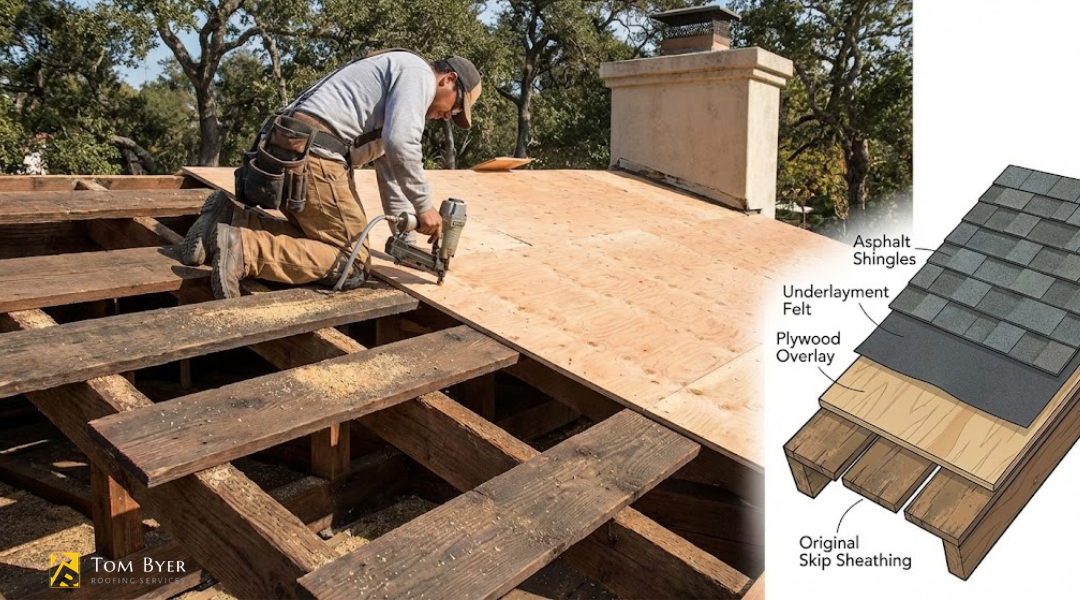
You can often install modern roofing over this original decking by adding a plywood overlay. This approach preserves the historic substrate while creating a solid base for current materials. Your roof inspection should identify any boards that need repair or replacement before the overlay goes down.
Installation techniques for layered systems differ from standard new construction methods. The contractor must account for additional weight and ensure proper fastener penetration through multiple layers. You should discuss load calculations with your roofing contractor to confirm your existing rafters can handle the combined weight of old and new materials.
Flashing Upgrades Within Aging Wall Assemblies
The wall-to-roof connections on character homes often lack the moisture barriers found in modern construction. Your existing flashing may consist only of metal step flashing without any underlying water-resistive barrier. A knowledgeable roofing contractor will integrate updated flashing systems while working within the constraints of your original wall assembly.
You need careful coordination between new roof materials and existing siding, especially around dormers and chimneys. Modern codes require ice and water shield or similar products at vulnerable areas. Your contractor should install these upgrades without damaging historic trim or requiring extensive wall reconstruction.
Roof repair projects on vintage homes often reveal deteriorated wood around valleys and penetrations. You should expect some carpentry work as part of your flashing upgrades to ensure solid attachment points for new materials.
Aligning Modern Underlayments With Vintage Profiles
Character homes feature roof profiles that differ significantly from contemporary designs. Your home may have a low pitch, decorative rakes, or exposed rafter tails that require specialized underlayment installation techniques. Standard synthetic underlayments can work with historic profiles when installed correctly by an experienced roofing contractor.
You need to match the underlayment weight and flexibility to your roof’s specific geometry. Steeper slopes common on Tudor or Colonial Revival homes handle most modern products easily. Lower pitches found on Craftsman bungalows may require heavier underlayments or multiple layers for adequate protection.
Your roof inspection should identify areas where standard installation methods need modification. Exposed eaves and decorative elements may require custom cutting and fitting to maintain their visual appearance while incorporating modern weather protection.
Evaluating Longevity, Cost, And Historical Integrity
Historic roof restoration demands careful analysis of material choices, maintenance requirements, and structural performance over time. Property owners face decisions that affect both their budget and their home’s authentic character.
Replica Materials Versus True Restorations
Synthetic slate and composite shingles offer visual similarities to traditional materials at 40-60% lower installation costs. These products typically last 30-50 years compared to genuine slate’s 100+ year lifespan. Metal alternatives designed to mimic wood shakes provide fire resistance while maintaining period-appropriate aesthetics.
True restorations using reclaimed or quarried slate, clay tiles, or wood shakes preserve maximum historical value. Original materials support your home’s architectural integrity and often qualify for historic preservation tax credits. The higher upfront investment in authentic materials pays off through extended durability and maintained property values.
Preservation boards near Garden Grove’s Main Street may require specific material approvals. Check local ordinances before selecting alternatives, as some districts mandate matching original roofing specifications exactly.
Maintenance Cycles Across Traditional Systems
Wood shake roofs need inspection every 3-5 years with moss removal and treatment applications. Clay and concrete tiles require checking for cracks and displaced pieces annually, with major maintenance every 15-20 years. Metal standing seam systems need minimal care beyond debris clearing and fastener checks every 5 years.
Slate roofs demand professional assessment every 10-15 years to replace individual broken tiles and check flashing conditions. This selective replacement approach costs less than full roof replacements when addressed promptly. Traditional copper or lead flashing lasts 70-100 years but requires monitoring for separation or deterioration.
Budget $300-800 annually for routine maintenance on most historic roofing systems. Complex architectural features like turrets, dormers, or decorative elements increase inspection costs by 25-40%.
Long-Term Resilience Versus Short-Term Conformity
Southern California’s climate creates specific challenges for historic roofing materials. Clay tiles excel in heat resistance and UV exposure but crack during rare freeze events. Wood products deteriorate faster in coastal moisture without proper ventilation and treatment.
Material Performance Comparison:
| Material | Lifespan | Climate Suitability | Historic Accuracy |
|---|---|---|---|
| Natural Slate | 100-150 years | Excellent | High |
| Clay Tiles | 50-100 years | Very Good | High |
| Wood Shakes | 25-40 years | Moderate | High |
| Metal (Copper/Zinc) | 60-100 years | Excellent | Variable |
| Synthetic Slate | 30-50 years | Good | Moderate |
Garden Grove’s Main Street district experiences minimal snow loads but faces intense sun exposure eight months yearly. Select materials proven in Mediterranean climates rather than following Eastern architectural traditions blindly. Your roof restoration should balance regional weather patterns with historical precedent for optimal longevity.