
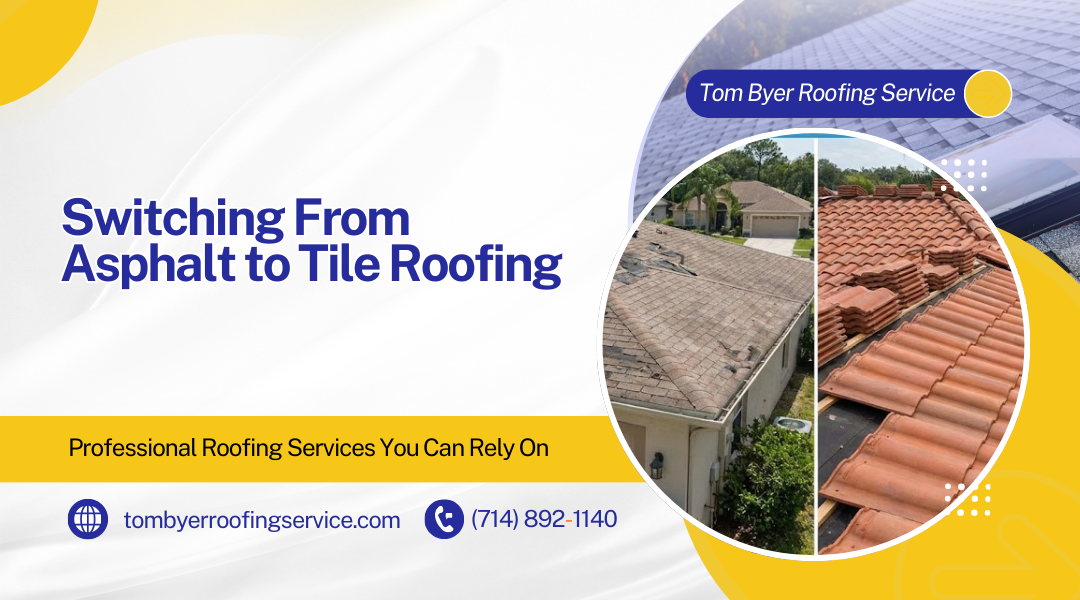
Switching from asphalt shingles to tile roofing can feel like a major upgrade for your home in Garden Grove. The look alone adds character and longevity, but beneath the surface lies a series of structural and regulatory steps that can’t be overlooked. You must verify that your home’s framing and foundation can handle the extra weight and meet local permit standards before the first tile goes up.
Understanding the engineering behind this change can help you make smart decisions. Tile roofing shifts load paths, puts new stress on framing, and changes how the roof reacts to wind and heat. At the same time, Garden Grove’s building codes set clear requirements for engineering letters, inspections, and material approvals—all designed to keep your home safe and compliant.
Tom Byer Roofing Service brings the expertise to guide you through those technical and administrative steps. With decades of experience in California’s roofing systems, we help you balance durability, appearance, and cost so your new tile roof becomes a lasting investment, not a surprise project.
How Tile Roofing Changes Load Paths, Framing Stress, And Roof Behavior
Switching to a tile roof changes how weight travels through your roof’s structure and how much stress your framing carries. The materials and layout determine how the load transfers from the tiles to rafters, then down to the walls and foundation. Tile weight means your roof supports must resist greater bending forces and long-term compression.
Dead Load Differences Between Asphalt And Common Tile Systems
Asphalt shingles add about 2–3 pounds per square foot (psf) to a roof. In contrast, concrete tiles can weigh 9–12 psf, and clay tiles average 8–10 psf. Lightweight concrete tiles can reduce that to around 6 psf, but the difference is still significant. This increase matters because it permanently changes how your structure bears static, or dead, loads.
Extra weight means every beam and truss must carry more constant stress. While the load remains steady, it creates higher bending moments in rafters and greater shear on bearing points. These effects multiply across roof spans. Heavier roofing also amplifies deflection over time, especially in older wood framing where creep can occur.
You should have a structural engineer or experienced roofing contractor evaluate whether your framing meets the necessary load requirements per local California building codes. Roofs built for lightweight shingles often need reinforcement before accepting tile.
Rafter Spacing, Deck Strength, And Cumulative Structural Impact
Your roof’s rafter layout, sheathing type, and connection strength all affect how it handles the additional tile load. Standard rafter spacing for asphalt roofs is often 24 inches on center, which may not provide enough support for heavier materials. Tile systems usually need tighter spacing or added support beams.

The roof deck—often made of plywood or OSB—must also withstand greater compressive forces. Thicker decking, usually 5/8 inch or more, increases stiffness and limits sagging between rafters. Fasteners, hangers, and bearing connections must be inspected to confirm they can transfer the added load without loosening or bending.
Cumulatively, even small differences in spacing and joint integrity affect how the roof distributes weight. Poorly aligned framing may cause uneven load paths, creating localized stress near ridges, hips, and eaves.
Conditions Where Existing Framing Is Typically Adequate
Some roofs already meet structural requirements for tile without major changes. Homes built after the mid-1990s in California often used framing sizes that satisfy tile roofing loads when designed to state codes. If your roof uses 2×6 or larger rafters, 16-inch spacing, and engineered trusses, it may already meet minimum strength requirements.
Low-slope roofs also manage tile loads more efficiently because weight distributes more evenly along rafters. Strong ridge beams and well-anchored load-bearing walls further reduce the chance of structural stress.
You should still verify your framing through inspection and load analysis. Even if the lumber appears solid, moisture damage, improper fastening, or long spans can affect performance. A qualified contractor like Tom Byer Roofing Service can confirm compliance with both structural and local permit requirements before installation.
Interpreting Local Permit Requirements And Engineering Thresholds In Garden Grove
Roofing projects in Garden Grove must meet specific city standards that link building safety and engineering performance with permit thresholds. You need to confirm if your tile conversion affects the roof structure, determine when engineering documentation is required, and understand what changes fall under mandatory code compliance versus those that remain optional.
When A Re-Roof Qualifies As A Structural Alteration
In Garden Grove, a simple re-roof using the same material usually qualifies as a like-for-like replacement and may need only a standard building permit. When switching from asphalt to a heavier tile, though, the load increase often makes it a structural alteration. The weight of clay or concrete tiles can exceed 600–800 pounds per square (100 sq ft), compared to asphalt’s typical 200–250 pounds.
You must verify that the roof framing and decking can safely support the added load. If framing members, rafters, or trusses require reinforcement, the city considers that a structural modification. The Building & Safety Division will need documentation showing that these changes comply with California Building Code (CBC) requirements, especially Chapter 23 on wood construction and structural loads.
Before starting, confirm with the Garden Grove Building and Safety Division if your scope triggers structural review. A contractor like Tom Byer Roofing Service can assist by providing framing evaluation data or coordinating with a licensed engineer.
Engineering Reports, Calculations, And Plan Review Triggers
When the load or framing conditions change, Garden Grove requires engineering calculations and plan review before issuing a permit. You’ll need to submit drawings that include roof framing layout, connection details, and load calculations. These should demonstrate that design stresses remain within CBC limits.
Plan check reviewers verify that live and dead loads, sheathing strength, and connections meet the current CBC and City of Garden Grove amendments. An engineer’s stamped report often becomes mandatory if any existing components are undersized or altered. In some cases, only a partial analysis—such as for rafter sizing—may be sufficient.
Documentation checklist:
- Structural calculation summary (signed by engineer)
- Framing plan and details
- Manufacturer’s tile weight data
- Notes on nailing patterns and underlayment specifications
Each submittal must also show compliance with energy, fire-resistance, and drainage codes if the scope expands beyond a basic roof replacement.
Scope Boundaries Between Code Compliance And Discretionary Upgrades
The city focuses its permit review on minimum code compliance rather than aesthetics or property upgrades. That means you must address required structural, energy, and safety items but can choose whether to include optional improvements.
Code compliance covers:
- Load capacity and framing adequacy
- Weatherproofing, flashing, and fire rating
- Proper slope and drainage systems
Discretionary upgrades may include insulation improvements, cool-roof materials, or solar-ready provisions. While these aren’t required for permit approval, integrating them during a re-roof can save future labor costs and reduce energy use.
You remain responsible for confirming that your final design does not change structural geometry without approval. When in doubt, Garden Grove’s permit staff can clarify whether a change stays within standard re-roofing categories or crosses into the structural or engineering realm.
Tradeoffs Between Material Choice, Architectural Fit, And Long-Term Constraints
Switching from asphalt to tile changes the roof’s structure, aesthetics, and long-term maintenance needs. You must evaluate how weight, slope, and detailing interact with the home’s design, as each decision affects both immediate installation and future flexibility.
Concrete Vs Clay Tile Weight And Profile Implications
Concrete tiles typically weigh 850–950 pounds per square (100 sq. ft.), while clay tiles can range from 600–1,000 pounds depending on shape and thickness. This increase in weight compared to asphalt shingles (about 200–250 pounds) often requires verifying that your roof framing can handle the added load. Reinforcing rafters or trusses may become necessary before installation.
Clay tiles maintain color better and handle high heat well, making them suitable for Southern California’s climate. Concrete tiles, though durable, can absorb more moisture, which slightly increases weight during wet weather. You should also consider how profile thickness and overlap affect water runoff and wind resistance.
| Material | Approx. Weight (per square) | Durability | Maintenance Frequency | Color Retention |
|---|---|---|---|---|
| Asphalt Shingle | 200–250 lbs | 15–25 years | Low | Moderate |
| Concrete Tile | 850–950 lbs | 40–50 years | Moderate | Fair |
| Clay Tile | 600–1,000 lbs | 50+ years | Low | Excellent |
Each option delivers different tradeoffs between cost, structure, and long-term upkeep.
Roof Slope, Eave Detailing, And Visual Proportion Changes
Tile roofs need a minimum slope of 4:12 for proper drainage and weather performance. A gentler pitch can trap water and cause leaks, so you may have to modify the framing or roofing substrate. The change also alters the visual mass of your home because tile systems sit higher than asphalt shingles.
Eaves and fascia boards often need reshaping to fit the increased tile thickness. This small adjustment affects how the roof meets exterior walls, gutters, and soffits. In neighborhoods with a consistent architectural pattern, your choice of tile profile and color should complement nearby designs to maintain visual balance.
Simple design drawings or 3D renderings can help you preview these proportion changes before committing to the build.
Design Decisions That Limit Future Repair Or Modification Options
Certain tile installations, especially when mortared or heavily interlocked, can make future roof work complex and costly. Unlike shingles that are easy to replace individually, tile systems usually require removing surrounding sections to access damaged areas.
You should plan access points for vents, solar mounts, or skylights before installation. Once tiles are set, cutting into the roof structure can disturb alignment or break adjacent pieces. Because each tile batch may vary in tone, replacing sections years later may cause visual inconsistency.
Consider fastening methods, underlayment selection, and clearance spacing as factors that affect how easily your roof can be maintained. A well-documented installation plan helps your future contractors match materials and layout accurately if repairs are ever needed.
How Structural And Regulatory Decisions Shape The Final Roofing System
When you switch from asphalt shingles to tile roofing, the weight difference becomes the first major factor to assess. Tile can weigh several times more than asphalt, so your roof framing must support the added load. A licensed structural engineer can confirm whether your rafters or trusses need reinforcement before installation begins.
In Garden Grove, you must also meet local building and seismic safety codes. California regulations often reference ASCE 7 for structural load and wind design, meaning your new roof must meet specific performance standards for uplift and earthquake resistance. These requirements help prevent structural stress or failure during extreme conditions.
Permits play an important role in ensuring compliance. The City of Garden Grove Building Division reviews structural drawings and material specifications before work starts. You may need documentation showing that your roof framing meets design load limits, especially when adding tile or concrete materials.
| Roofing Material | Approx. Relative Weight | Framing Reinforcement | Permit Needed |
|---|---|---|---|
| Asphalt Shingle | Light | Rarely | Usually |
| Metal Panel | Very Light | Rarely | Usually |
| Clay or Concrete Tile | Heavy | Often Required | Always |
Design choices such as slope, underlayment type, and attachment method must align with both manufacturer standards and local codes. By verifying these details early with Tom Byer Roofing Service, you ensure that your tile roof functions safely, meets regulations, and maintains long-term structural integrity.


