

Buying or selling a home in Garden Grove involves more than a handshake and a signature. Roof inspection reports often become a decisive part of real estate transactions, showing the true condition of one of the property’s most important features. A clear, professional roof inspection report helps you understand potential repair costs, negotiation points, and long-term maintenance needs before signing any contract.
You benefit from knowing exactly what to expect when a licensed roofing contractor evaluates your property. Inspection reports reveal details about materials, structure, and possible damage that a visual check can miss. In Garden Grove, local weather patterns, aging homes, and diverse roofing materials make a thorough inspection a practical step for both buyers and sellers.
Trusted contractors like Tom Byer Roofing Service perform these evaluations with precision, ensuring the report is accurate and useful during your transaction. Whether you want peace of mind as a buyer or transparency as a seller, understanding how roof inspection reports work helps you make confident, informed decisions.
When Roof Inspection Reports Matter in Transactions
Roof inspection reports play an important role when property value, financing, and disclosure accuracy are on the line. They inform decisions about pricing, repair priorities, and risk sharing between buyers, sellers, and lenders. In Garden Grove, where older homes and variable roofing materials are common, these reports can determine whether a transaction proceeds smoothly or encounters delays.
Buyer Due Diligence Versus Seller Disclosure Context
A roof inspection report supports both your due diligence as a buyer and your disclosure duties as a seller. For buyers, it verifies the roof’s current condition beyond a basic home inspection. You gain documentation of leaks, material wear, and expected lifespan so you can weigh maintenance costs before closing.
For sellers, ordering a pre-listing inspection lets you disclose known issues up front. This transparency reduces surprise findings later and builds trust with potential buyers. In competitive markets, sharing a current inspection report can help your listing stand out. It may even prevent price reductions during negotiations because most concerns are addressed early.
Example:
| Role | Purpose of Report | Main Benefit |
|---|---|---|
| Buyer | Due diligence | Confirms roof integrity before purchase |
| Seller | Disclosure | Reduces liability and supports accurate pricing |
Both sides benefit from verified roof data that clarifies property condition and limits dispute risk.
Lender, Insurer, and Escrow-Driven Inspection Triggers
Sometimes roof inspections are required by third parties rather than either party’s preference. Mortgage lenders may request a current report when the roof shows visible wear or when the home is older than 15 years. The document helps confirm the property qualifies for standard loan terms.
Insurance providers often use inspection findings to set coverage limits or premiums. In Garden Grove, where sun exposure and past storm damage can shorten roof life, insurers may ask for proof of remaining service years before approving a policy.
During escrow, inspection results can trigger follow-up repairs or credits before funds are released. If damage is discovered late, it may require a reinspection to confirm the fix. Having an organized and credible report on file ensures that lenders and insurers review accurate information without delaying closing.
Situations Where Reports Carry Limited Weight
In some cases, a roof inspection report provides little added value. For example, new-construction homes often carry manufacturer or contractor warranties that already certify roof condition. In that setting, the inspection might duplicate findings you can verify through warranty paperwork.
If the transaction involves a cash purchase, there may be no lender requirement, meaning the report becomes optional. Experienced buyers might instead rely on a general home inspection if the visible roof condition appears sound.
However, skipping the inspection can still pose risk when purchasing older properties or homes with undocumented repairs. While not always mandatory, an independent roof report becomes more relevant when any uncertainty exists about the roof’s history. The goal is to match inspection depth to the property’s age, material type, and deal complexity.
Timing Within Escrow and Negotiation Phases
The timing of a roof inspection can strongly influence your negotiation power. When completed early—especially during pre-listing or initial offer review—it allows proactive repairs before pricing is finalized. Sellers who fix roof issues ahead of time often avoid credit requests later.

If an inspection occurs mid-escrow, expect negotiations over repair credits or replacement costs. Because escrow timelines are short, unresolved findings can lead to extensions or even withdrawn offers.
Planning the inspection at the start of your transaction keeps outcomes predictable. You can include cost findings or warranty information directly in the offer or disclosure packet. This approach minimizes last-minute disputes and keeps both parties aligned on financial and repair responsibilities before closing.
How Roof Inspection Reports Are Structured and Issued
A professional roof inspection report uses a consistent structure to document the roof’s visible condition, expected lifespan, and safety or maintenance concerns. It separates what can be confirmed visually from what would require invasive testing, supports findings with clear photographs, and distinguishes inspection summaries from formal roof certifications.
Visual Assessment Versus Invasive Inspection Limits
During a residential roof inspection, a qualified roof inspector conducts a visual assessment based on what can be observed without dismantling materials. You can expect the report to describe conditions seen from accessible points such as the roof surface, attic, and perimeter.
Inspectors note visible issues like cracked shingles, rusted flashing, or ponding water. They do not remove decking, tiles, or structural members unless separate approval is given. Any areas that are unsafe or inaccessible, such as steep slopes, are clearly marked as not inspected.
The report should state its scope and inspection limits so buyers and sellers understand what was actually examined. A typical statement confirms that findings rely on current observations and that hidden damage may exist beneath finished materials. This transparency establishes clear expectations and helps prevent disputes after the sale.
Condition Ratings, Estimated Lifespan, and Risk Flags
Most roof inspection reports include a simple condition rating system that ranks each component—covering, flashing, drainage, vents—by performance. Ratings like Good, Fair, or Poor help readers identify priorities quickly.
Inspectors often add an estimated remaining service life in years based on the roof’s age, material type, and visible wear. Asphalt shingles might have 5–10 years left, while metal panels could last several decades if maintained. Including this estimate helps you budget for repairs or replacement.
Some reports feature risk flags that highlight safety, leak, or structural concerns needing prompt attention. A short table can clarify urgency:
| Rating | Definition | Recommended Action |
|---|---|---|
| Good | Fully functional | Routine monitoring |
| Fair | Minor wear | Schedule maintenance |
| Poor | Significant deterioration | Evaluate for replacement |
This approach ensures you can interpret the inspection findings without specialized knowledge.
Documentation Standards and Photo Evidence Practices
Clear photo documentation supports the conclusions of a professional roof inspection. A credible report includes labeled images—typically an overview of each slope followed by close-ups showing defects.
You should see identifiers such as photo numbers, direction (north, south, east, west), and short captions like “Cracked flashing at chimney base.” These details create a transparent record that insurance adjusters, real estate agents, and contractors can reference later.
Reports produced with digital tools or inspection software ensure consistent formatting. They may incorporate timestamped photos, GPS tags, or annotations showing the exact problem area. Consistent documentation reinforces trust between all parties and reduces confusion over what was observed on-site.
Distinction Between Inspection and Certification Reports
An inspection report and a roof certification are not the same document. The inspection report summarizes findings from a specific date and outlines the roof condition as observed by a qualified roof inspector. It does not guarantee performance—it records facts.
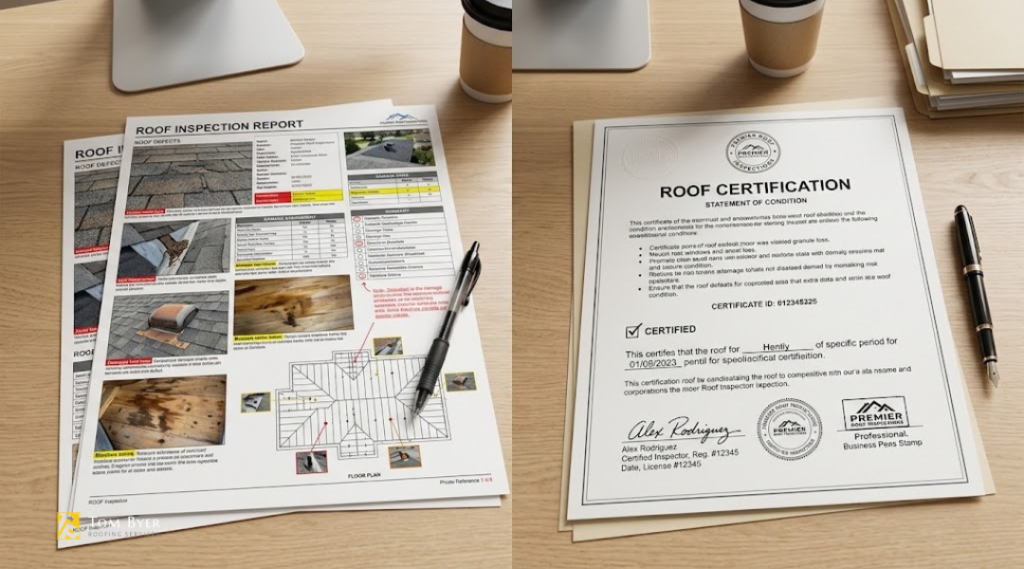
A roof certification, on the other hand, is a formal statement—often issued by a certified roof inspector or contractor—that the roof is free of leaks and will remain serviceable for a defined term, usually one to five years. Certifications may only be granted after completing required repairs or maintenance.
When buying or selling property in Garden Grove, you should confirm whether the transaction requires a standard inspection report, a roof certification, or both. Understanding this difference ensures you meet disclosure requirements and avoid misunderstandings during escrow.
Interpreting Findings and Their Transaction Implications
A roof inspection report helps you understand how the roof’s condition affects both short-term decisions and long-term value. When you read the report, focus on how inspectors classify roof problems, estimate remaining service life, and define financial impacts like repair costs or credits. The details guide pricing discussions and clarify responsibility for needed roof work before closing.
Minor Defects Versus Material Performance Concerns
Inspectors often distinguish between minor defects and material performance concerns. Minor issues, like a few missing shingles or clogged gutters, usually fall under routine maintenance. They don’t threaten structural soundness and can often be resolved with low-cost repairs.
Material concerns, such as widespread damaged shingles or evidence of ongoing moisture intrusion, point to deeper performance or design issues. These may involve failed flashing, ponding water, or substrate deterioration. Such findings suggest declining waterproofing ability and possible water damage inside the attic or ceilings.
A simple way to view this distinction:
| Type | Typical Examples | Typical Action |
|---|---|---|
| Minor Defect | Debris buildup, lifted shingles | Simple repair or cleaning |
| Material Concern | Structural sagging, chronic leaks | Major repair or replacement |
Understanding which category your roof’s condition falls into helps you decide whether the issue affects cosmetic appearance or property value.
Remaining Lifespan Estimates and Valuation Impact
Roof inspection reports often include a remaining lifespan estimate that signals how many years of service your current roof likely has left. You might see an estimate like “5–8 years,” meaning continued but time-limited performance.
Lifespan estimates directly affect property value and marketability. Buyers view shorter remaining life as future expense risk and may adjust offers accordingly. For homes in Garden Grove, weather exposure, maintenance records, and material age strongly influence these estimates.
A roof approaching the end of its service range often triggers price discussions related to roof replacement or major restoration. For example, an older asphalt roof with curled or damaged shingles lowers the home’s market strength, even if no leaks are active. By contrast, a newer roof with proper drainage and no roof damage can help justify higher appraisal values.
Repair Credits, Price Adjustments, and Contingencies
When inspection results show material issues, buyers and sellers often negotiate repair credits or price adjustments. These arrangements offset expected roof repairs or replacement costs.
If the inspection reveals missing shingles or flashing separation causing roof problems, you can ask the seller for a monetary credit instead of direct repair. This allows flexibility in choosing your own contractor after closing. Sometimes, lenders or insurance providers require issues like active water damage to be fixed before loan approval.
Contracts may also contain inspection contingencies. These allow buyers to cancel or renegotiate the offer if the roof’s condition proves worse than expected. Keeping quotes and written estimates organized ensures both parties understand financial responsibilities.
Liability Boundaries Tied to Report Conclusions
Roof inspection reports identify defects, but they also define liability boundaries for each involved party. Inspectors clarify what areas they could or couldn’t see—such as inaccessible attic corners or steep roof sections. You should note any “limited access” statements since they influence later claims.
Sellers are usually liable for known defects not disclosed, while buyers assume responsibility after accepting the condition. Lenders and insurers rely on the report as part of their risk review, especially when issues like ongoing moisture intrusion exist.
You should read disclaimers carefully. Reports rarely guarantee future performance; they describe the roof’s state at inspection time. Using the document as a baseline helps assign fair accountability if roof damage or water leaks emerge later.
Garden Grove Property Factors Affecting Inspection Outcomes
Roof inspection results in Garden Grove often reflect how local building age, weather exposure, and past renovations shape a property’s roof condition. The combination of older housing designs, warm coastal humidity, and varying record-keeping practices can influence inspection findings more than simple material quality or maintenance effort.
Age of Housing Stock and Common Roofing Systems
Many Garden Grove neighborhoods include homes built between the 1950s and 1980s. As these houses age, their original roofing systems—often asphalt shingles or wood shakes—approach or exceed their expected lifespans. Some newer developments feature concrete tile or composite materials, which resist aging differently but still require routine checks for seal integrity and underlayment decay.
Older structures may also lack the ventilation or insulation standards now required by modern code. During inspections, you can expect attention on attic air movement, sheathing integrity, and nail corrosion. Upgrades or replacements that do not match the home’s structural design can affect drainage and load distribution, leading to inspection notes about uneven wear patterns or sagging panels.
Typical concerns with older roofs:
| Common Issue | Likely Cause | Example Finding |
|---|---|---|
| Cracked shingles | Thermal expansion | Curling or gaps around vents |
| Moss growth | Shade and moisture | Damp underlayment |
| Weak decking | Prolonged leaks | Soft spots during walkover |
Climate Exposure Influencing Wear and Deterioration Patterns
Garden Grove’s Mediterranean climate includes mild winters and dry summers with limited but sometimes intense rain. Seasonal wind events and heat exposure cause thermal cycling that loosens flashing and dries out seals. Proximity to coastal moisture can also promote rust on metal flashings and accelerate granule loss on asphalt shingles.
Storm damage remains an intermittent problem. Strong winds can lift or shift older shingles, while clogged gutters increase standing water. Hail is rare but can cause surface bruising that weakens roof durability. You may notice inspectors checking for lifted edges, cracked ridge caps, or discoloration that signals UV degradation.
Consistent roof maintenance—clearing debris and verifying drainage—helps limit these effects. Experienced inspectors in Garden Grove watch for uneven fading or wear concentrated on south-facing slopes where sunlight is strongest.
Local Permit History and Undocumented Roof Modifications
The City of Garden Grove requires approved building permits for most roof replacements and structural modifications. Permit records held by the Building and Safety Division and related inspection documents provide official proof that prior work met safety and code standards. Missing or incomplete records can complicate an inspection because you cannot verify whether existing reinforcements, fasteners, or materials comply with updated regulations.
Undocumented changes, such as added vents, solar mounts, or modified drainage lines, often appear during visual inspection. These may not automatically indicate problems but can raise questions about load capacity or waterproofing. If a roof layer appears newer than the home’s permit file suggests, the inspector might flag it for further verification.
You can check permit status through city databases or request information at City Hall. This step helps avoid disputes about noncompliant repairs that might affect insurance coverage or sale disclosures.
Implications of Prior Repairs on Current Assessments
Previous repairs—whether professional or informal—affect how inspectors interpret roof condition. When patches, overlays, or mismatched materials appear, they signal underlying issues that might need more review. Older patchwork repairs without proper sealing can trap moisture beneath surface materials, leading to hidden rot.
Even well-executed repairs should show uniform workmanship and compatible materials. Inspectors typically note seam alignment, fastener spacing, and transition flashing where old work meets new. Uneven coloration is common but not always a defect; what matters more is performance under water tests or visible stress.
If you purchased the property after a major repair, request documentation describing the scope of work. A clear record supports your maintenance planning and reassures potential buyers that the roof was properly restored, not merely covered over.
How Tom Byer Roofing Service Evaluates Transaction Reports
Tom Byer Roofing Service uses a structured approach to verify roof conditions for real estate transactions in Garden Grove. Their roofing professionals combine on-site analysis, document verification, and timing coordination to help you understand how each finding relates to property value and negotiation outcomes.
Reconciling Inspection Findings With Field-Level Observations
When Tom Byer Roofing receives an inspection report, their team compares the written findings with what they observe firsthand. A roofing contractor inspects key components such as flashing, underlayment, and roof membrane to ensure each item matches what the report claims.
If photos or data in the report appear incomplete, the team conducts follow-up checks. They look for wear patterns, water intrusion signs, and inconsistencies in slope drainage. This process helps confirm whether the reported condition reflects the roof’s true state on-site.
You gain value from this comparison because it connects paperwork with physical evidence. It ensures repair estimates or condition statements align with what a buyer or seller can reasonably expect during negotiations.
Distinguishing Urgent Repairs From Deferred Maintenance
Tom Byer Roofing separates issues that affect roof performance from those that can wait. Urgent repairs might include active leaks, damaged flashing, or separated seams. Deferred items often involve aging shingles or minor sealant wear that still protect the structure but may need work later.
A roofing professional categorizes findings with practical notes. An example table they might use:
| Condition Type | Typical Concern | Action Timeframe |
|---|---|---|
| Active Leak | Water intrusion at seams or vents | Immediate |
| Surface Wear | Minor granule loss | Within 6–12 months |
| Aged Flashing | Deteriorating metal joints | Short-term |
This classification helps you decide how to handle each issue based on transaction goals and budget limits. Immediate fixes reduce liability risk, while noncritical maintenance can be negotiated as part of closing terms.
Interpreting Third-Party Reports for Buyers and Sellers
Third-party inspection reports vary widely in depth and terminology. Tom Byer Roofing reviews these documents to clarify what each remark means for the structure’s condition. For example, a phrase like “roof nearing service life” may not mean full replacement is needed but rather that monitoring and minor improvements should begin soon.
You can ask a roofing contractor from Tom Byer Roofing to explain technical notes in plain language. They often translate inspection data into action-based recommendations, such as resealing specific joints or reinforcing drainage points.
Their interpretations protect both parties from overestimating or underestimating repair needs. Buyers gain a clearer sense of long-term costs, and sellers avoid unnecessary concessions due to unclear report language.
Aligning Repair Scope With Transaction Timelines
Timing plays a major role in property transfers. Tom Byer Roofing structures repair plans so they match escrow deadlines and lender requirements. They coordinate with real estate agents and home inspectors to complete essential work before final walk-throughs.
You can expect short turnaround options for minor fixes and more detailed scheduling for complex materials like tile, asphalt shingles, or flat asphalt roofing. Their staff communicates clearly about lead times, material availability, and inspection scheduling.
By aligning the repair timeline with transaction stages, the roofing professional reduces stress for both buyers and sellers. This approach allows you to close on time without delaying escrow due to pending roof certification or incomplete documentation.