
Atmospheric river storms drop massive amounts of rain over hours or days, and flat roofs face unique challenges when water keeps coming with nowhere to go. Your drainage system must handle prolonged, intense rainfall without allowing water to accumulate beyond safe limits, or you risk structural damage, leaks, and costly repairs. Unlike standard rainstorms that pass quickly, atmospheric rivers test every component of your roof’s water management system.
Most flat roofs in Garden Grove and across California were designed for typical storm patterns, not the extreme rainfall volumes that atmospheric rivers deliver. When drains get overwhelmed or blocked, ponding water builds up faster than your roof can shed it. This extra weight stresses the structure, accelerates membrane wear, and creates entry points for leaks.
This guide walks you through the specific risks atmospheric rivers pose to flat roofs, how to prepare your drainage system before storms arrive, what ponding water does to your roof’s structural limits, and what emergency steps to take when water starts pooling. You’ll learn practical protocols to protect your property and minimize damage when the next atmospheric river hits.
Atmospheric Rivers And Flat Roof Risk Profiles
Flat roofs face specific risks during atmospheric river events that standard weather systems don’t typically produce. The combination of extreme rainfall rates, sustained wind speeds, and prolonged moisture exposure can overwhelm drainage systems and compromise roof membranes designed for average conditions.
Rainfall Intensity Versus Design Assumptions
Most flat roofs are designed to handle rainfall rates of 2 to 4 inches per hour. Atmospheric rivers can deliver 6 to 10 inches per hour at peak intensity. This gap between design capacity and actual conditions creates immediate drainage problems.
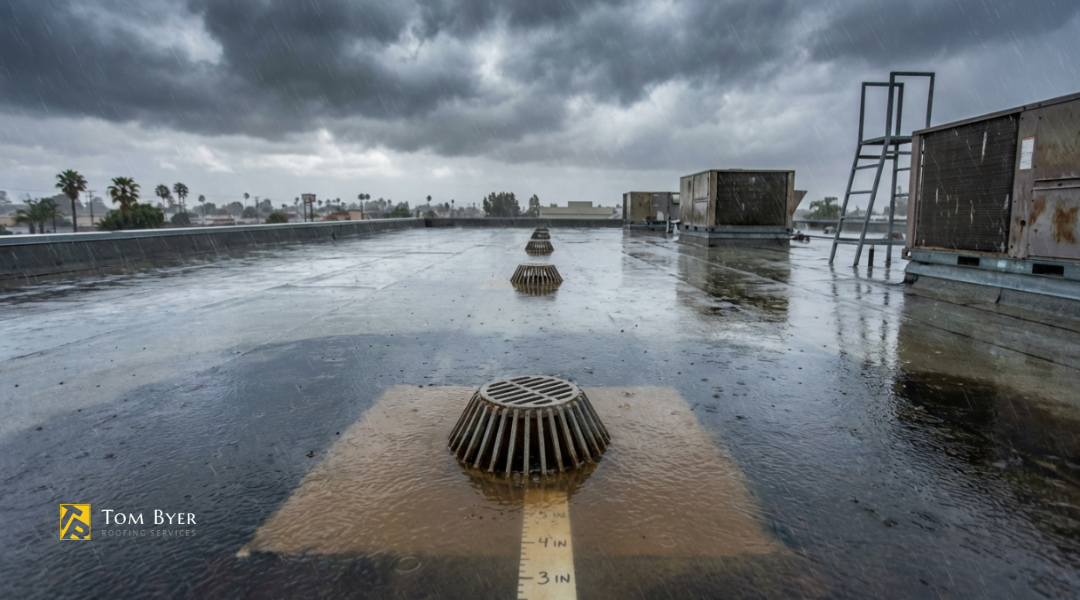
Your roof’s drainage system probably uses calculations based on historical weather data. These calculations assume specific rainfall amounts over set time periods. Atmospheric rivers break these assumptions by dumping water faster than drains can handle it.
The result is water accumulation that exceeds what your waterproof membrane was tested to withstand. Standard flat roof membranes are rated for water depths of 2 to 4 inches when properly supported. When water pools deeper than this, the weight stresses the membrane and underlying structure.
Wind-Driven Water And Membrane Vulnerability
Atmospheric rivers bring sustained winds of 40 to 60 mph with gusts exceeding 80 mph. These winds push water horizontally across your roof surface instead of allowing it to drain naturally. Water gets forced under flashing, through seams, and into areas where the waterproof membrane meets vertical surfaces.
The pressure from wind-driven water is different from standing water pressure. It creates a pushing force that can peel back membrane edges and separate sealed joints. This happens most often at roof corners and along parapet walls.
Your membrane adhesive or mechanical fasteners face forces they weren’t designed to resist. Wind uplift combined with water weight can tear membranes away from the substrate in as little as 30 minutes during peak storm conditions.
When Standard Maintenance Thresholds Fail
Regular flat roof maintenance assumes you’ll clear drains monthly and inspect membranes quarterly. Atmospheric rivers require different protocols. A drain that’s 30% blocked under normal conditions will fail completely when rainfall exceeds 5 inches per hour.
Your maintenance schedule likely doesn’t account for debris loads that atmospheric rivers deposit. Leaves, branches, and sediment can clog a previously clear drain in minutes. The standard “check drains before winter” approach doesn’t prepare your roof for sudden-onset extreme weather.
Ponding areas that seem minor during typical rain become critical failure points. Water that normally evaporates within 48 hours can sit for a week after an atmospheric river passes.
Drainage Systems Under Prolonged Rainfall
Atmospheric river storms deliver hours or even days of continuous precipitation that pushes flat roof drainage systems to their limits. Systems designed for typical storms may struggle when flow rates remain high without pause, allowing debris to migrate and revealing capacity bottlenecks.
Primary Drains, Scuppers, And Overflow Paths
Your flat roof drainage system relies on a hierarchy of outlets to remove water safely. Interior drains serve as the primary collection points, typically positioned at the lowest spots on your roof. These flat roof drains connect to pipes that run through the building to the storm sewer.
Scuppers act as secondary outlets, cut through parapet walls to let water exit when primary drains reach capacity. Overflow scuppers sit higher than primary drains but lower than the roof’s design flood level. This spacing gives you visible warning when your main drainage struggles.
During prolonged rainfall, both systems must work together. If your interior drains handle 80% of design flow but atmospheric rivers deliver sustained rates above that threshold, your scuppers become critical. Gutters and downspouts on the building perimeter provide a third path, though they typically serve smaller roof sections.
Test all three paths before storm season. Pour water into each flat roof drain and scupper to verify flow. Blocked overflow paths during extended storms can cause water levels to rise faster than you expect.
Hydraulic Load Limits And Flow Bottlenecks
Every component in your roof drainage system has a maximum flow rate. Drain strainers, pipes, and downspouts all create potential bottlenecks when rainfall intensity remains high for extended periods.
A standard 4-inch roof drain moves approximately 75 gallons per minute under typical head pressure. Atmospheric rivers in California can deliver 2–4 inches per hour for 24–48 hours. A 10,000-square-foot roof generates roughly 1,250 gallons per minute during a 2-inch-per-hour event.
| Component | Typical Capacity | Common Bottleneck |
|---|---|---|
| 4″ interior drain | 75 GPM | Clogged strainer |
| 6″ scupper | 120 GPM | Ice or debris |
| Siphonic drain | 150+ GPM | Air break in seal |
Your drainage design must account for simultaneous loading across all drains. If three drains serve your roof, you cannot simply multiply one drain’s capacity by three—shared piping and head losses reduce total system performance. Siphonic drainage systems increase flow through negative pressure but require precise installation and clear flow paths to function properly.
Debris Migration During High-Volume Events
Sustained rainfall loosens granules, vegetation fragments, and sediment that normally stay in place during brief storms. This material migrates across your roof toward drains, where it accumulates on drain strainers and drain baskets.
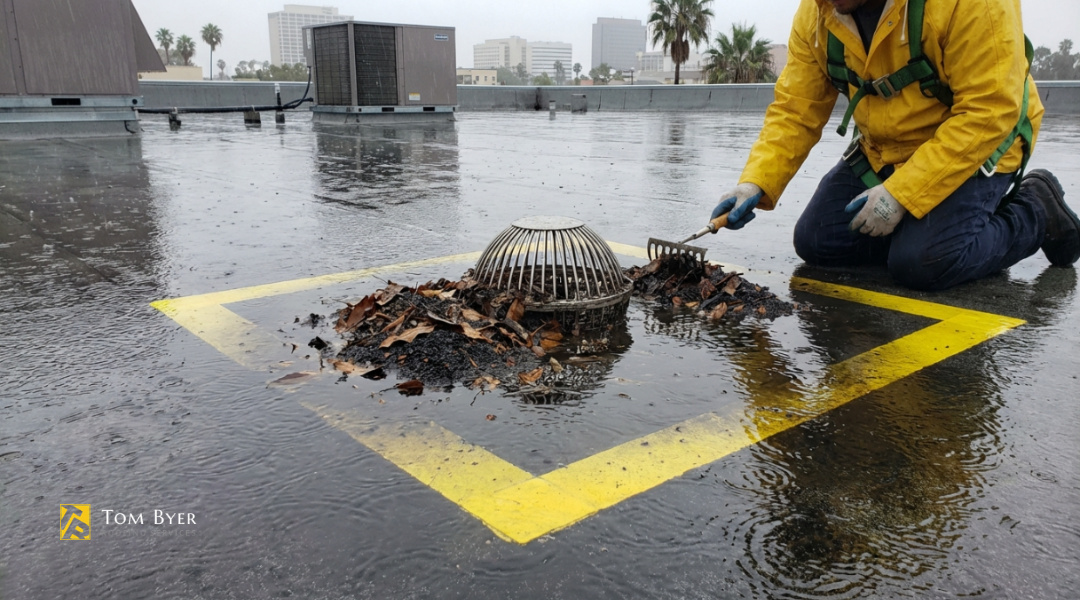
A drain basket that appears clean before a storm can become 70% blocked within six hours of continuous rain. Leaf litter from nearby trees travels farther in heavy flow, piling against drain covers faster than during typical weather.
Check and clear drain strainers every 4–6 hours during atmospheric river conditions. Remove the clamping ring on your flat roof drains to lift the strainer and clear debris. Waiting until water ponds means you’re already behind.
Install secondary strainers or debris clutches on drains that clog frequently. These devices catch larger material before it reaches the primary basket. Position these additions without blocking flow—improper installation creates new bottlenecks rather than solving existing ones.
Mark all drain locations with bright paint or reflective markers so you can find them quickly in heavy rain and low visibility. Your roof drainage system only works when water reaches the drains, and prolonged storms give debris more time to block those pathways.
Ponding Water Mechanics And Structural Tolerances
Standing water on a flat roof creates progressive weight that changes how your roof structure behaves. The membrane, insulation layers, and deck all respond differently to water load, and understanding these mechanics helps you recognize when ponding shifts from a minor nuisance to a structural threat.
Load Distribution On Low-Slope Assemblies
Water weight distributes across your roof at 5.2 pounds per square foot for every inch of depth. A shallow puddle covering 100 square feet at one inch deep adds 520 pounds to that section of your roof. This load doesn’t spread evenly like snow. It concentrates in low spots where drainage fails.
Your roof deck transfers this weight to joists or beams underneath. Steel decking handles concentrated loads better than wood. The deck’s gauge and span between supports determines how much deflection occurs under water weight.
Tapered insulation systems redirect water toward drains by creating intentional slopes. Without proper taper, insulation compresses unevenly under water weight, creating deeper pockets that trap more water in a self-reinforcing cycle.
Deflection, Insulation Compression, And Memory
Your roof deck flexes downward when water accumulates. This deflection creates a bowl shape that holds even more water. The process feeds itself: more water causes more sag, which traps additional water in the depression.
Insulation beneath the membrane compresses under sustained water weight. Polyisocyanurate and EPS foam lose thickness when saturated. This compression often becomes permanent, meaning the low spot remains even after water evaporates. The deck may return to its original position, but compressed insulation creates a lasting depression.
Roof crickets between drains reduce this risk by creating ridges that prevent water from pooling between drainage points. These raised sections interrupt the deflection pattern and guide water toward multiple outlets.
Thresholds Where Ponding Becomes Structural Risk
Most manufacturers void warranties when water remains longer than 48 hours after rainfall stops. This industry standard reflects when ponding typically begins causing measurable damage rather than an absolute structural limit.
Water depth beyond one inch indicates inadequate drainage that will worsen over time. At two inches, you’re adding 10.4 pounds per square foot of localized load. Depths reaching three inches signal serious drainage failure requiring immediate intervention.
Your roof’s age and condition affect these thresholds. A new roof with proper slope tolerates brief shallow ponding. An older system with compressed insulation or existing deck deflection reaches critical load faster. Watch for visible sagging, membrane wrinkling around ponding areas, or interior ceiling stains directly below water accumulation.
Commercial Flat Roof Realities In Garden Grove, California Through The Lens Of Tom Byer Roofing Service
Garden Grove’s commercial flat roofs face specific challenges that don’t always align with standard building codes designed for typical rainfall patterns. Tom Byer Roofing Service, operating in the area since 1952, has seen how aging buildings and occupied properties require different approaches during atmospheric river events.
Southern California Code Assumptions Versus Storm Variability
Building codes in Southern California were written with the region’s usual dry climate in mind. They often assume moderate rainfall spread across the wet season.
Atmospheric rivers bring concentrated water volumes that exceed these design assumptions. A single storm can deliver several inches in hours, which overwhelms drainage systems built for lighter, longer-duration rain.
Tom Byer Roofing Service has observed this gap in Garden Grove’s commercial buildings. Many older structures have drainage capacity sized for historical averages, not extreme weather events.
Your flat roof might meet code but still struggle during atmospheric rivers. The difference between design standards and actual storm behavior creates real risk for ponding and structural stress.
Key code-reality gaps include:
- Drain sizing based on older rainfall data
- Scupper placement that doesn’t account for rapid water accumulation
- Overflow provisions that are undersized for current storm intensity
Retrofit Constraints In Aging Commercial Buildings
Many Garden Grove commercial buildings date back several decades. These structures weren’t built with current weather patterns or drainage needs in mind.
Adding drains or improving slope on an occupied building presents physical and financial challenges. You can’t always modify the roof deck without affecting the space below or disrupting business operations.
Tom Byer Roofing Service works within these constraints regularly. Their experience shows that solutions must balance ideal drainage with what’s actually possible on an existing structure.
Budget limits matter too. Complete roof replacement might solve drainage issues, but partial improvements often make more sense for older buildings.
Common retrofit limitations:
- Structural capacity for additional drains
- Tenant disruption during major work
- Existing HVAC and equipment placement
- Cost versus remaining roof lifespan
Interpreting Emergency Response Within Active Properties
Commercial properties rarely shut down for roof maintenance. Your building likely has tenants, customers, or operations that continue during storms.
This reality shapes how you prepare for atmospheric rivers. Emergency protocols must account for occupied spaces and business continuity needs.
Tom Byer Roofing Service handles emergency calls knowing that commercial clients need fast response without complete operational shutdown. Their approach considers both roof protection and minimal business disruption.
You need clear protocols for when ponding reaches critical levels. This includes knowing who to call, what areas to monitor, and how to protect interior spaces if water enters.
Essential emergency elements:
- 24-hour contact information for your roofing contractor
- Pre-identified vulnerable zones on your roof
- Interior protection supplies readily available
- Staff trained to spot warning signs during storms
Emergency Protocols And Post-Storm Assessment Logic
A structured emergency protocol protects your property and simplifies insurance claims by establishing clear documentation standards and safety procedures before, during, and after atmospheric river events.
Pre-Storm Documentation And Access Planning
Document your flat roof’s current condition before storm season begins. Take clear photos from multiple angles, showing drainage outlets, membrane seams, flashing details, and any existing wear patterns. Date-stamp these images and store them digitally where you can access them remotely.
Create a roof access plan that identifies safe entry points and marks hazardous areas like skylights or weak sections. Keep a list of emergency contacts including your roofing contractor, insurance agent, and local building department. Store essential tools in a waterproof container near ground level—you’ll need binoculars, a flashlight, measuring tape, and weatherproof notebooks.
Mark drainage outlet locations on a simple sketch of your roof. This map becomes critical during heavy rain when you need to identify which drains are failing without climbing onto a wet surface. Share this documentation with your roofing contractors so they understand your roof’s layout before an emergency call.
Active Event Safety Boundaries
Never inspect your flat roof during active rainfall or high winds. The membrane becomes extremely slippery when wet, and standing water conceals surface damage that could give way under your weight.
Monitor your roof from inside during the storm. Check ceilings for water stains, bulging, or dripping. Listen for unusual sounds like rushing water or debris impacts. Note the time when you observe each issue—this timeline helps roofing contractors assess the damage sequence later.
If you must observe the roof during a storm, use binoculars from ground level or an upper-floor window. Look for ponding depth, debris accumulation on drainage areas, or visible sagging. Do not attempt temporary repairs while rain continues.
Post-Event Inspection Sequencing And Damage Classification
Wait at least 2-3 hours after rain stops before accessing your roof to allow surfaces to partially dry. Start your inspection from the perimeter, checking gutters and scuppers for blockages. Look for standing water that persists beyond 48 hours—this indicates drainage failure requiring immediate attention.
Document damage in three categories: immediate threats (active leaks, large tears, sagging sections), urgent repairs (ponding over two inches deep, membrane blistering, loose flashing), and monitoring items (minor surface wear, small debris deposits). Photograph each issue with a measuring device in frame to show scale.
Contact your roofing contractor within 24 hours if you identify immediate threats or multiple urgent repairs. Provide your pre-storm photos alongside new damage documentation to establish timeline and causation for insurance purposes.