

A commercial roof represents one of your largest capital assets, yet it often gets ignored until water damages tenant spaces or expensive equipment. Property managers who wait for visible problems end up paying three times more for emergency repairs compared to planned maintenance. The key to avoiding these costly surprises is implementing a structured maintenance plan with clear inspection intervals and predictable budgets.
A well-designed commercial roof maintenance plan can extend your roof’s lifespan by up to 25% while keeping repair costs under control through regular inspections and early problem detection. Instead of guessing when to schedule service or scrambling to find budget for unexpected failures, you need a systematic approach that fits Orange County’s climate conditions and your financial planning cycles.
This guide walks you through creating a maintenance plan that works for your properties. You’ll learn how to define what needs inspection, when to schedule maintenance visits, and how to budget realistically for both routine care and eventual replacement. You’ll also see how local factors in Orange County affect your planning decisions and what tradeoffs matter most when managing roof assets.
What Readers Will Master After This Guide
You will gain the skills to build a commercial roof maintenance program that reduces emergency repairs and extends roof life. These competencies include organizing inspection schedules, translating technical findings into repair priorities, and forecasting annual maintenance costs.
Structured Checklists, Seasonal Timing, and Budget Allocation for Commercial Roofs
You will learn to create repeatable checklists that cover critical roof components like membranes, flashings, drainage systems, and penetrations. These checklists help you standardize inspections across multiple properties and ensure nothing gets missed during walkthroughs.
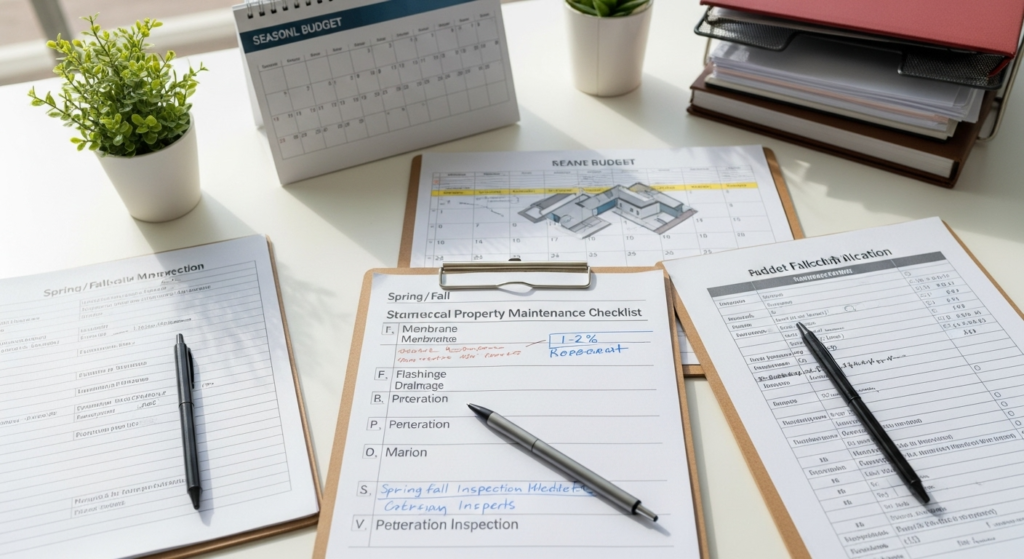
Your maintenance calendar will include spring and fall inspections to address seasonal wear patterns. Spring checks focus on winter damage from freeze-thaw cycles and prepare roofs for summer heat. Fall inspections clear debris before winter and verify that drainage systems can handle increased rainfall.
Budget allocation becomes predictable when you track maintenance costs over time. You will estimate annual spending based on roof age, system type, and square footage. Most property managers allocate 1-2% of replacement cost annually for routine maintenance, with adjustments for older roofs requiring more frequent attention.
How to Interpret Inspection Findings into Actionable Plans
You will translate inspection reports into prioritized repair lists based on urgency and budget impact. Minor issues like small punctures or loose flashings become immediate repairs that prevent water intrusion. Moderate concerns such as membrane aging or ponding water go into quarterly monitoring plans.
Your action plans will separate emergency repairs from scheduled maintenance work. This distinction helps you respond quickly to leaks while planning non-urgent projects during slower periods when contractor rates are lower.
You will also document findings for warranty compliance and asset management records. These reports track roof condition over time and provide evidence of proper maintenance when filing insurance claims or negotiating property sales.
Defining Scope and Inspection Boundaries
A maintenance plan works only when you know exactly what to check and what falls outside your responsibility. Clear boundaries prevent missed problems and help you budget accurately for the services you actually need.
What Core Elements to Inspect—Drains, Flashings, Membranes, Penetrations
Your inspection scope should cover the roof membrane, which serves as your primary waterproof barrier. Check for cracks, blisters, punctures, or areas where seams have lifted. These membrane issues often start small but quickly lead to water infiltration if ignored.
Drainage systems require careful attention:
- Scuppers and drain openings for clogs or damage
- Standing water that remains 48 hours after rain
- Downspouts and gutters that aren’t flowing properly
Flashings around roof edges, walls, and curbs need inspection for rust, gaps, or separation from the membrane. Roof penetrations like HVAC units, vents, pipes, and skylights are common leak points. Examine the seals around each penetration for deterioration or gaps where water could enter.
Document the condition of expansion joints, fasteners, and edge metal. These components protect your roof from wind uplift and water entry at vulnerable transition points.
Exclusions Like Structural Analysis or Full System Testing
Your maintenance plan should not include structural engineering assessments of the building’s deck or support system. These require licensed engineers and fall outside routine maintenance.
Core sampling and destructive testing to check insulation or multiple membrane layers typically happen during roof replacement planning, not regular maintenance. Emergency repairs after storms or accidents also fall outside scheduled maintenance agreements.
You don’t need thermal imaging or infrared moisture scanning at every inspection. Save these specialty services for when you suspect hidden problems or plan major repairs. Interior ceiling inspections and mold remediation belong to building maintenance, not roof maintenance contracts.
Adapting for Flat Versus Sloped Commercial Roofs in Dry Climates
Low-slope roofs require more frequent drainage checks since ponding water poses a constant threat. Even in dry climates, occasional storms can overwhelm inadequate drainage systems. Inspect membrane seams more closely on flat roofs because water sits longer and finds weak points.
Sloped roofs naturally shed water faster but need careful flashing inspections at valleys and transitions. In dry climates, UV damage becomes your primary concern. Check for membrane brittleness, cracking, or fading that indicates sun exposure damage.
Adjust your inspection frequency based on your climate. Dry regions may need fewer drainage checks but more attention to thermal expansion, which can stress seams and fasteners. Low-slope roofs in any climate should be inspected at least twice yearly, while sloped roofs may extend to annual inspections if performance history supports it.
Recommended Maintenance Intervals and Checklists
A strong roof maintenance plan requires specific timing for inspections and tasks. Property managers should schedule semi-annual walkthroughs in spring and fall, perform quarterly debris removal at high-risk buildings, and arrange annual professional moisture scans to catch hidden damage.
Semi-Annual Visual Walkthroughs—Spring, Fall, Post-Storm
You need to conduct roof inspections twice per year to catch problems early. Spring inspections should happen in March or April to assess damage from winter weather and prepare for summer heat. Fall inspections work best in September or October to clear seasonal debris and check for issues before winter arrives.
Your spring walkthrough should focus on checking for cracks, blisters, or shrinkage in the roof membrane caused by freeze-thaw cycles. Look at all flashings around vents, HVAC units, and roof edges for rust or separation. Document any pooling water that sits for more than 48 hours after rainfall.
Post-storm inspections are critical after severe weather events. Hail, high winds, and heavy rain can cause immediate damage that worsens quickly if left unaddressed. Schedule these inspections within 72 hours of any major storm to maintain warranty compliance and prevent emergency leaks.
Quarterly Tasks for High-Risk Sites—Debris Removal, Drain Clearing
Buildings surrounded by trees or with heavy foot traffic need more frequent attention. Schedule quarterly maintenance every three months to remove leaves, branches, and other debris that accumulates on the roof surface. This prevents organic material from breaking down and damaging your roof membrane.
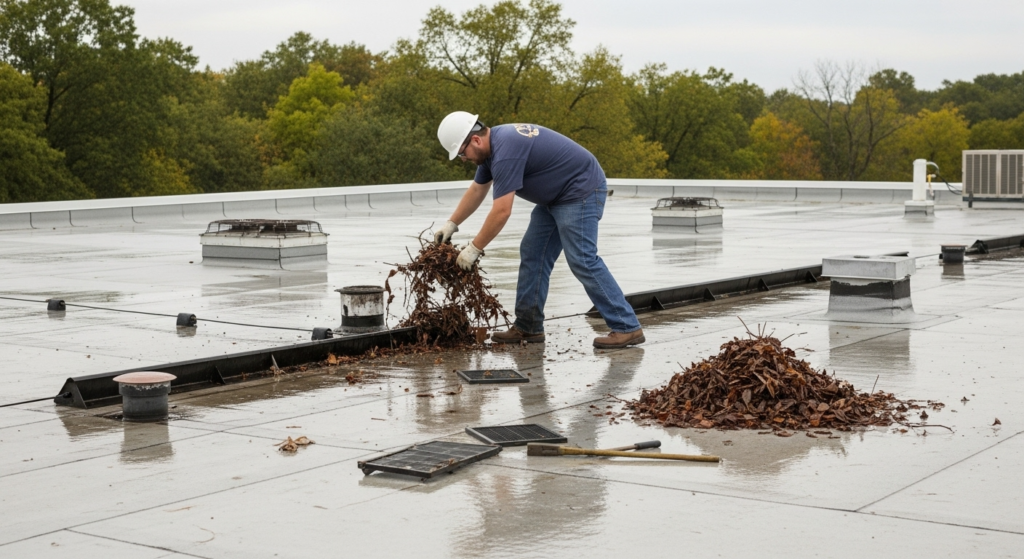
Clogged drains create serious problems during heavy rainfall. Clear all gutters, scuppers, and interior drains during each quarterly visit. Check drain screens for blockages and remove any buildup that restricts water flow. Test drainage by running water through the system to confirm proper function.
Pay special attention to roof penetrations and high-traffic areas during these visits. HVAC technicians and other maintenance workers can accidentally damage roofing materials when accessing equipment.
Annual Professional Scan for Moisture and Wear
Your annual inspection should include professional tools that detect hidden problems. Infrared cameras and moisture meters identify trapped water beneath the roof surface before it causes visible damage. These scans catch issues that visual inspections miss.
A roofing contractor should perform this detailed assessment to check membrane adhesion, insulation condition, and structural integrity. They’ll provide a written report documenting the roof’s condition and any repairs needed. This documentation protects your warranty coverage and helps you budget for future maintenance needs.
Schedule this comprehensive inspection during mild weather when the roof is dry and accessible. The detailed findings help you prioritize repairs and plan capital expenditures for the coming year.
Budgeting Frameworks in Orange County Markets
Orange County’s unique climate and construction standards create specific cost structures for commercial roof maintenance. Local market rates reflect higher labor costs and specialized material requirements for coastal and inland properties.
Cost Ranges for Inspections, Cleaning, and Minor Repairs Locally
Professional roof inspections in Orange County typically cost between $300 and $800 per visit. The price varies based on your building’s square footage and accessibility challenges.
Routine cleaning services range from $0.08 to $0.15 per square foot. A 20,000-square-foot roof would cost $1,600 to $3,000 for debris removal and drain clearing.
Minor repairs follow these local price points:
- Membrane patching: $200-$600 per section
- Flashing repairs: $400-$1,200 depending on location
- Drain maintenance: $150-$400 per drain
- Sealant reapplication: $250-$800 for problem areas
Emergency repairs cost 50-75% more than scheduled maintenance work. Your location near the coast may increase prices by 10-20% due to salt air exposure and stricter building codes.
Scaling Budgets by Roof Size, Type, and Condition Factors
Budget $0.18 to $0.35 per square foot annually for standard maintenance in Orange County. Your actual costs depend on three primary factors.
Roof type drives material and labor requirements. TPO and PVC systems need $0.18-$0.25 per square foot yearly. Modified bitumen requires $0.22-$0.30 per square foot. Metal roofing costs $0.15-$0.22 per square foot due to lower maintenance needs.
Building age affects your budget significantly. Roofs under 10 years old stay at the lower end of cost ranges. Systems between 10-20 years need budgets at the higher end. Properties with roofs over 20 years should add 25-40% to standard estimates.
Condition factors include previous damage history, drainage efficiency, and exposure to Santa Ana winds. Buildings in inland areas face temperature extremes requiring different maintenance than coastal properties dealing with salt corrosion.
Allocating for Preventive Recoating or Sealing Cycles
Preventive coatings extend your roof’s lifespan by 5-10 years. Orange County contractors charge $1.50 to $3.50 per square foot for elastomeric or silicone coatings.
Schedule recoating every 5-7 years for TPO and PVC systems. Modified bitumen needs resealing every 3-5 years. Budget approximately $30,000 to $70,000 for a 20,000-square-foot facility.
Set aside funds in a designated reserve account. Divide your total coating cost by the number of years until the next application. A $40,000 recoating project in six years requires $6,667 annually in your maintenance fund.
Your allocation should include a 15-20% buffer for scope changes or price increases. Orange County’s construction costs have risen 8-12% annually in recent years, making conservative estimates necessary for long-term planning.
Applying Plans Through Tom Byer Roofing’s Lens
Tom Byer Roofing applies preventative maintenance strategies specifically tailored to Garden Grove’s climate and building codes. Property managers working with this commercial roofing contractor gain access to localized expertise that addresses flat roof vulnerabilities before seasonal weather patterns cause damage, while maintaining compliance requirements that protect both warranties and long-term investments.
How Garden Grove Property Managers Prioritize Flat Roof Vulnerabilities Pre-Rainy Season
Garden Grove’s rainy season demands specific attention to flat roof drainage systems and membrane integrity. Tom Byer Roofing schedules inspections 4-6 weeks before winter weather arrives, allowing time for repairs before heavy precipitation begins.
The inspection process focuses on three critical areas. First, technicians clear and test all drains, scuppers, and overflow systems to prevent water pooling. Second, they examine membrane seams and flashing around HVAC units for any separation or gaps. Third, they assess low-slope areas where ponding water typically accumulates after 48 hours.
Property managers receive detailed reports identifying immediate risks versus issues that can wait until spring. This prioritization helps you allocate emergency funds appropriately. Minor repairs like resealing penetrations cost significantly less than emergency leak repairs during storms.
Tom Byer Roofing maintains records of vulnerability patterns specific to Garden Grove properties. This data helps predict which buildings face higher risk based on roof age, membrane type, and previous repair history.
Integrating Maintenance with Local Code Compliance and Warranty Preservation
Your maintenance plan must satisfy both manufacturer warranty requirements and Garden Grove building codes. Most commercial roofing warranties require documented inspections twice yearly to remain valid. Missing these inspections can void coverage worth thousands of dollars.
Tom Byer Roofing structures maintenance visits to meet warranty timelines while addressing local code requirements. Garden Grove requires proper drainage, fire-resistant materials, and safe roof access points. The roofing contractor documents compliance during each visit, creating records you can present during property inspections or insurance audits.
Key compliance elements tracked:
- Membrane condition and attachment methods
- Fire-rated material certifications
- Proper drainage slopes and functionality
- Secure equipment mounting and penetration seals
Warranty preservation requires using approved materials and qualified installers for all repairs. Your commercial roofing contractor maintains relationships with material manufacturers, ensuring repairs don’t accidentally void existing warranties. Documentation from each maintenance visit becomes part of your property’s permanent records, supporting insurance claims and increasing asset value during appraisals.
Measuring ROI Through Avoided Repairs and Extended Roof Life
A preventative maintenance plan delivers measurable financial returns through deferred replacement costs and reduced emergency repairs. Tom Byer Roofing tracks the difference between proactive maintenance costs and reactive repair expenses for Garden Grove properties.
The average commercial roof replacement costs $8-12 per square foot in Garden Grove. A well-maintained roof lasts 25-30 years versus 15-20 years without regular care. For a 10,000 square foot building, this extended lifespan represents $80,000-$120,000 in deferred capital expenditure.
Annual cost comparison:
| Maintenance Approach | Annual Cost | 20-Year Total |
|---|---|---|
| Reactive repairs only | $3,000-$8,000 | $100,000+ |
| Preventative plan | $2,000-$3,000 | $40,000-$60,000 |
Your roofing contractor provides annual reports showing repair costs avoided through early intervention. A $200 sealant repair caught during inspection prevents a $5,000 leak repair months later. These documented savings justify maintenance budgets to property owners and demonstrate your effective asset management.
Properties with documented maintenance plans also maintain higher appraisal values. Buyers and lenders recognize that well-maintained roofs represent lower risk and reduced near-term capital requirements.
Risk Tradeoffs and Decision Logic
Property managers must weigh inspection costs against potential repair expenses while keeping tenant satisfaction high. Smart budgeting means focusing resources on areas most likely to fail and knowing when repairs no longer make financial sense.
Balancing Inspection Frequency Against Budget Constraints
Most commercial roofs need two inspections per year—spring and fall—to catch problems early. This schedule costs between $300-$800 per inspection but prevents emergency repairs that typically run three times higher than planned fixes.
You can adjust frequency based on roof age and type. Roofs under five years old may only need annual checks if your warranty allows it. Roofs over 15 years old benefit from quarterly inspections since failure risk increases significantly.
Budget-Friendly Inspection Options:
- Full professional inspection (twice yearly): $600-$1,600 annually
- Post-storm visual checks (in-house staff): $0 added cost
- Annual professional + seasonal self-checks: $300-$800 annually
Missing inspections to save money rarely works. A single undetected leak can damage inventory, disrupt tenant operations, and cost $5,000-$15,000 in emergency repairs plus interior restoration.
Prioritizing High-Leak-Risk Areas Over Cosmetic Issues
Not all roof issues carry equal risk. Focus your maintenance dollars on the five areas where most leaks start:
- Flashings around HVAC units and pipes (40% of leaks)
- Drainage systems and gutters (25% of leaks)
- Seams and membrane joints (20% of leaks)
- Roof penetrations (10% of leaks)
- Edge metal and perimeter (5% of leaks)
Surface discoloration or minor ponding that drains within 48 hours rarely threatens the roof structure. Postpone these cosmetic fixes when budget is tight. Prioritize anything that channels water into the building or compromises the membrane seal.
Tenant satisfaction depends on leak-free spaces, not perfect roof appearance. Direct funds toward preventing water intrusion first.
When to Escalate from Maintenance to Partial or Full Replacement
Routine maintenance stops making sense when repair costs exceed 25-30% of replacement value. Calculate your break-even point by comparing annual repair spending against the prorated cost of a new roof.
Replacement indicators include:
- Widespread membrane deterioration affecting more than 30% of the roof
- Repeated leaks in different locations despite ongoing repairs
- Saturated insulation reducing energy efficiency
- Age beyond 75% of expected lifespan (15+ years for most systems)
Partial replacement works when damage concentrates in specific sections. Replace only the damaged area if it covers less than 40% of total roof area and the remaining sections have at least five years of life left.
A roof costing $60,000 to replace has a break-even point around $15,000-$18,000 in annual repairs. Once your maintenance budget approaches this threshold for two consecutive years, replacement delivers better value.